Review · NEW ZEALAND
Glenorchy Helicopter Tour | Alpine Lakes & Fiordland
The big draw here is simple: in two hours, you reach places that would take days to approach on foot. From Glenorchy, the helicopter crosses high country to Sutherland Falls, Milford Sound, and a glacier-fed valley at Earnslaw Burn, with three landings along the way.
I like the mix of grand views and actual time on the ground. I also like that Earnslaw Burn is an exclusive landing spot, where you can see a hanging glacier and seasonal waterfalls at close range. The main catch is the price, $804 per person, and the route can change when Fiordland weather turns rough.
Key points at a glance
- Three landings in two hours: Stop at an alpine lake, Milford Sound, and the remote Earnslaw Burn.
- Sutherland Falls from above: See the 580-metre waterfall reached by the Milford Track.
- A rare Earnslaw Burn landing: Walk into a glacier-fed basin with blue ice and seasonal cascades.
- Small shared helicopter flight: Expect roughly 6 to 9 passengers, with seats assigned for aircraft balance.
- Weather shapes the day: Cloud, wind, and conditions can alter the route or force a shorter flight.
- Best for big scenery in limited time: This is a strong choice if you want Fiordland views without a long trek or boat journey.
Why this Glenorchy flight covers so much ground
Fiordland National Park is huge, rugged, and wet. Its 1.2 million hectares hold dark forests, steep mountains, deep fiords, hanging glaciers, and alpine lakes. From the road, you see only small parts of it. A helicopter gives you the wider picture quickly.
That matters in Glenorchy, where the scenery is beautiful but the most remote parts of Fiordland remain far away. This flight is not just a quick ride above town. It reaches the high valleys around Milford Sound and returns through the country near Mount Tutoko, Fiordland National Park’s highest peak.
You get a useful range of views in a short span: pale alpine water, sheer rock, forested valleys, snow and ice, and the narrow walls of Milford Sound. Each part feels different, which helps justify the two-hour length.
The flight leaves from 35 Mull Street in Glenorchy and returns there. Since this is a shared experience, you may fly with 6 to 9 passengers. That keeps the price below a private charter, but you will not have complete control over your seat or the exact angle for every photograph.
More Helicopter Tours around New Zealand:
- Franz Josef Glacier: Helicopter Flight & Alpine Landing
★ 4.8 · 619 reviews - Franz Josef Glacier Heli-Hike
★ 4.5 · 618 reviews - Heli Hike Fox Glacier
★ 5.0 · 563 reviews
From Glenorchy to Lake Erskine and the alpine country
The helicopter leaves Glenorchy and begins with broad views over the surrounding mountains and valleys. Lake Erskine is one of the first notable sights. It gives you an early look at the clear, isolated lakes that make this part of New Zealand feel so remote.
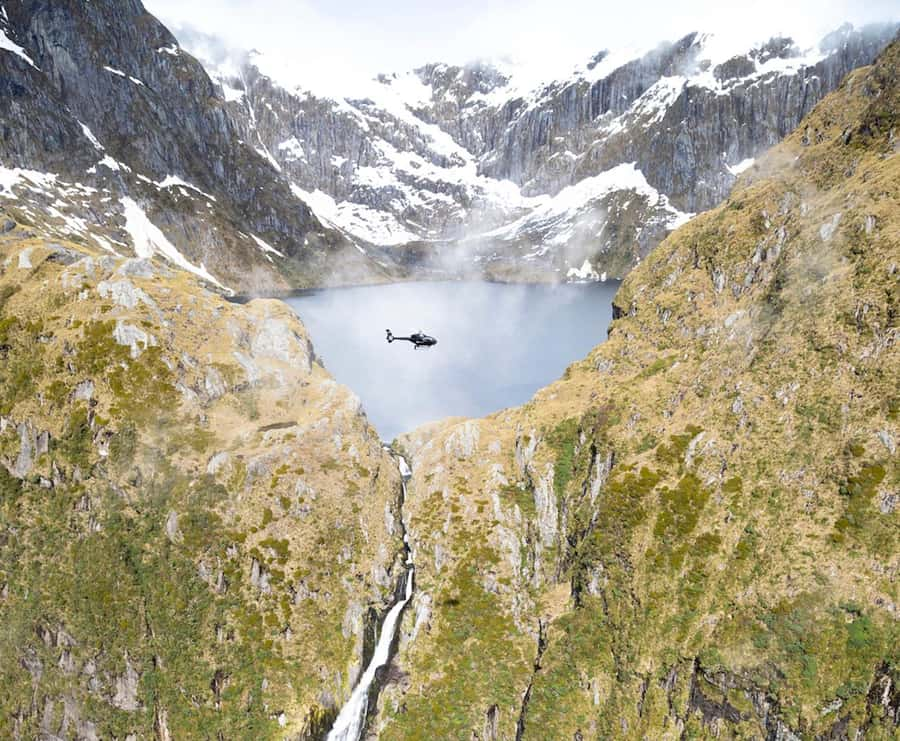
The first landing is an alpine lake stop. The exact location can depend on operational and weather conditions, but Lake Erskine and the area around Lake Quill are central to the route. You should expect about 10 minutes on the ground at this point.
Ten minutes is not a long walk, and this is not a hiking excursion. It is enough time to step out, take photographs, feel the cold alpine air, and look around without the helicopter noise. Bring shoes with a good grip rather than sandals. Comfortable clothing matters too, since the temperature can be sharply different from Glenorchy.
The value of this stop is access. You are not looking at an alpine lake through a car window or from a distant lookout. You are standing beside one, surrounded by high country that is difficult to reach by ordinary transport.
Sutherland Falls and the Milford Track from the air
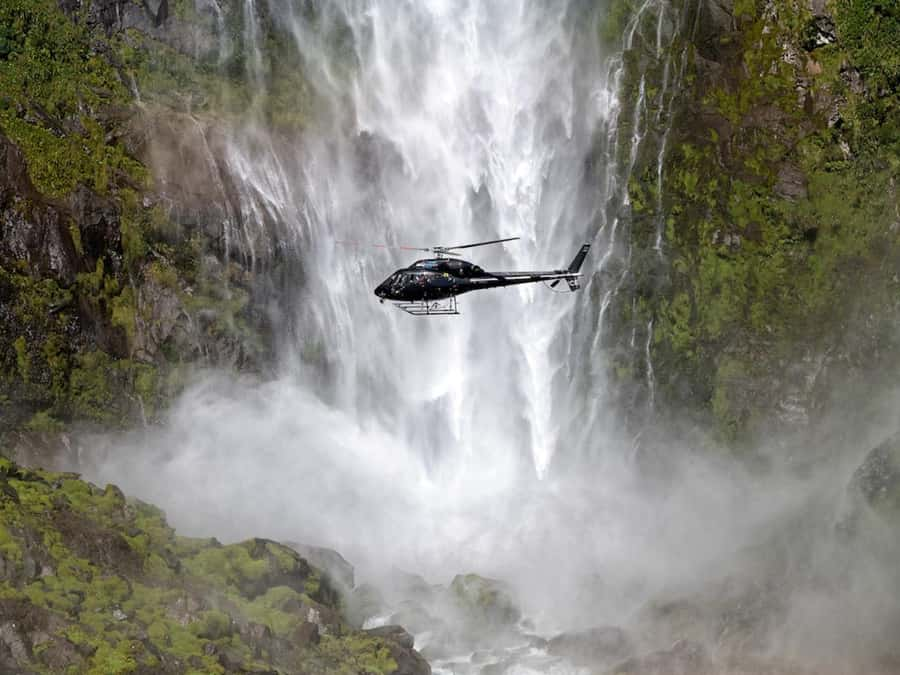
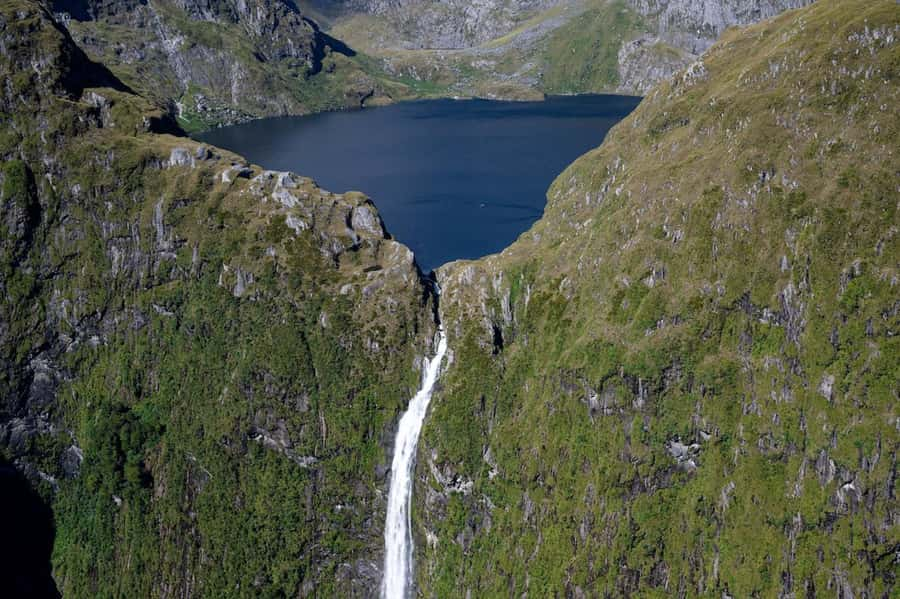
The route continues toward Lake Quill and Sutherland Falls. At 580 metres, Sutherland Falls is one of New Zealand’s great waterfalls and is reached on the Milford Track. From above, the scale is easier to grasp than it is from ground level. The waterfall drops through a huge mountain setting, with the surrounding rock and forest making the water look even more slender and distant.
You do not land at Sutherland Falls. The helicopter passes over or near the waterfall as part of the aerial sightseeing. That distinction is worth knowing if you are hoping to stand at its base. This tour gives you the high view, along with the advantage of seeing the falls in relation to the surrounding valleys.
The Milford Track connection adds useful context. The track is famous for its multi-day walk, but this flight lets you see a remote section of that country without committing several days to a trek. You still miss the slow rhythm of walking, but you gain views of terrain that would otherwise require much more time and planning.
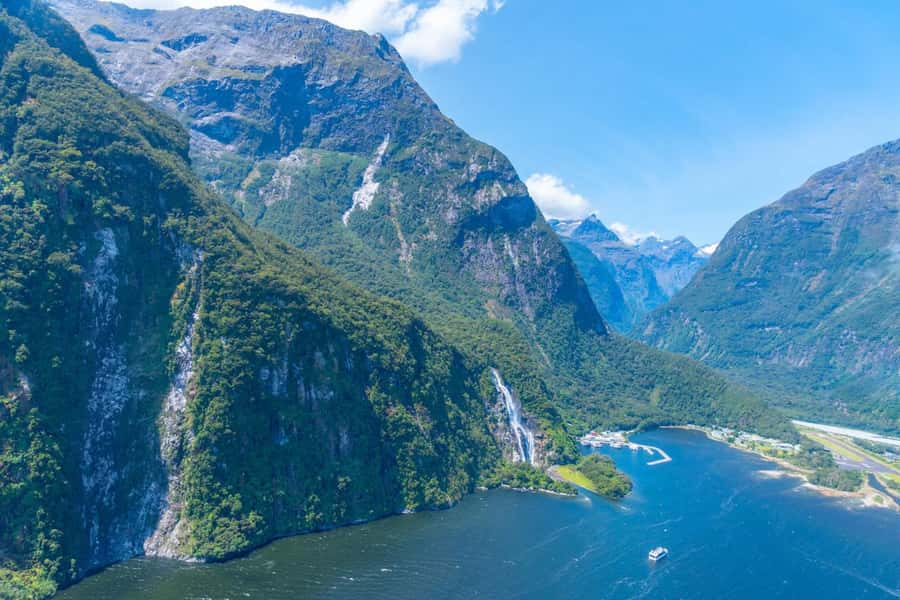
The helicopter then heads toward Milford Sound. The approach is one of the strongest parts of the trip. You see steep cliffs, old forest, narrow valleys, and water cutting into the mountains. From the air, Milford Sound reads as part of a much larger system of fiords and ridges rather than a single scenic viewpoint.
A Milford Sound landing with a high view
The Milford Sound portion includes sightseeing and a landing. The stop lasts about 10 minutes, giving you a short chance to get out and take photographs in this famous corner of Fiordland.
Milford Sound is often visited by road or boat. A helicopter landing changes the scale of the place. Instead of approaching through one route at water level, you arrive from above and see the fiord framed by cliffs and forests. You also get a sense of how isolated the area is.
This landing is brief, so keep your camera ready and listen closely to the guide’s instructions. You may have only a small window to take in the view before returning to the helicopter. The English-speaking guide explains the route during the flight. Matt is one guide associated with this experience, and his style is described as personable and fun, with useful information along the way.
The Milford Sound stop is also where weather can have the biggest effect. Mountains can hold cloud on one side while conditions remain clear elsewhere. If the route toward Milford Sound is not safe, the company may shorten or alter the flight. That is disappointing when you have paid for a specific itinerary, but it is the correct tradeoff in this kind of terrain.
Same rotors, a different route:
- Franz Josef: 35min Helicopter Trip over Two Glaciers
★ 4.8 · 451 reviews - Mount Cook: Scenic Helicopter Flight with Alpine Landing
★ 4.8 · 442 reviews - Franz Josef & Fox Glaciers Helicopter Flight & Snow Landing
★ 4.7 · 342 reviews - Franz Josef: 2.5 Hour Glacier Hike with Helicopter Transfer
★ 4.7 · 322 reviews
Mount Tutoko and the return toward Glenorchy
After Milford Sound, the helicopter turns back toward Glenorchy and passes over or near Mount Tutoko. At 2,723 metres, Mount Tutoko is the highest peak in Fiordland National Park. It gives the return flight another strong point of focus rather than making the trip feel like a simple reversal of the outward route.
The return also lets you see the mountains from a different direction. Valleys that looked closed in on the way out may open toward wider basins on the way back. The pilot’s route and the day’s visibility will determine how much of the peak and surrounding country you see.
This is a good reason to avoid treating the flight as only a transport ride to Earnslaw Burn. The aerial part between landings is a major part of the experience. Keep looking out rather than focusing only on photographs. A camera can record the scene, but it will not show the full change in scale as the helicopter moves over ridges and into valleys.
Earnslaw Burn, the tour’s most unusual stop
The final landing is at Earnslaw Burn, an exclusive landing location for this flight. This is likely to be the most distinctive stop because it feels less like a famous landmark and more like a remote alpine basin.
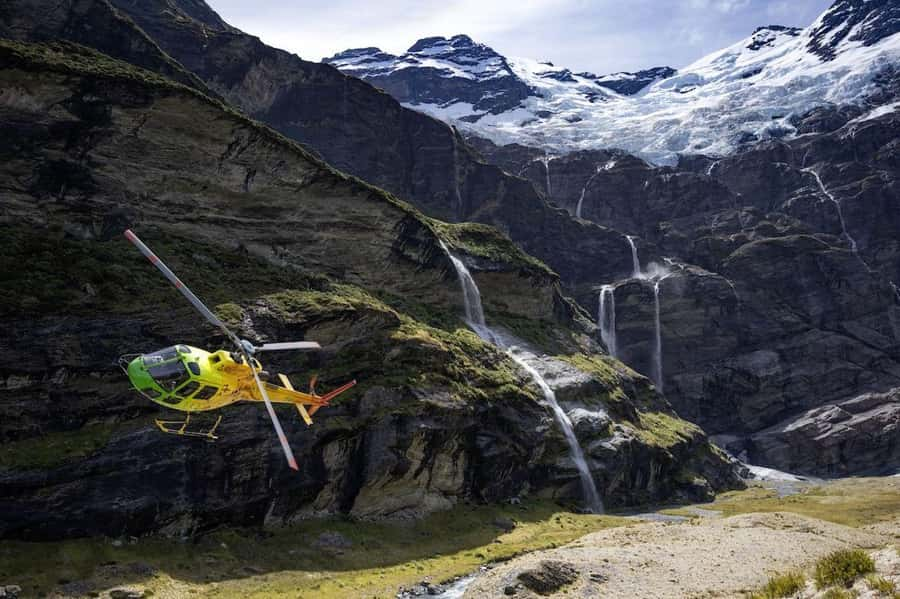
The valley is known for a hanging glacier, blue ice, and waterfalls that spill down into the basin. You get about 20 minutes here, longer than at the other stops. That extra time gives you room to look around, take photographs, and appreciate the setting without rushing straight back into the helicopter.
The character of Earnslaw Burn changes with the season. From September through March, spring and summer meltwater usually bring more fast-flowing waterfalls. From June through August, the falls may be less forceful, but the glacier and valley often carry more snow. Winter can make the stop quieter and whiter, while warmer months bring more visible water movement.
Do not judge the stop only by the number of waterfalls. The glacier, basin, rock walls, and snow can make winter a special time to visit. At the same time, if your main aim is to see the strongest seasonal cascades, spring and summer offer the better chance.
The helicopter then returns to Glenorchy and lands at 35 Mull Street. With the aerial travel and three stops included, the full experience lasts two hours.
What $804 buys you
At $804 per person, this is an expensive excursion. You are paying for a helicopter, a pilot, fuel, specialist operations, and access to remote Fiordland locations. The price is easier to justify if you value time and reach more than a low-cost sightseeing outing.
A Milford Sound visit by road or boat can be less expensive, but it gives you a different experience. Road and boat trips keep you closer to the main access routes. This helicopter flight adds high alpine lakes, Sutherland Falls from the air, Mount Tutoko, and Earnslaw Burn, all within one two-hour trip.
The shared format helps. A private flight would cost more, while sharing the helicopter with 6 to 9 passengers makes this version more attainable for some visitors. Still, you should book it only if the aerial views and landings are a top priority. If you mainly want to see Milford Sound, a ground-based visit may offer better value.
There is also a practical value in avoiding a long day of road travel. You do not spend hours driving toward Milford Sound and back. Instead, you reach several major sights in a compact window, with actual landings rather than a nonstop flight.
Seats, weights, weather, and what to bring
Seats are assigned according to weight and balance requirements. You cannot guarantee a particular position in the helicopter. Accurate individual weights are required when you book, and a major difference between the stated and actual weight can lead to changes in the passenger list or extra charges.
That may feel less flexible than choosing a window seat on a plane, but aircraft balance is a safety issue. If photography matters to you, accept that your view may not be the same for the whole flight. Every passenger should get meaningful views, but a specific seat is not promised.
Weather is the other major consideration. Flights depend on safe conditions, and the route or landing locations can be changed or rescheduled. Fiordland weather can vary across short distances, so one section of the route may be clear while another is covered by cloud.
A recent departure had bad weather on the far side of the mountains, preventing the full planned route. The staff arranged a shorter flight at short notice instead. That shows the practical side of booking a helicopter tour: you need to accept that safety and weather come before a fixed sightseeing list.
Bring:
- Warm clothing
- Comfortable shoes
- A camera
The clothing advice is not filler. Alpine landings can feel cold even when Glenorchy is mild. Comfortable shoes help on uneven ground around the landing sites.
The activity is wheelchair accessible, but the provided information does not describe the exact transfer process into the helicopter or the ground conditions at every landing. If you need specific assistance, confirm those details before booking.
Who will get the most from this flight
This is best for you if you want to see a lot of Fiordland in a short time, especially if you do not plan to hike the Milford Track or spend a full day reaching Milford Sound by road.
It also suits photographers, provided you accept the seating limits and changing weather. The combination of alpine lakes, waterfalls, fiord cliffs, glaciers, and seasonal cascades gives you a wider range of subjects than a flight that simply circles one landmark.
The tour may be less suitable if you dislike uncertain plans. Three landings are included, but weather can change their location or cancel part of the route. The price is also high enough that you should be comfortable with the possibility of a shorter flight if conditions close part of Fiordland.
Families and visitors with limited walking time may find the format useful. You see remote country without a demanding hike, and the ground stops are short. On the other hand, anyone wanting a long, quiet walk in the mountains will find these brief landings too limited.
Should you book the Glenorchy helicopter tour?
Book it if you want the broadest possible look at Fiordland in two hours and you are excited by the idea of standing at Earnslaw Burn, not just photographing Milford Sound from a distance. The three landings make this more than a scenic loop, and Sutherland Falls, Mount Tutoko, and the alpine lakes give the flight real variety.
Think twice if $804 would strain your budget or if a fixed route is essential. Weather can change the plan, seats are assigned, and the experience is shared with other passengers.
For the right person, the strongest reason to book is the combination of access and time. You see places that are hard to reach, step out in three very different settings, and return to Glenorchy after two hours in the air. Just bring warm clothes, keep your plans flexible, and treat the scenery, rather than any single promised viewpoint, as the main event.
FAQ
Where does the helicopter tour start and finish?
The tour starts and returns to 35 Mull Street in Glenorchy, on New Zealand’s South Island.
How long does the experience last?
The helicopter tour lasts two hours.
How many landings are included?
Three landings are included: one at an alpine lake, one at Milford Sound, and one at the exclusive Earnslaw Burn location.
Will the helicopter land at Sutherland Falls?
No. The route includes aerial views of Sutherland Falls, which is 580 metres high, but the listed landings are at an alpine lake, Milford Sound, and Earnslaw Burn.
What can I see at Earnslaw Burn?
Earnslaw Burn has a hanging glacier, blue ice, a glacier-fed basin, and seasonal waterfalls. Waterfalls are generally faster flowing from September through March, while winter usually brings more snow on the glacier and in the valley.
How many passengers share the helicopter?
You may be flying with 6 to 9 passengers.
Can I choose my seat?
No specific seating position can be guaranteed. Seats are assigned to meet the aircraft’s weight and balance requirements.
Is the tour affected by weather?
Yes. Flights depend on weather and operational conditions. The route and landing locations may be adjusted or rescheduled for safety.
What should I bring?
Bring warm clothing, comfortable shoes, and a camera.
Is the tour wheelchair accessible?
Yes, the activity is listed as wheelchair accessible. The supplied information does not provide details about transfers into the helicopter or conditions at each landing, so confirm any specific assistance needs before booking.
Fresh on the helipad around New Zealand
- Wellington: Scenic South Coast Discovery Helicopter Flight★ 4.8 · 4 reviews
- Wanaka: Scenic Helicopter Flight with Glacier Experience★ 5.0 · 42 reviews
- Wānaka: Scenic Helicopter Flight Wānaka Max★ 5.0 · 11 reviews
- Wānaka: Heli Siberia Max – Helicopter Flight, Hike, Jet Boat★ 5.0 · 3 reviews
- Wānaka: Helicopter Scenic Flight Wānaka Experience★ 5.0 · 4 reviews
- Wānaka: Heli Siberia – Helicopter Flight, Hike & Jet Boat★ 4.6 · 4 reviews
- 15-Minute Wellington Harbour Helicopter Flight★ 4.0 · 9 reviews
- Wharekauhau Heli-lunch from Wellington★ 4.5 · 6 reviews
New Zealand Helicopter Tours, compared.
Franz Josef Glacier: Helicopter Flight & Alpine Landing
Read our review →
Franz Josef: 35min Helicopter Trip over Two Glaciers
Read our review →
Mount Cook: Scenic Helicopter Flight with Alpine Landing
Read our review →
Franz Josef & Fox Glaciers Helicopter Flight & Snow Landing
Read our review →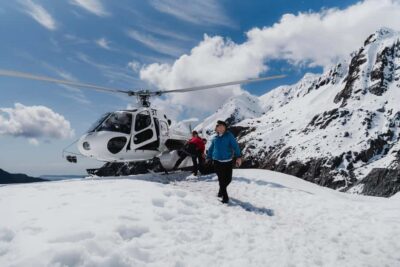
Franz Josef: 2.5 Hour Glacier Hike with Helicopter Transfer
Read our review →