
Review · NEW ZEALAND
Mount Cook: 3-Hour Tasman Glacier Helicopter Ride and Hike
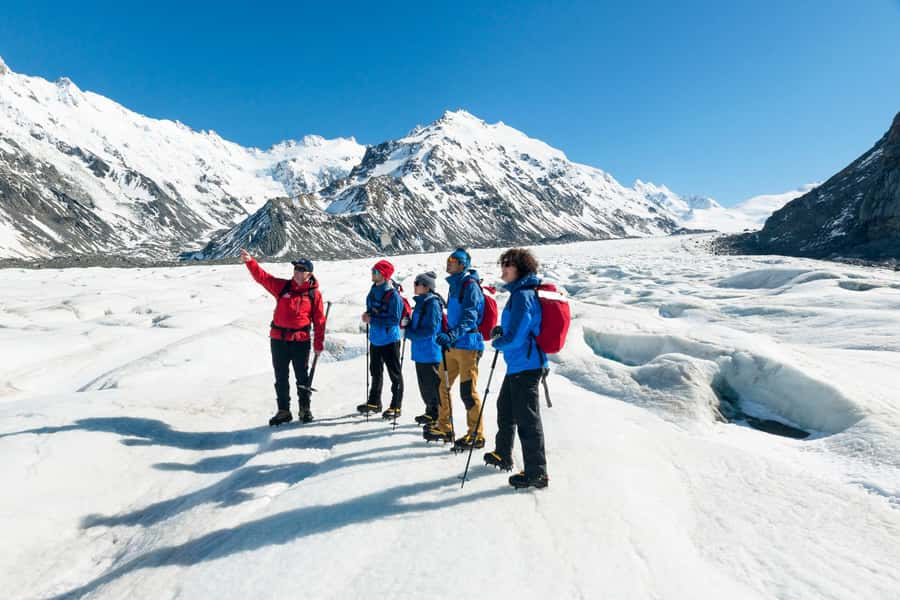
The helicopter lands you on Tasman Glacier, where the real adventure begins on foot. You follow a guide across changing blue ice, squeeze through moulins and tunnels, and may step into a newly formed cave before flying back beneath Aoraki/Mount Cook. It is a rare mix of flightseeing and hands-on glacier travel.
I like two things here: the glacier time is generous, with up to two hours on the ice, and the small group is limited to 11 people. Guides such as Hunter, Anna, Tori, and Kristen are praised for clear safety advice, strong local knowledge, and taking photos for solo visitors. The main catch is the weather. Clear windows can be brief, and a cancellation or shortened route is possible.
Key points at a glance
- Land on Tasman Glacier by helicopter: The flight is not just transport. It gives you a high view of the glacier, surrounding ice fields, and Aoraki/Mount Cook.
- Walk through changing blue ice: Your guide may lead you through moulins, caves, tunnels, and crevasses that have formed or shifted since earlier trips.
- Spend up to two hours on the glacier: This is a proper glacier outing, not simply a quick landing for photographs.
- Gear is supplied: Leather boots, wool socks, crampons, a walking pole, and a waterproof jacket are included.
- Small groups make a difference: With no more than 11 participants, the guide can help with footing, questions, and photographs.
- Weather controls the day: The 8:45 AM and 10:45 AM departures give you a choice, but neither guarantees a flight.
Why this Tasman Glacier heli-hike is special
Tasman Glacier is New Zealand’s largest glacier, but you do not experience it from a distant lookout. The helicopter carries you into a remote section of the ice, far from an ordinary walking track. You then put on crampons and travel across the glacier under the care of a trained guide.
That change from aircraft to ice is the heart of the trip. One moment you are looking down through a helicopter window at folds of snow and rock. Soon after, you are testing each step on the glacier, listening to the ice, and looking into a blue opening that was not there in quite the same form before.
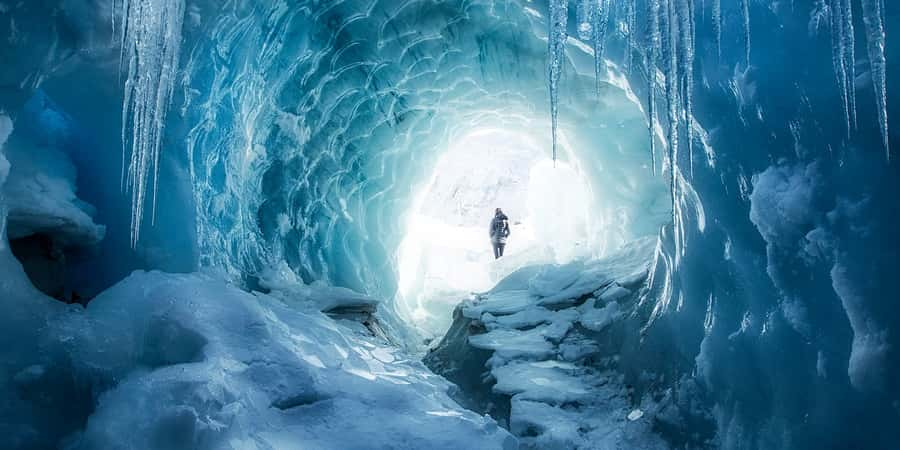
The ice is always shifting. That means the route is not a fixed attraction with the same cave waiting every morning. Your guide finds safe and interesting features on the day, then cuts or improves steps where needed. You might see a moulin, an ice tunnel, a blue cave, or a crevasse. Some outings have included crawling through ice formations and stepping into a moulin, while others have focused on caves beside waterfalls or freshly formed tunnels.
This changing route is a strength, though it also means you should not book with one exact cave in mind. Glacier conditions decide what you see.
More Glacier Helicopter Tours in New Zealand
- Franz Josef Glacier: Helicopter Flight & Alpine Landing
★ 4.8 · 619 reviews - Franz Josef Glacier Heli-Hike
★ 4.5 · 618 reviews - Heli Hike Fox Glacier
★ 5.0 · 563 reviews
Starting at Mount Cook Airport
Meet inside the Mount Cook Airport terminal at the Mt Cook Glacier Guiding desk. The airport is the practical base for both helicopter flights, and the staff use the opening period to prepare you properly.
The safety briefing takes about 45 minutes. That may feel long when you are eager to fly, but it matters. You learn how the flight and glacier sections work, what to do around the helicopter, and how to use the equipment. The briefing also gives the guides a chance to explain the conditions and check that everyone is ready for a cold, uneven walking surface.
Allow time to get dressed and fitted out. The operator supplies leather boots, wool socks, crampons, a walking pole, and a waterproof jacket. Some people have also been provided with extra outer layers or backpacks when needed. You should still bring warm clothing, sunglasses, and a hat. Sunglasses are especially useful on bright ice, while a hat helps with the cold from the wind and helicopter flight.
Food and drinks are not included, so eat beforehand and carry anything you need within the operator’s rules. The tour lasts three hours, but this is not the place to depend on a café stop halfway through.
The first 15-minute helicopter flight
The first scenic flight takes about 15 minutes. It carries you from Mount Cook Airport to a remote landing point on Tasman Glacier, but it also gives you the first big view of the day.
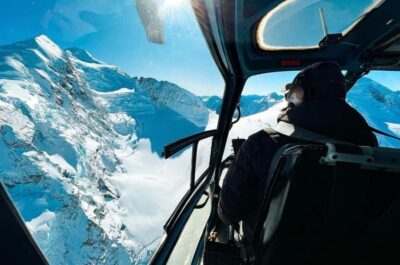
The flight is a fine reason to choose this outing over a ground-based glacier walk. You see the scale of the ice from above, along with mountain ridges and the setting around Aoraki/Mount Cook. Pilots point out features on the route, and the return flight provides another angle rather than simply repeating the outward journey.
Group arrangements vary with the helicopter, but the experience is designed so participants get a window view. One person noted that everyone in their group had a window seat. Another pointed out that the front seats may offer an even better view at an added cost, if that option is available when you book. Do not assume you will have the front row, but you should have a useful view from the aircraft.
Flight time is short, so keep your camera ready before takeoff. You may get clear views of Aoraki/Mount Cook, other glaciers, and the broad sweep of the ice below. The smoothness of the flight depends on the weather, but the pilots are repeatedly praised for making passengers feel safe and for pointing out features along the way.
Two hours on Tasman Glacier
After landing, your guide helps you prepare for the ice. Crampons give your boots grip, and the walking pole adds stability. Your guide may cut steps into the glacier as the group moves, especially where the surface is steep or awkward.
This is not a technical mountaineering trip, but it is not an ordinary stroll either. You need to be comfortable walking on uneven ground, following instructions, and adjusting your pace to the group. The tour is not recommended for people with limited mobility and is not suitable for children under nine.
The route can include open blue ice, ridges, holes, tunnels, and other formations. You may crawl through a low passage or step down into a moulin, a vertical shaft formed by meltwater. Some people have seen blue caves and ice tunnels, while others have walked beside a glacial stream or explored new formations near a waterfall.
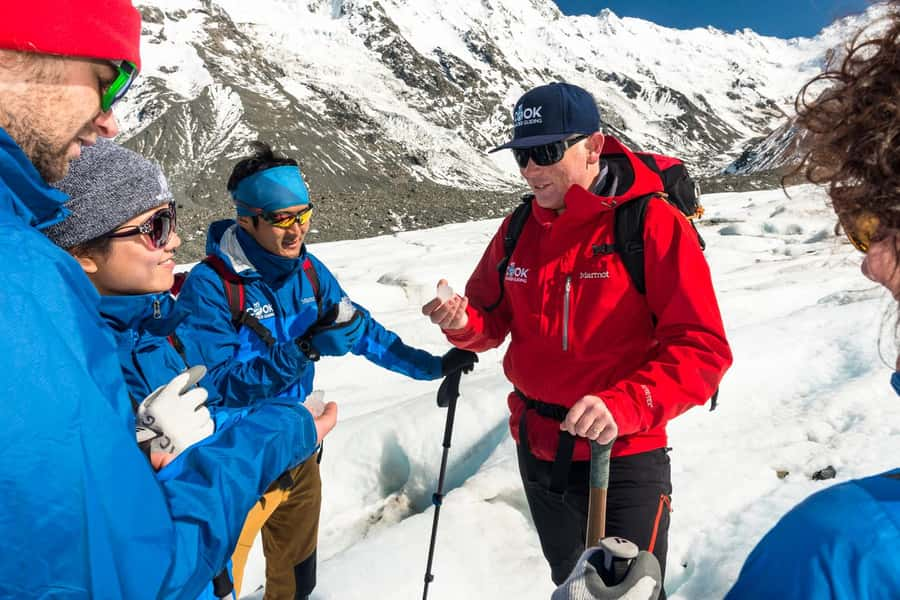
The blue color can be striking. Light passing through dense ice removes much of the red end of the spectrum, leaving the cold blue tones that make glacier caves so memorable. You do not need a science lecture to appreciate it, but a good guide can explain how the ice forms, shifts, and melts as you go.
The glacier also has its own sounds. Ice can crack and groan in the quiet, a reminder that this is moving terrain rather than a frozen museum display. You might see fresh cracks or changing passages. The guide decides what is safe, and the route can change even during the season.
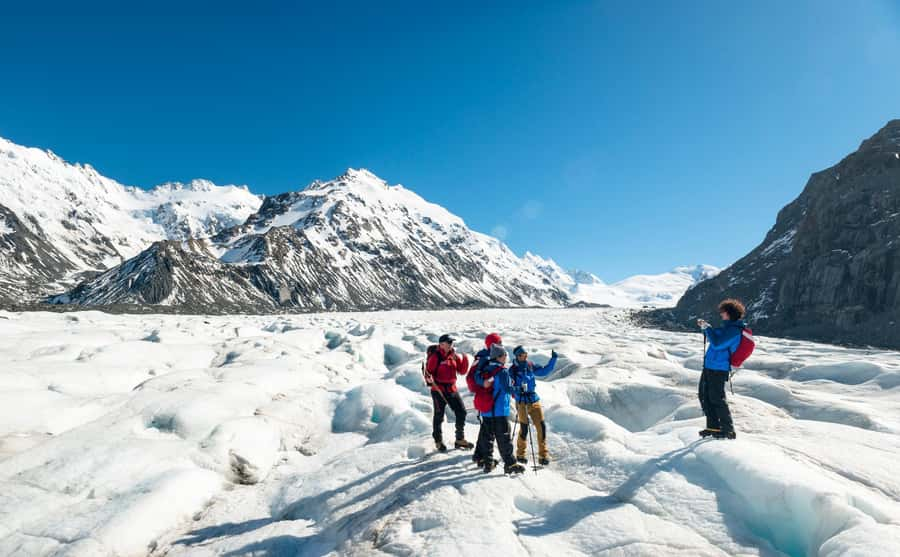
Up to two hours on the ice is a useful amount of time. It allows room for walking, photographs, questions, and pauses to look around. The exact time depends on weather and conditions. One practical point is worth noting: stay close enough to hear the guide. A small group can spread out around a photo stop, and one person found that being separated from the guide meant missing some of the explanation.
Same rotors, a different route:
- Franz Josef: 35min Helicopter Trip over Two Glaciers
★ 4.8 · 451 reviews - Mount Cook: Scenic Helicopter Flight with Alpine Landing
★ 4.8 · 442 reviews - Franz Josef & Fox Glaciers Helicopter Flight & Snow Landing
★ 4.7 · 342 reviews - Franz Josef: 2.5 Hour Glacier Hike with Helicopter Transfer
★ 4.7 · 322 reviews
The guides make the glacier manageable
The guide is central to this activity. The helicopter gets you there, but the guide turns a cold landing into an understandable and enjoyable walk.
Hunter has been praised for answering questions about the terrain and geological past, taking group photos, and helping solo visitors get good pictures. Anna has been noted for adjusting to different abilities and showing people ice caves and tunnels. Tori and Kristen have received similar praise for clear introductions, calm care, and friendly help on the ice.
You should expect practical instruction rather than a lecture all day. Your guide explains how to use the crampons, where to step, and when to stay together. At the same time, you can ask about the glacier, nearby mountains, avalanches, ice caves, and meltwater. The best outings balance safety with curiosity.
Guides also help with photographs. If you are traveling alone, say so early. Guides have taken photos and videos for solo participants, and several have suggested good spots for group pictures. That is a small service, but it matters when you have paid for a major experience and do not want every photograph to be a selfie.
Weather is part of the experience
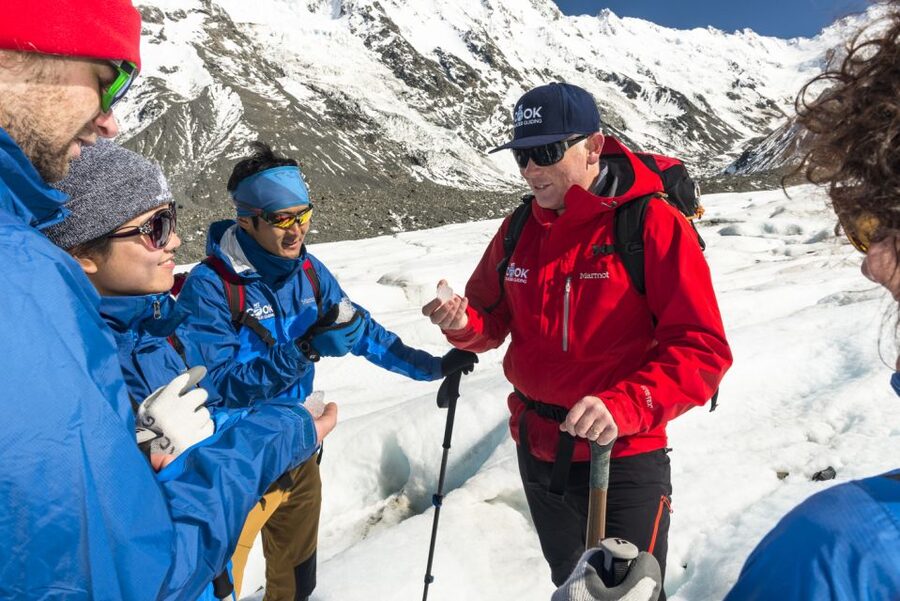
A helicopter trip to a glacier cannot run on a fixed schedule in the same way as a museum visit. Wind, cloud, visibility, and conditions on the ice all matter. Even summer can bring quick changes, and a clear-weather window may open or close with little warning.
You can choose between an 8:45 AM and a 10:45 AM start. The earlier departure may suit you if you want the rest of the day free, while the later time may fit better with your plans around Mount Cook. Neither slot is automatically safer or clearer. Check availability and keep some flexibility in your schedule.
If weather stops the trip, the operator may offer another departure later the same day or the next day when space allows. One booking was moved conveniently after a first-day cancellation. You can also cancel up to 24 hours ahead for a full refund under the stated policy.
The best advice is simple: do not schedule this on the final hour of your New Zealand holiday. Leave room for a change of day, particularly if the glacier flight is one of the main reasons for visiting Mount Cook.
Is $537 a fair price?
At $537 per person, this is expensive. You are paying for two helicopter flights, a small-group guide, specialist equipment, and access to a remote section of the glacier. It is not a cheap add-on to a day of sightseeing.
The value depends on what you want. If you only want an aerial view of Aoraki/Mount Cook, a flight-only option may be better suited to your budget. If you want to walk on the ice, explore formations, and have a guide manage the equipment and route, this combines several costly elements into one three-hour outing.
I find the price easier to justify because the glacier portion can last up to two hours. You are not landing, taking a few photographs, and immediately flying out. The included boots, socks, crampons, walking pole, and waterproof jacket also reduce the need to rent or buy specialist gear.
Still, the price does not remove the weather risk. A canceled outing can be rescheduled under the available options, but you should not expect guaranteed cave access or a particular route. Value is strongest when you have flexibility and when walking on the glacier matters as much as seeing it from the air.
Who should book this experience?
You should consider it if you want an active Mount Cook experience and can walk on uneven ice for an extended period. It suits couples, families with children aged nine and older, solo visitors, and small groups who want both photographs and a real guide-led outing.
It is also a good fit if you enjoy seeing natural features that are not permanent. One morning may bring an ice cave, another may offer a moulin, a fresh tunnel, a stream, or a view of an avalanche on a distant slope. The changing route is part of the appeal.
You should think twice if you have limited mobility, dislike cold conditions, or want a relaxed sightseeing flight with no walking. The guide can help with technique and pacing, but this remains an ice walk. You also need to follow safety instructions closely. One participant described a group where people ignored directions and slowed the outing, which is a reminder that everyone’s behavior affects the whole team.
Small details that improve the day
Wear warm layers that you can adjust. The helicopter ride, open glacier, and waiting periods can feel different from one another, and you will be more comfortable if you can add or remove clothing.
Bring sunglasses and a hat, even if the morning looks cloudy. The supplied waterproof jacket helps, but you should not treat it as a full substitute for warm clothing.
Keep your camera secure and accessible. You may only stop briefly at some features, and blue ice can look different from every angle. A phone with a simple strap or secure pocket is more useful than a camera buried under several layers.
Listen when the guide calls the group together. It is easy to focus on a cave or photograph and miss instructions. Staying close also means you hear more of the explanation about the ice.
If you are alone, tell the guide you would like photographs. Hunter, Anna, Tori, and other guides have been especially helpful with this. If you are celebrating something special, mention it before the walk, since guides may be able to help with a group photograph or a good viewpoint.
Should you book the Tasman Glacier heli-hike?
Book it if you want the full combination: helicopter views of Aoraki/Mount Cook, a guided walk on Tasman Glacier, and time among blue ice formations. The price is high, but the included equipment, two flights, small group, and long glacier section make it a serious experience rather than a quick scenic ride.
Skip it if your schedule cannot absorb a weather change, if you are uncomfortable on uneven ice, or if the flight itself is your only priority. For the right person, this is one of the most memorable ways to meet Mount Cook: not just by looking at the glacier from a distance, but by standing on it and seeing how quickly it changes.
FAQ
Where does the Mount Cook heli-hike begin?
The meeting point is inside the terminal at Mount Cook Airport. Look for the Mt Cook Glacier Guiding desk.
How long does the experience take?
The full activity lasts three hours. This includes a 45-minute safety briefing, two helicopter flights of about 15 minutes each, up to two hours on Tasman Glacier, and a short break period.
What equipment is included?
Leather boots, woolen socks, crampons, a walking pole, and a waterproof jacket are included. You should also bring warm clothing, sunglasses, and a hat.
Can children join the tour?
Children under nine cannot join this experience. The activity is also not suitable for people with mobility impairments.
Is the tour affected by weather?
Yes. The trip is weather dependent, and conditions can affect whether the helicopter flies or how much time you spend on the glacier.
What cancellation terms apply?
You can cancel up to 24 hours before the activity for a full refund. The reserve-now, pay-later option lets you book without paying immediately.
More Three-Hour Outings around New Zealand
- Fox Glacier: Up to 3 Hours Hike with Helicopter Transfer
★ 4.9 · 309 reviews - Mount Cook: 3 Hour Heli Hike to the Tasman Glacier
★ 4.7 · 218 reviews - Mount Cook: 3-Hour Tasman Glacier Heli-Hike
★ 4.5 · 29 reviews - 3-Hour Hunter Valley Scenic Helicopter Tour Including 3-Course Lunch from Cessnock
★ 5.0 · 52 reviews
Fresh on the helipad around New Zealand
- Wellington: Scenic South Coast Discovery Helicopter Flight★ 4.8 · 4 reviews
- Wanaka: Scenic Helicopter Flight with Glacier Experience★ 5.0 · 42 reviews
- Wānaka: Scenic Helicopter Flight Wānaka Max★ 5.0 · 11 reviews
- Wānaka: Heli Siberia Max – Helicopter Flight, Hike, Jet Boat★ 5.0 · 3 reviews
- Wānaka: Helicopter Scenic Flight Wānaka Experience★ 5.0 · 4 reviews
- Wānaka: Heli Siberia – Helicopter Flight, Hike & Jet Boat★ 4.6 · 4 reviews
- 15-Minute Wellington Harbour Helicopter Flight★ 4.0 · 9 reviews
- Wharekauhau Heli-lunch from Wellington★ 4.5 · 6 reviews
New Zealand Helicopter Tours, compared.
Franz Josef Glacier: Helicopter Flight & Alpine Landing
Read our review →
Franz Josef: 35min Helicopter Trip over Two Glaciers
Read our review →
Mount Cook: Scenic Helicopter Flight with Alpine Landing
Read our review →
Franz Josef & Fox Glaciers Helicopter Flight & Snow Landing
Read our review →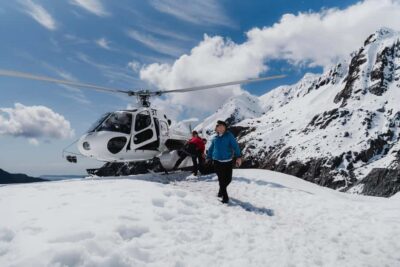
Franz Josef: 2.5 Hour Glacier Hike with Helicopter Transfer
Read our review →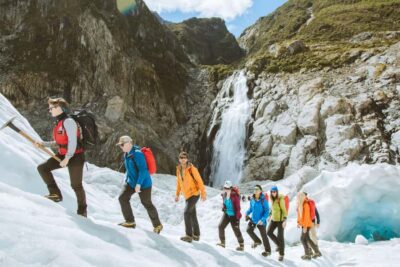
Fox Glacier: Up to 3 Hours Hike with Helicopter Transfer
Read our review →Other lists this flight appears in