

Review · BIG ISLAND
Big Island: Kilauea Volcano Eruption Heli Tour – Door On/Off
Kilauea is best understood from the air. From a helicopter, you can see the sharp contrast between black lava fields and green rainforest, then watch for craters, steam, and active lava when volcanic conditions allow. The 90-minute flight also sweeps along the Kona coast, adding historic sites and coffee country to the view.
I like the choice between doors-on and doors-off seating, plus the pilot’s ability to adjust the flight for better views. The main drawback is the price: $1,180 per person is a serious splurge, and a doors-off booking does not guarantee that your seat will be next to an open door.
Key points to know before booking
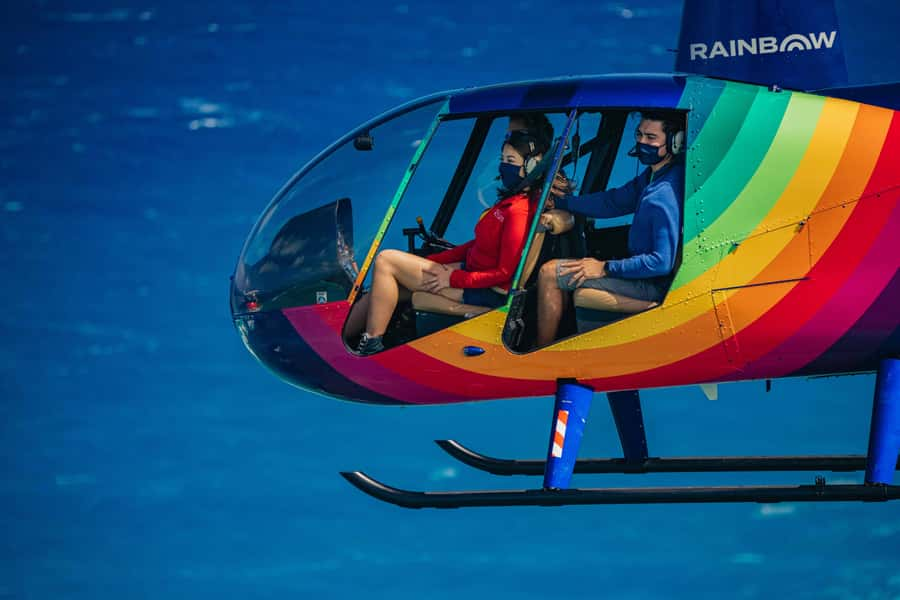
- Kilauea from 4,091 feet: See the youngest and most active of the Big Island’s five volcanoes from a clear aerial angle.
- Doors on or off: Doors-off flights bring more wind and direct sightlines, but seat placement beside the open door is not guaranteed.
- A full 90 minutes in the air: The route includes Kilauea, rainforests, lava fields, and the Kona coast.
- Live English commentary: Your pilot provides context as you fly, helping connect the volcanic scenery with Hawaiian geology and culture.
- Arrive one hour early: Check in at Big Island Jet Center, park south of the brown building, and complete the required safety briefing.
- High price, special occasion value: At $1,180 per person, this makes the most sense if seeing Kilauea from above is a top priority.
Kilauea from the helicopter seat
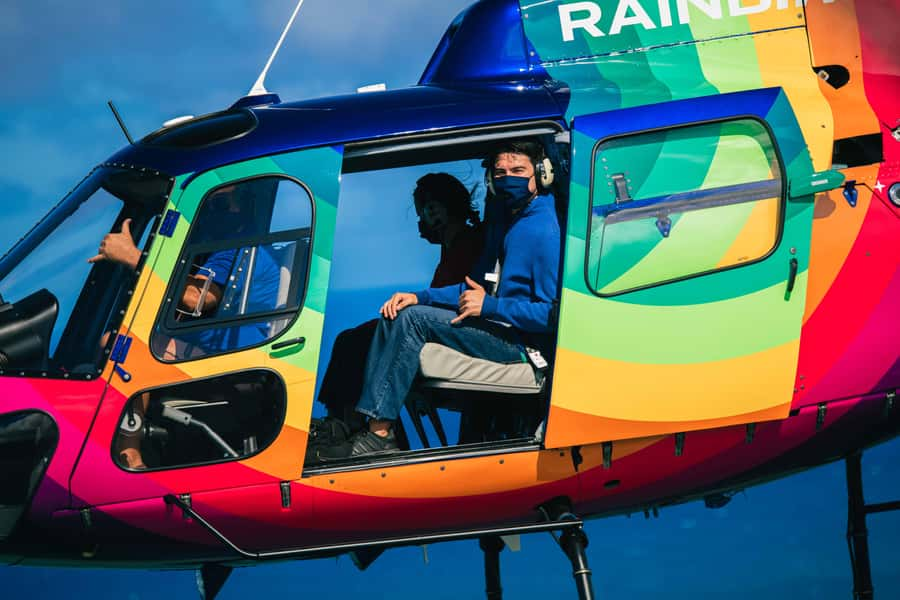
The central event here is Kilauea, not simply a scenic flight around Hawaii. This volcano is about 300,000 to 600,000 years old, formed as the Pacific tectonic plate moved across the Hawaiian hot spot. It is the youngest of the Big Island’s five volcanoes and one of the most active volcanic systems on Earth.
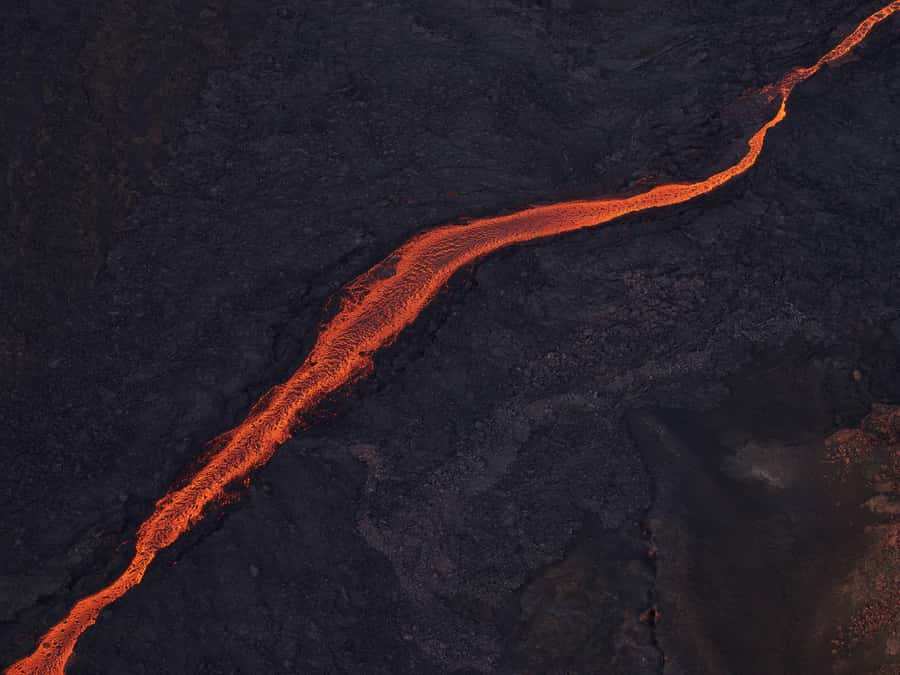
From above, you can take in the scale of the volcano in a way that is difficult from the ground. Rainforest surrounds portions of the mountain, while newer lava flows create broad black areas that sharply interrupt the green. Craters and volcanic scars show how quickly the island can change.
The tour information describes rivers of molten lava and lava flowing toward the ocean. That is the great prize when activity and visibility line up, but volcanic conditions are never fixed. You should book this for a close aerial view of Kilauea and its changing terrain, not as a guarantee of a particular lava display.
The area has seen more than 30 eruptions in the past six decades. That figure gives you a useful sense of the volcano’s character. Kilauea is not a dormant mountain being viewed like an old monument. It is an active force that keeps reshaping the ground.
The flight reaches an altitude of about 4,091 feet above sea level. That height gives you broad views without taking you so far away that the volcano becomes a tiny mark below. The helicopter’s low aerial perspective is the point: you can study the shapes of craters, the edges of lava fields, and the meeting of forest and rock.
More Volcano Flights around Big Island:
- Kona Coast Hualalai Volcano-60Min Helicopter Tour-Door Off or On
★ 5.0 · 16 reviews - Kailua-Kona: Hualalai Volcano Doors On/Off Helicopter Tour
★ 4.7 · 12 reviews - Kailua-Kona: Kohala, Volcanoes and Waterfall Helicopter Tour
★ 3.8 · 8 reviews
The 90-minute route and what you see
The exact order of sights can vary, but the experience combines the volcano with the western side of the island. That variety matters. A flight focused only on lava could become visually repetitive, while the Kona coast gives you a different color and texture between volcanic views.
Kona coast and coffee country
The tour includes the lush Kona coast, historic sites, and coffee farms. You will not be stopping to tour a farm or walk through a historic site, so think of this portion as an aerial introduction rather than a full cultural visit.
From the helicopter, the coast helps you understand the relationship between the island’s settled areas, farmland, and volcanic ground. The Kona coffee region is one of the Big Island’s best-known agricultural areas, and seeing it from above adds useful context to a later road trip or coffee visit.
This part also gives the flight breathing room. The view shifts from raw volcanic activity to cultivated land and coastal scenery. If you are spending several days on the island, the aerial overview can help you decide which areas deserve more time on the ground.
Rainforest and black lava fields
The contrast between rainforest and lava is one of the strongest visual features of the trip. Dense green growth surrounds stretches of dark volcanic rock, showing how quickly nature can begin reclaiming fresh ground.
The black fields are not just pretty scenery. They are evidence of recent eruptions and the continuing process that has built the Big Island. A ground-level road view can show you a lava field, but a helicopter gives you its full reach and shape.
You should also expect some of the most memorable views to be broad rather than dramatic. A crater may not be erupting at the moment you pass over it, yet its form still tells a story. The tour is valuable because it lets you see the volcanic system as a whole.
More Helicopter Tours around Big Island:
- Private Kona Coast Helicopter Tour: All Window Seats
★ 5.0 · 139 reviews - Big Island Spectacular Helicopter Tour
★ 5.0 · 116 reviews - Big Island: Discover Hilo Helicopter Tour
★ 4.5 · 110 reviews - Kohala Waterfalls & Valleys Helicopter Tour
★ 5.0 · 36 reviews
Craters, steam, and active lava
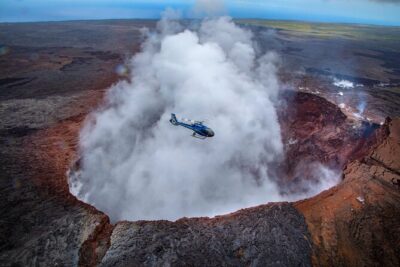
Kilauea’s craters are the main reason many people choose this flight. Depending on current activity, weather, and visibility, you might see steam rising from volcanic areas or molten lava moving through channels.
The helicopter’s vantage point can make these sights easier to understand than a distant viewpoint. You can see how a flow relates to nearby craters, forests, and the coastline. If lava reaches the sea, the meeting of hot rock and water may create steam, giving you one of the most striking scenes on the route.
Still, this is nature, not a stage show. Eruptions change. Clouds may block views. The most sensible expectation is a powerful aerial look at an active volcano, with the possibility of seeing lava or steam rather than a promise that either will appear.
Choosing doors-on or doors-off
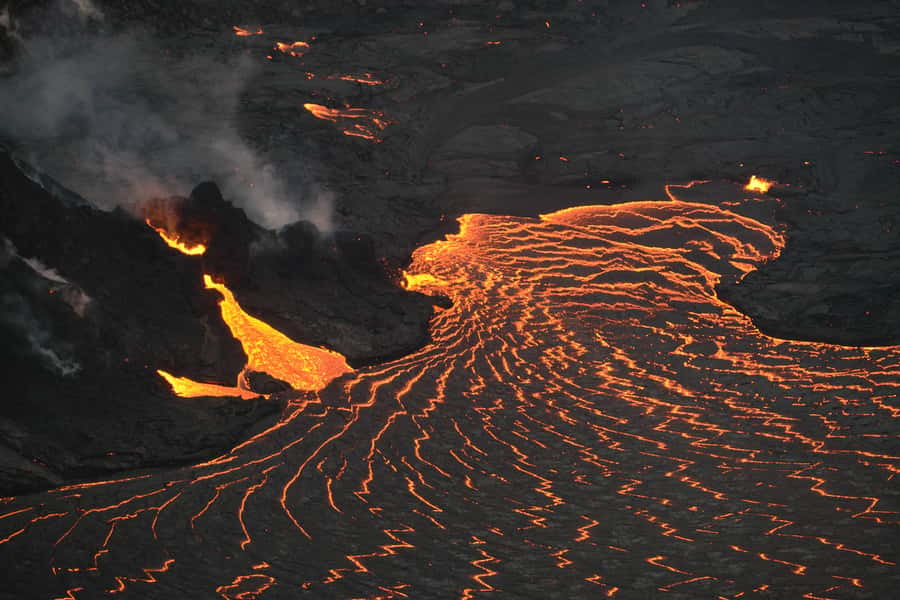
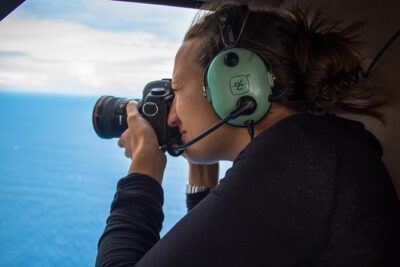
The doors-off option is the obvious choice for photographers and anyone who wants a more direct sensation of flight. There is less obstruction between you and the view, and the air feels far more immediate. You should expect wind, noise, and a cooler ride, which is why warm clothing and a jacket are listed as essential items.
There is an important catch: booking doors off does not mean you are guaranteed a seat directly beside an open door. Your position depends on the aircraft and seating arrangement. If an unobstructed side view is vital to you, ask about the seating setup before you book.
Weight rules also apply. In a Robinson R44 helicopter, only passengers weighing at least 80 pounds may fly with the door off. In an Airbus Astar, the minimum is 100 pounds. These are safety requirements, not optional preferences.
Doors-on seating is the calmer choice. You still get the helicopter view and live commentary, but you avoid the strongest wind and may find it easier to listen and take notes. For many people, the closed-door option offers the better balance of comfort and scenery.
Bring sunglasses for glare and a hair tie for the wind. Closed-toe shoes are required, and warm layers make sense even if the Kona coast feels hot at ground level. Cell phone straps and cases are provided, which is helpful when you are trying to take photographs in a moving aircraft.
What the live commentary adds
The pilot provides live English commentary during the flight. That matters because the volcanic sights can be hard to interpret without context. A crater, a fresh lava field, or a steaming area can look like an abstract shape from above.
The commentary connects what you see with Kilauea’s geology and ongoing activity. It also brings in the presence of Pele, the Hawaiian goddess of fire and volcanoes. You can treat that as an important cultural layer rather than a decorative story. The volcano has physical power, but it also carries deep meaning in Hawaiian tradition.
One recent booking described the pilot going the extra mile to find the best views. The pilot’s choices matter on a flight like this. If visibility changes or one area is less active, a good flight team can make the most of the conditions within the route and safety limits. No pilot name is provided, so you should not book expecting a particular guide.
Price, timing, and practical value
The cost is $1,180 per person. That places this firmly in the special-occasion category, especially for a couple or family. At that price, you are paying for the aircraft, pilot, operating costs, safety procedures, and the rare chance to see Kilauea from above, not just for a standard sightseeing loop.
I would consider the price worthwhile if Kilauea is one of your main reasons for visiting the Big Island and you want a view that ground stops cannot match. The 90-minute duration is generous for a helicopter flight, and the combination of volcano, coast, rainforest, and coffee country gives you more range than a short point-to-point flight.
I would skip it if you are mainly seeking an inexpensive way to see the island or if you can be satisfied with viewpoints and road travel. You should also think carefully about weather and volcanic conditions. The price does not guarantee molten lava, a clear crater, or a particular view.
Hotel pickup and drop-off are not included. You need to make your own way to Big Island Jet Center and arrive one hour before departure. Park in the large lot south of the brown building, then enter through the front doors of that building.
That early arrival is not a minor detail. You need time for check-in and the mandatory safety briefing. Plan your driving carefully, especially if you are crossing from another part of the island.
Passengers 24 months and older must purchase a full-fare seat. A weight and balance fee applies for each passenger weighing 250 pounds or more. For passengers between 250 and 275 pounds, the fee is 50 percent of the seat price. At 275 pounds or more, an additional seat purchase is required after booking.
The operator will not fly passengers who appear intoxicated, and the full charge still applies if service is refused for that reason. Scuba diving within 24 hours of the flight is also not allowed. These rules are easy to plan around, but you should check them before paying.
Who will enjoy this flight most
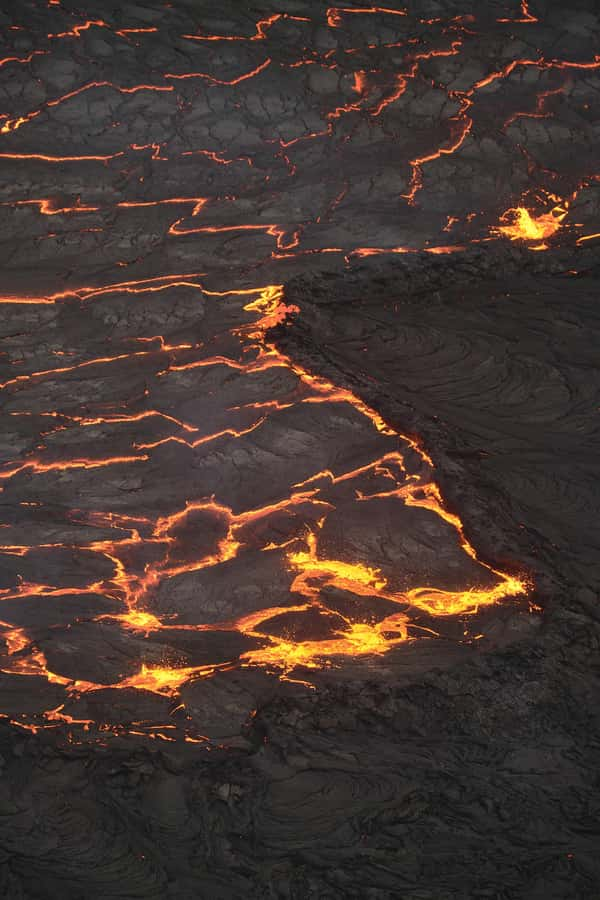
This tour suits you if you want a close aerial look at volcanic activity and are comfortable paying for a premium experience. It is especially strong for photographers, geology fans, first-time Big Island visitors, and anyone who wants to understand the scale of Kilauea.
The private group option may appeal to families or small groups that want more control over the experience. A shared flight can keep the cost from becoming even higher, but private availability and pricing should be checked when you book.
The helicopter is wheelchair accessible, which widens the audience, though you should confirm any specific mobility needs in advance. Children 24 months and older require their own full-fare seat.
I would not choose this as a casual add-on at the end of a packed day. The cost and early arrival time deserve planning. You want to be alert, properly dressed, and ready to focus on the view.
Should you book the Kilauea helicopter tour?
Book it if you want Kilauea to be the centerpiece of your Big Island visit and you accept that volcanic activity cannot be scheduled. The 90-minute flight, live commentary, and doors-off option give you a strong way to see both the volcano and the Kona side of the island.
Skip it if $1,180 would strain your budget or if you need guaranteed lava, a guaranteed open-door seat, or hotel transportation. For everyone else, this is a costly but distinctive way to see how fire, forest, coast, and farmland fit together on one young volcanic island.
FAQ
How long is the helicopter tour?
The flight lasts 90 minutes, or 1.5 hours.
Where do I meet the helicopter?
Go to the Big Island Jet Center building. Park in the large parking lot south of the brown building, then enter through the front doors.
How early should I arrive?
Arrive one hour before your scheduled departure for check-in and the mandatory safety briefing.
Can I choose doors-on or doors-off seating?
Yes. You can select a doors-on or doors-off option when booking. With doors off, your seat may not be directly next to an open door.
What are the minimum weights for doors-off flights?
In the Robinson R44, passengers must weigh at least 80 pounds for doors-off flight. In the Airbus Astar, the minimum is 100 pounds.
Can I fly after scuba diving?
No. You may not take part if you plan to scuba dive within 24 hours of the flight time.
Is the tour wheelchair accessible?
Yes, the activity is listed as wheelchair accessible. Hotel pickup and drop-off are not included.
Fresh on the helipad around Big Island
- Waikoloa: Big Island Spectacular Helicopter Tour★ 4.5 · 5 reviews
- Kona Coast Hualalai Volcano-60Min Helicopter Tour-Door Off or On★ 5.0 · 16 reviews
- Kohala Coast Volcano Waterfalls-90 Min Heli Tour-Doors Off or On★ 4.5 · 7 reviews
- Kohala Waterfalls with Exclusive Landing Helicopter Tour★ 5.0 · 19 reviews
- Kona Coastal Sights Unseen – 45Min Helicopter Tour – Doors Off/On★ 5.0 · 2 reviews
- Exclusive Landing with Spectacular Big Island Helicopter Tour★ 5.0 · 34 reviews
- Kailua-Kona: Kohala, Volcanoes and Waterfall Helicopter Tour★ 3.8 · 8 reviews
- From Waikoloa: Kohala Coast Helicopter Adventure★ 4.0 · 5 reviews
Big Island Helicopter Tours, compared.
Private Kona Coast Helicopter Tour: All Window Seats
Read our review →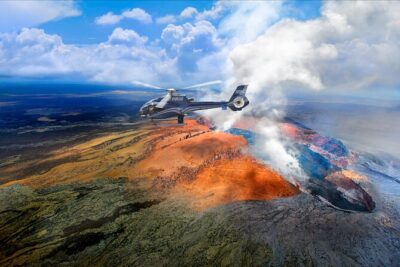

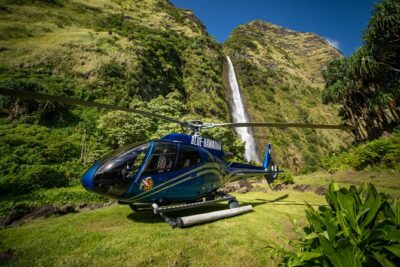
Exclusive Landing with Spectacular Big Island Helicopter Tour
Read our review →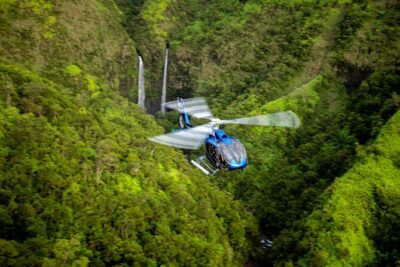
Kohala Waterfalls with Exclusive Landing Helicopter Tour
Read our review →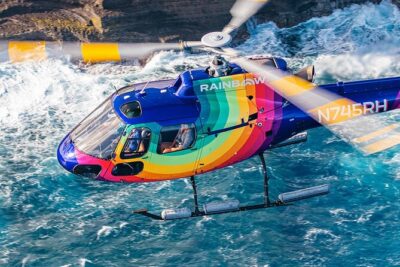
Kona Coast Hualalai Volcano-60Min Helicopter Tour-Door Off or On
Read our review →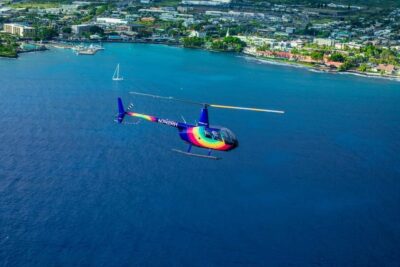
Kailua-Kona: Hualalai Volcano Doors On/Off Helicopter Tour
Read our review →Other lists this flight appears in