
Review · NEW ZEALAND
Helicopter White Island / Mount Tarawera ‘Volcanic Extremes’
Whakaari White Island and Mount Tarawera show two very different faces of volcanism in one compact flight. You look down on an active marine crater, then land on the dormant summit of Tarawera, where enormous craters recall New Zealand’s biggest eruption in living memory. I like the rare contrast and the fact that you actually land on Tarawera, rather than only circling it. The main drawback is the price: at $1,423.60 per person, this is a major splurge, and weather or minimum numbers can still cancel your flight.
I also like the small maximum group of 12, the clear headset communication, and the chance to see White Island from the air after access on the island itself was closed following the 2019 eruption. Plan carefully, though: the flight is short, the schedule depends on conditions, and passengers have a strict seat weight limit for comfort and balance.
Key points to know before you book
- Two volcanoes in one flight: See active Whakaari White Island from above, then land on dormant Mount Tarawera.
- A genuine summit landing: The Tarawera stop gives you time on the volcano itself, not just an aerial view.
- About 1 hour 25 minutes in the air: The full experience takes roughly 1 hour 45 minutes from Rotorua and returns to the same meeting point.
- Small group size: The aircraft carries no more than 12 people, which helps keep the guide’s commentary audible and the flight more personal.
- Strict passenger weight rule: The maximum per-seat limit is 297 pounds, or 135 kilograms, with a total passenger weight limit of 298 pounds listed for the tour.
- Weather matters: Poor conditions can lead to a new date or a full refund, so keep some flexibility in your Rotorua plans.
Two volcanoes, two very different stories
The strength of this trip is its contrast. Whakaari White Island is an active volcano sitting offshore in the Bay of Plenty. Mount Tarawera is inland, dormant, and shaped by a vast eruption in 1886.
You can understand the difference quickly from the air. Whakaari is a living volcanic system, with activity that can change from day to day. Mount Tarawera is quieter, but its broken summit, craters, and domes reveal the force of its past.
I like tours that give you a clear sense of place instead of treating scenery as a backdrop. This one connects Rotorua’s volcanic setting with two specific eruptions and two very different kinds of risk. The result is not just a scenic flight. You get a short lesson in how volcanoes can behave, from an active marine crater to a dormant inland massif.
The 2019 eruption of Whakaari also gives the flight a serious edge. Looking down on the island is visually striking, but it is important to remember that this remains an active volcano. The aerial visit lets you see it without treating the crater as an ordinary walking attraction.
More Volcano Flights around New Zealand:
- Mt Tarawera Helicopter Tour with Volcano Landing
★ 5.0 · 40 reviews - Mount Tarawera Volcanic Adventure by Helicopter
★ 5.0 · 11 reviews - Auckland: 20min Helicopter scenic flight – City & Volcanoes
★ 4.9 · 8 reviews
Leaving Rotorua for Whakaari White Island
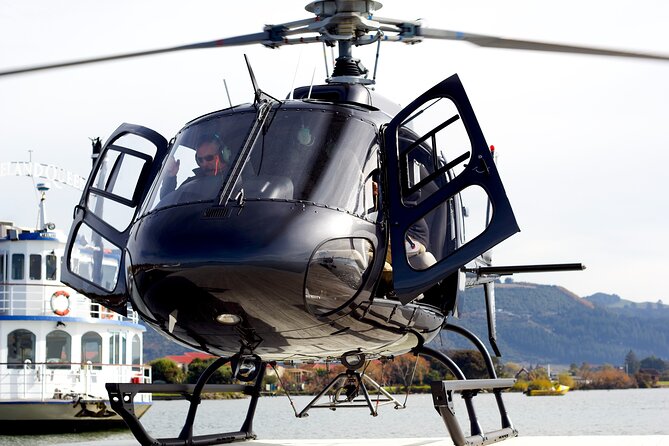
The tour begins at Volcanic Air, 1 Lakefront Drive on Rotorua’s city lakefront. You arrange your own way there because hotel pickup and drop-off are not included. The meeting point is near public transportation, and the flight returns there at the end.
Once airborne, the first major sight is New Zealand’s only permanently active offshore volcano, Whakaari White Island. From above, you can take in the crater lake and the island’s volcanic activity without landing on the crater floor.
This part of the experience is brief but important. A flight changes the way you read a volcano. From ground level, you tend to notice smoke, rock, or a single dramatic feature. From the helicopter, you can see the larger form of the island and how the crater sits within it.
Your pilot-guide provides commentary through a headset. That matters in a helicopter, where the engine noise would otherwise make conversation difficult. You are not left trying to guess what you are looking at, and the small group limit helps keep the experience manageable.
The White Island flyover is also the part most affected by changing volcanic conditions. The island’s activity can change each day, so the view may not look exactly the same from one flight to the next. That uncertainty is part of the point, but it also means you should not book this expecting a fixed display of steam or color.
Why the White Island flyover matters
White Island is not simply an attractive crater viewed from a helicopter. It is an active marine volcano, and its recent history has made the risks very clear.
The 2019 eruption was devastating. Seeing the island from the air gives you a respectful way to understand its scale and isolation while avoiding a ground visit to an active crater. For many people, this will be the most unusual part of the tour because it combines a rare aerial view with a place that cannot be treated casually.
I would not choose this trip only for a guarantee of a particular volcanic effect. The island’s activity changes, and conditions may affect visibility. Choose it for the chance to see an active volcano as part of a wider trip that also includes Tarawera.
The headset commentary is useful here. You can ask yourself practical questions about the crater, lake, and visible activity, then use the pilot-guide’s explanation to make sense of what appears below. The information provided does not name individual guides, but the operator supplies a professional pilot-guide rather than a separate ground escort.
Landing on Mount Tarawera
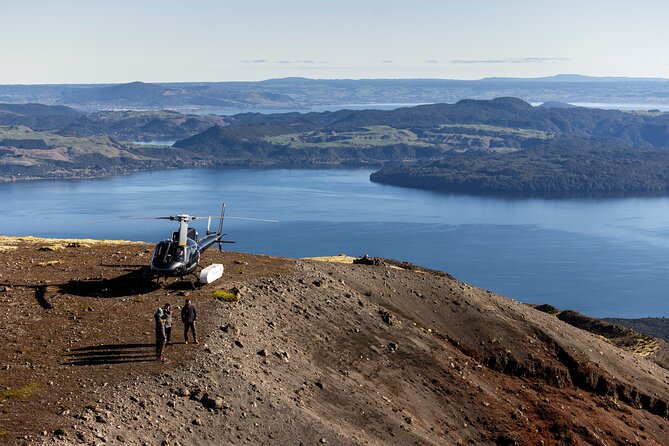
After the White Island flight, the helicopter heads inland to Mount Tarawera. This is the trip’s more physical and place-based moment because you land on the volcano itself.
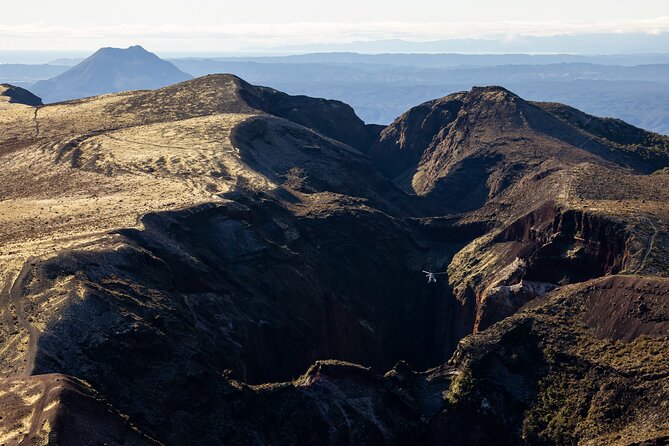
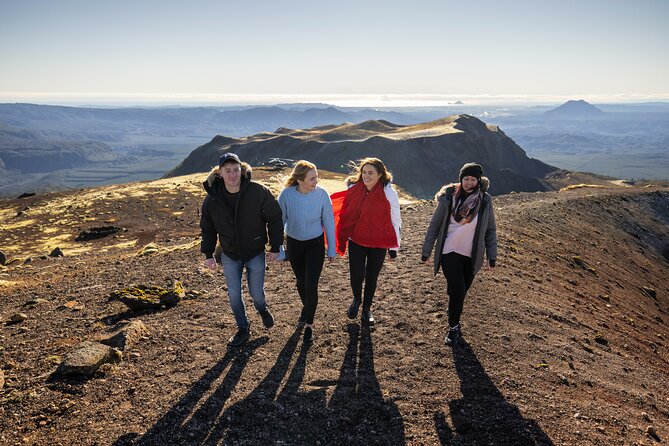
Mount Tarawera erupted in 1886 in an event regarded as the largest eruption in New Zealand’s living memory. The summit today is dormant, but it remains dramatic. The craters and domes created by that eruption give the mountain its broken, powerful form.
The listed stop lasts about 10 minutes. That is not a long visit, so set your expectations correctly. You are not getting a full mountain hike or an extended geology lesson on foot. You are getting a rare landing and a concentrated look at the summit features, followed by broad views across the surrounding region.
Those 10 minutes can still carry real value. The key difference between seeing Tarawera from a road or viewpoint and landing on the summit is scale. Standing at the crater area helps you grasp how large the eruption was and how much the mountain changed.
You may want more time once you arrive. That is the clearest limitation of the itinerary. The flight provides access and views that would be difficult to arrange independently, but the landing is a short stop rather than a long exploration.
More Helicopter Tours around New Zealand:
- Franz Josef Glacier: Helicopter Flight & Alpine Landing
★ 4.8 · 619 reviews - Franz Josef Glacier Heli-Hike
★ 4.5 · 618 reviews - Heli Hike Fox Glacier
★ 5.0 · 563 reviews - Franz Josef: 35min Helicopter Trip over Two Glaciers
★ 4.8 · 451 reviews
The views from Tarawera’s summit
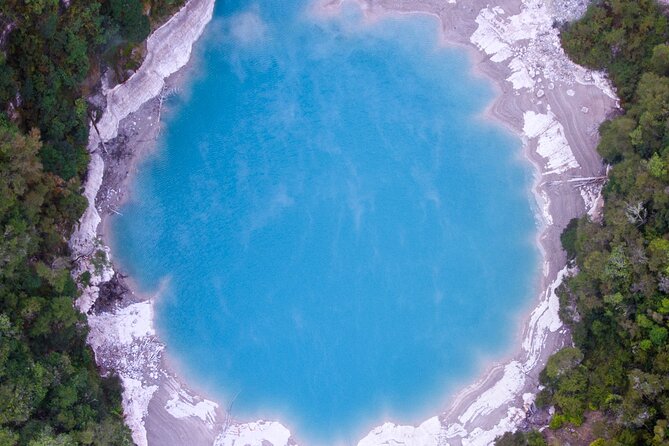
The summit views are one of the strongest reasons to pay for this experience. You look into the volcano’s deep craters and across the central North Island region around Rotorua.
The view is not only about distance. It is also about seeing the relationship between the mountain and the wider volcanic area. Tarawera rises above the surrounding country, so the summit gives you a commanding angle on the region.
I like that the tour pairs this high viewpoint with Whakaari’s offshore crater. The two stops do different jobs. White Island gives you a view of present volcanic activity. Tarawera gives you a closer look at the lasting shape left by a major historic eruption.
The information does not specify every feature you will see from the landing site or how much time you spend outside the aircraft. Keep that in mind when comparing this flight with a dedicated Tarawera ground excursion. The appeal here is the combination of access, speed, and the second volcano, not a long summit walk.
How much value is $1,423.60 per person?
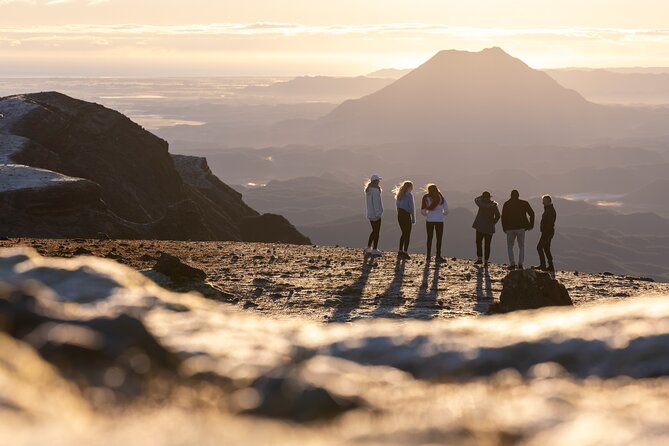
At $1,423.60 per person, this is one of Rotorua’s expensive activities. You should compare it with the kind of access you are buying, not just the number of minutes.
The full tour lasts about 1 hour 45 minutes, including around 1 hour 25 minutes of flight time. You receive two volcanic viewpoints, professional pilot commentary, headsets, a small group setting, and a landing on Mount Tarawera. Food, drinks, and hotel transfers are not included.
The price makes more sense if you have limited time in Rotorua and want one high-impact experience rather than several ordinary sightseeing stops. It also suits a special occasion or a once-in-a-lifetime New Zealand itinerary where you are willing to pay for access that is hard to reproduce on your own.
The value is weaker if you mainly want a long visit on Mount Tarawera. The landing is listed at about 10 minutes, and the tour does not include a substantial meal, ground transport, or an extended walk.
I would also consider the weather risk before placing this at the center of a tightly packed itinerary. If bad weather cancels the flight, you can be offered another date or a full refund, but rescheduling is easier when you have spare time in Rotorua.
Group size, comfort, and practical limits
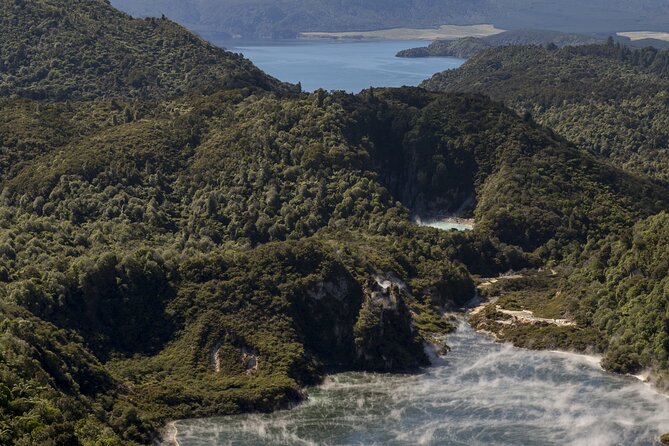
The maximum group size is 12 people. That is large enough to create a shared experience but small enough to avoid the feel of a big sightseeing coach. In a helicopter, group size also matters because everyone needs a fair chance to hear the commentary and see out.
Headsets are included, allowing you to hear the pilot-guide during the flight. That is a basic feature, but an essential one. Without it, much of the educational value would disappear under the aircraft noise.
Passenger weight rules deserve attention before you book. The listed maximum per-seat limit is 297 pounds, or 135 kilograms, and the tour also gives a total passenger weight limit of 298 pounds. The wording suggests that aircraft balance is part of the restriction, not simply personal comfort.
Most people can participate, and the activity is near public transportation. Still, you should check your own situation with the operator if you are unsure about the aircraft limits or the physical demands of boarding and landing. The supplied details do not give a more specific accessibility description.
The tour requires at least two adult fares to operate. Solo booking may therefore work only if another adult booking brings the trip up to the minimum. Confirmation is sent within 48 hours of booking, subject to availability, so last-minute plans need extra care.
Making the most of a short flight
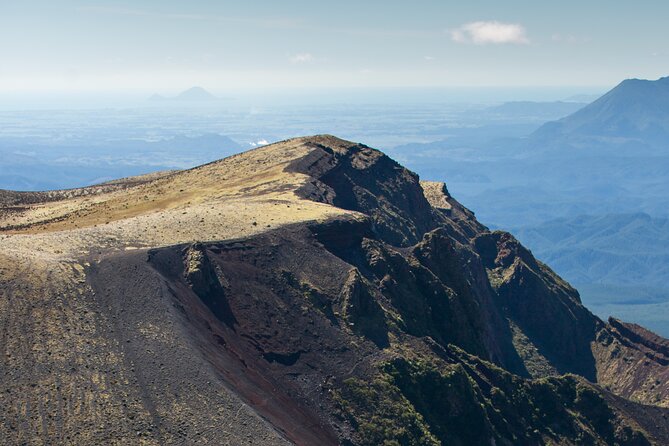
Because the tour lasts less than two hours, preparation matters. Arrive at the Rotorua lakefront meeting point with your transport sorted and enough time to check in without rushing. You will not be able to rely on hotel pickup.
Use the flight time well. Look first at the overall shape of each volcano, then focus on smaller details such as the crater lake, summit breaks, domes, and visible signs of activity. The headset commentary should help, but your own attention will make the aerial view more memorable.
Photography is likely to be a natural part of the trip, but the tour information does not promise particular seating positions or specific photo stops. Conditions can also affect what you see. Bring the attitude of a person observing a changing natural site, not someone expecting a staged attraction.
I would avoid booking this as your only activity on a day when a cancellation would cause major trouble. The tour can be canceled for poor weather or because the minimum number is not reached. In either case, you are offered a different date or a full refund, but your schedule still needs room to absorb the change.
Free cancellation is available up to 24 hours before the start time. Cancellations or changes inside that window are not refunded or accepted, and the cut-off uses local time.
Who should book Volcanic Extremes?
I would recommend this trip most strongly to you if volcanoes are a main reason for visiting Rotorua, if you value unusual access, or if you want a single memorable flight rather than a full day of organized sightseeing.
It is especially appealing for people who want both an active and a dormant volcano in one outing. The contrast gives the flight a clear purpose, and the Tarawera landing prevents the experience from being only a quick aerial circuit.
You should think twice if the price feels uncomfortable, if you want a long walk on Tarawera, or if your schedule cannot tolerate a weather change. The short landing and lack of included meals or transfers also make it less useful as a full-day replacement for other Rotorua activities.
The small group, headsets, professional pilot-guide, and unusually strong volcanic subject matter all work in its favor. The high cost and short summit visit keep it from being an easy recommendation for every budget.
Should you book this helicopter tour?
Book it if you want one of New Zealand’s most distinctive volcanic views and can accept the cost, short Tarawera landing, and weather limits. The best reason to choose it is the pairing: an active offshore crater at Whakaari followed by a landing above the huge 1886 scars of Mount Tarawera.
Skip it if you are looking for a low-cost Rotorua activity or a long, relaxed mountain outing. For everyone else, this is a focused splurge with real geographic and geological value, especially if your New Zealand trip has room for one unforgettable flight.
FAQ
Where does the helicopter tour begin and end?
It begins and ends at Volcanic Air, 1 Lakefront Drive, City Lakefront, Rotorua 3010, New Zealand.
How long does the experience last?
The total experience lasts approximately 1 hour 45 minutes. About 1 hour 25 minutes of that time is spent flying.
What volcanoes will I see?
You will fly over Whakaari White Island, New Zealand’s permanently active offshore volcano, and land on dormant Mount Tarawera.
How long is the Mount Tarawera stop?
The listed Mount Tarawera stop lasts about 10 minutes.
Is hotel pickup included?
No. Hotel pickup and drop-off are not included. You make your own way to the Rotorua meeting point.
How many people can join the flight?
The tour has a maximum of 12 travelers.
What happens if the weather is poor?
If poor weather cancels the experience, you can be offered a different date or a full refund. The tour can also be canceled if the minimum number of travelers is not reached, with the same choice of another date or a refund.
Fresh on the helipad around New Zealand
- Wellington: Scenic South Coast Discovery Helicopter Flight★ 4.8 · 4 reviews
- Wanaka: Scenic Helicopter Flight with Glacier Experience★ 5.0 · 42 reviews
- Wānaka: Scenic Helicopter Flight Wānaka Max★ 5.0 · 11 reviews
- Wānaka: Heli Siberia Max – Helicopter Flight, Hike, Jet Boat★ 5.0 · 3 reviews
- Wānaka: Helicopter Scenic Flight Wānaka Experience★ 5.0 · 4 reviews
- Wānaka: Heli Siberia – Helicopter Flight, Hike & Jet Boat★ 4.6 · 4 reviews
- 15-Minute Wellington Harbour Helicopter Flight★ 4.0 · 9 reviews
- Wharekauhau Heli-lunch from Wellington★ 4.5 · 6 reviews
New Zealand Helicopter Tours, compared.
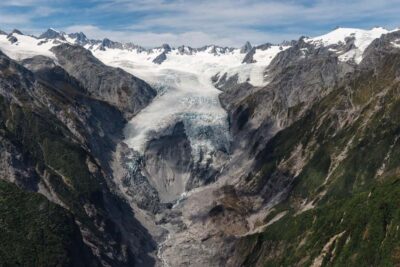
Franz Josef Glacier: Helicopter Flight & Alpine Landing
Read our review →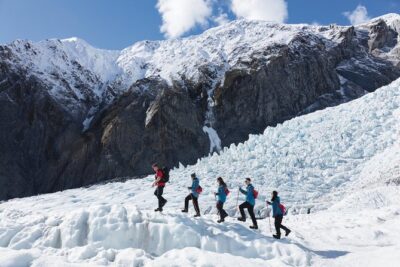
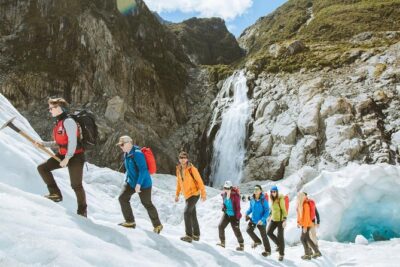
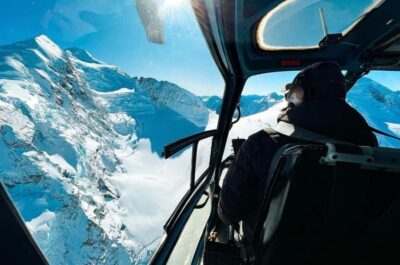
Franz Josef: 35min Helicopter Trip over Two Glaciers
Read our review →
Mount Cook: Scenic Helicopter Flight with Alpine Landing
Read our review →
Franz Josef & Fox Glaciers Helicopter Flight & Snow Landing
Read our review →
Franz Josef: 2.5 Hour Glacier Hike with Helicopter Transfer
Read our review →
Fox Glacier: Up to 3 Hours Hike with Helicopter Transfer
Read our review →Other lists this flight appears in