
Review · KATHMANDU
Everest Base Camp Trek with Helicopter Return – 10 Days
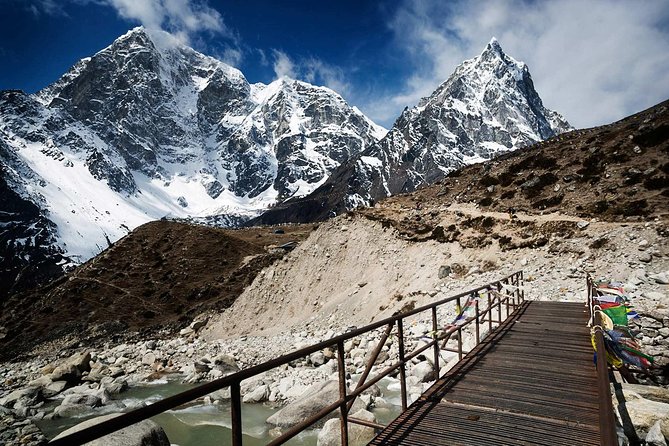
The big idea here is simple: walk into the Everest region and fly out. Over eight trekking days, you pass through Sherpa villages, pine forests, suspension bridges, monasteries, and high mountain valleys before reaching Everest Base Camp and Kala Patthar. Then the long return to Lukla is replaced by a helicopter ride toward Kathmandu.
I like the efficient route and the practical package. Your guide, porter support, tea house beds, trekking meals, permits, Lukla flight, and airport transfers are arranged in advance. I also like the small-group limit of 15, since a mountain trip is easier when the group can move without a parade of people.
The catch is the schedule. Ten days is quick for a trek that reaches very high altitude, and the pace is demanding, especially from Dingboche onward. You need moderate fitness, a willingness to walk for many hours, and enough flexibility for mountain weather to affect the helicopter.
Key points to know before booking
- The helicopter return saves several trekking days: You walk up the classic route but do not retrace the trail from Gorakshep and Kala Patthar to Lukla.
- Four major peaks frame the route: Everest, Lhotse, Makalu, and Cho Oyu are part of the mountain panorama described for the trek.
- Namche is your main acclimatization stop: Day four includes a hike to the Everest View Hotel before you head higher.
- The package covers the costly basics: Lukla air travel, shared helicopter return, lodges, meals during the trek, permits, guides, porters, and gear are included.
- The group can reach 15 people: That is still manageable, but your experience may feel less personal than on a private trek.
- Weather can change the plan: The helicopter and mountain flights depend on suitable conditions, with a different date or full refund offered if the experience is canceled for poor weather.
Why this 10-day route works
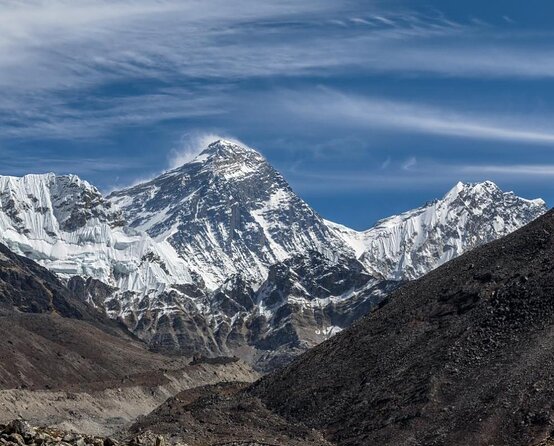
The classic Everest Base Camp trek usually requires walking back down the same valley after reaching the goal. This version cuts out that return by using a shared helicopter after Kala Patthar. That gives you more time for the high route while sparing your knees several days of downhill walking.
You still get the main progression that makes this trek special. The route begins among green hills near Lukla, moves through Sherpa villages and pine forest, then turns colder and barer as you climb toward the Khumbu Glacier. The scenery changes in stages rather than appearing all at once.
That efficiency comes at a cost. You have little spare time if a flight is delayed, if you need an extra rest day, or if your body struggles with the altitude. The schedule includes acclimatization in Namche and a stop in Dingboche, but this is not a slow, leisurely version of the trek.
More Himalaya Helicopter Flights around Kathmandu:
- Everest Base Camp Helicopter Tour landing at Everest View Hotel
★ 5.0 · 668 reviews - Everest Base Camp Helicopter Tour landing at Hotel Everest View
★ 5.0 · 218 reviews - Everest Base Camp Trek with Helicopter Return from Gorakshep to Lukla
★ 5.0 · 161 reviews
Day 1: Kathmandu arrival and a quiet start
You are met at the airport in Kathmandu and transferred to your hotel. The rest of the day is free, so you can rest or explore the capital before the early mountain start.
That free time is useful. The next morning begins early, and the Lukla flight sets the rhythm for the trek. Kathmandu accommodation with breakfast is included, but lunch and dinner in the capital are your responsibility. Your Nepal entry visa is also separate, and accurate US dollar cash plus two passport photographs are advised for faster processing.
Day 2: Lukla to Phakding by trail
The mountain section begins with an early transfer to the domestic airport and a flight from Kathmandu to Lukla. After meeting the trekking crew, you walk toward Phakding through green surroundings with views toward Kusum Kanguru.
Lukla is more than a transport stop. It is the gateway for the Everest region, and the short first walking day gives you an introduction to the trail without immediately pushing you into the highest elevations. You enter the Sagarmatha National Park area, a protected UNESCO World Heritage Site.
The day can feel long because of the early start, flight procedures, and trek connection. Still, Phakding is a sensible first overnight point before the larger climb toward Namche Bazaar.
Day 3: The long climb to Namche Bazaar
After breakfast, the trail follows the Dudh Koshi River through pine forest. You cross suspension bridges, including the Hillary Bridge, and pass the national park entry area before beginning the sustained climb to Namche Bazaar.
Namche is the Sherpa capital and the main gateway to the Everest region. It is also where the route starts to feel properly Himalayan. The village is positioned in a steep bowl of mountain terrain, and it serves as an important staging point for the higher trail.
You can visit the Sherpa Museum during the Namche stop. The museum focuses on Sherpa culture and traditions, though its admission fee is not included. The day is listed as roughly 12 hours, so do not treat the museum as the main event. The walk is the main event, and it is a serious one.
More Heli-Hikes around Kathmandu:
- Everest Base Camp Trek with Helicopter Return to Lukla – 10 Days
★ 5.0 · 34 reviews - Everest Base Camp Trek with Helicopter Return -11 Days
★ 5.0 · 12 reviews - Helicopter Return Everest Base Camp Trek, KTM-LUKLA & Gorakshep-KTM by Heli
★ 5.0 · 9 reviews - Everest Base Camp trek with Helicopter return 9 days
★ 5.0 · 8 reviews
Day 4: Acclimatization above Namche
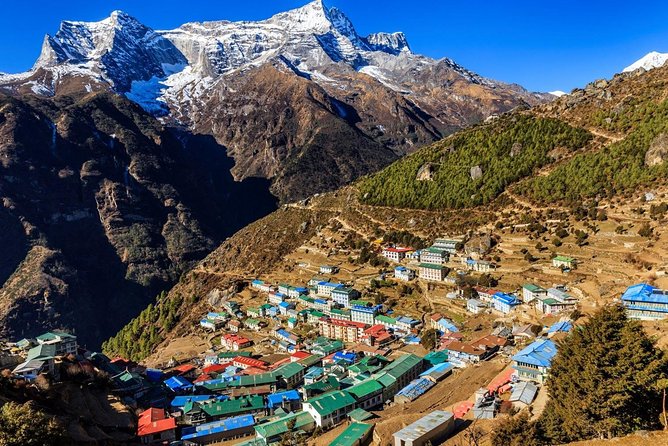
This is the first key rest and acclimatization day. Instead of spending the entire day idle, you hike toward the Everest View Hotel near Syangboche for broad views of the surrounding peaks, including Everest.
I like this part of the plan because it gives your body time to adjust while still making the day worthwhile. The climb also lets you see the route from a higher viewpoint before continuing toward Tengboche and the upper valley.
The schedule does not spell out every detail of the hike, so your guide will determine the exact walk and timing. Use this day sensibly. You do not gain anything by racing uphill simply because the day is shorter.
Day 5: Namche to Tengboche and its monastery
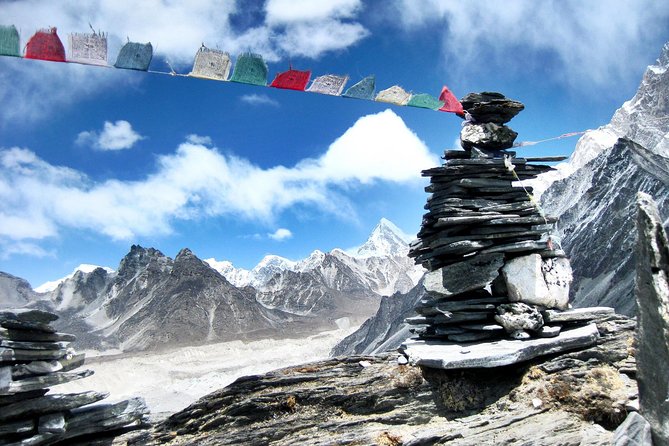
The trail leaves Namche with a mix of smooth sections and short rises and falls. It passes Kayangjuma and Sanasa, crosses the Dudh Koshi near Punki Tenga, then climbs more firmly toward Tengboche.
Tengboche is one of the most memorable stops on the route. Its monastery is the largest in the Khumbu region, and the village sits in a dramatic mountain setting. The monastery gives the trek a cultural center, not just a succession of mountain viewpoints.
The walk is again described as a long day of about 12 hours. That matters because the route is not simply a scenic stroll between villages. The steady gain in height begins to test your legs, and the next stages will be harder.
Day 6: Pangboche, Imja Valley, and Dingboche
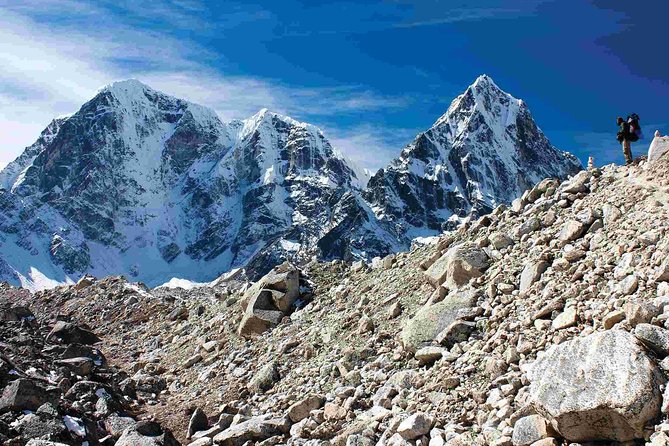
The trail continues on an upper route marked by chortens, mani walls, and small villages. You cross the Imja Khola and pass through Pangboche at about 3,900 meters before entering the Imja Valley and continuing toward Dingboche.
Dingboche is a small high-altitude settlement and an important stop for adjustment. It is described as an acclimatization point, though this schedule does not give you a full extra day here. You arrive on Day 6 and move on during Day 7.
That makes this section one of the main pressure points of the 10-day plan. Pay attention to how you feel, follow your guide’s advice, and avoid treating the shorter distance as an easy day. At this height, a modest climb can require more effort than the same walk near Lukla.
Day 7: Toward Lobuche and the Khumbu Glacier
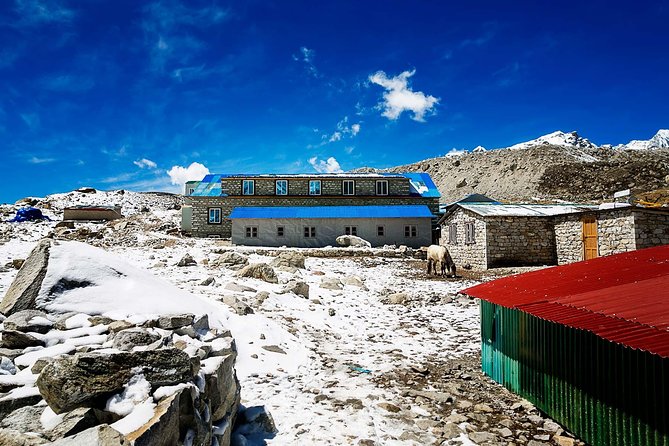
The route climbs through the Khumbu Khola Valley toward Duglha. Along the way, you pass Dusa and Phulung Karpo before reaching Chola Lake and crossing a small bridge. The trail then rises toward Duglha and continues in the direction of Lobuche.
Lobuche Peak lies close to the Khumbu Glacier and has east and west summits. You are not climbing the peak on this tour, but its presence helps explain the scale of the setting. The route is now high, exposed, and increasingly focused on the glacier and the great peaks above it.
Expect plenty of ups and downs. At this stage, your porter arrangement becomes especially useful. One porter is provided for every two trekkers, and the package includes porter food, lodging, transport, salary, equipment, and insurance. You still need to carry a day pack with personal essentials.
Day 8: Lobuche to Everest Base Camp and Gorakshep
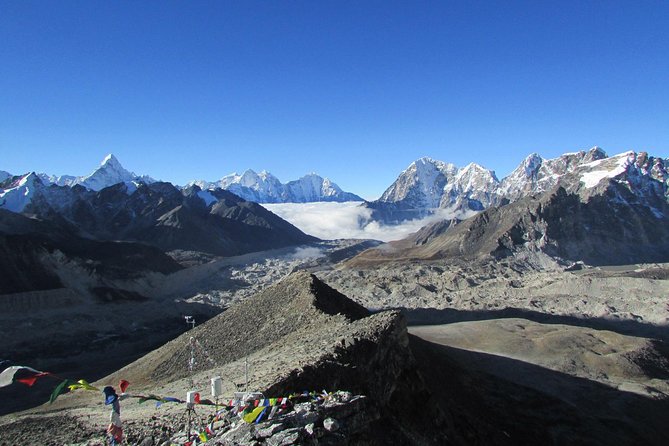
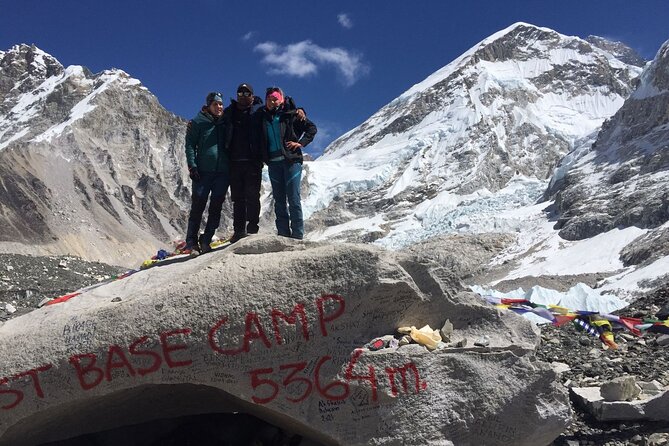
This is the goal day. You walk through a series of high-altitude rises and descents, then make the steady approach to Everest Base Camp, which takes about three hours from the stated section of the route.
At Base Camp, you can see the Khumbu Glacier and its icefall. The stop itself is listed as about 30 minutes, so keep your expectations realistic. This is a powerful place to reach, but it is not a long sightseeing session with cafés, displays, or a broad range of facilities.
After Base Camp, you return to Gorakshep, the last overnight stop on the route. This out-and-back section is physically demanding because you reach the destination, then still have to walk back to sleep at the lodge. Gorakshep is not the finish line. Kala Patthar is still ahead.
Day 9: Kala Patthar and the helicopter return
The final trekking morning takes you up Kala Patthar, the route’s famous viewpoint. From here, you get panoramic views of the Khumbu mountains, including Everest. The stop is listed as about 30 minutes, but the real value is the view and the sense of seeing the route from above.
After Kala Patthar, you return by group-sharing helicopter toward Kathmandu. The trip description places the helicopter after Kala Patthar, while the included transport wording refers to a flight from Gorakshep to Kathmandu. Confirm the exact pickup point and flight plan with Breakfree Adventures before departure, since the distinction matters at this altitude.
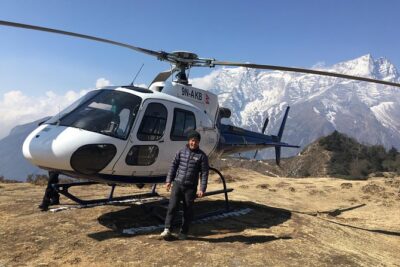
This is the tour’s biggest practical advantage. You avoid the long descent through the same villages and do not need to retrace the trail all the way to Lukla. A shared helicopter also means the flight is not exclusive to your party, and weather or operating conditions can change the plan.
Day 10: Kathmandu departure
After breakfast, you are transferred to the international airport for your flight home or onward connection. Airport pickup and drop-off by private vehicle are included according to the schedule.
The transfer is a useful final touch, particularly after the helicopter arrival and a demanding high-altitude trek. Give yourself enough care with onward flights, since mountain transport depends on conditions and timing.
What the $3,400 price covers
At $3,400 per person, this is not a budget walking trip. The price makes more sense when you separate the package into its expensive parts: the Kathmandu to Lukla flight, the helicopter return, guide and porter services, trekking permits, meals, mountain lodging, airport transfers, and supplied equipment.
You also receive a duffle bag, down jacket, sleeping bag, walking pole, trekking map, and trip achievement certificate. Meals include breakfast, lunch, and dinner during the trek. Breakfast is included in Kathmandu, but city lunches and dinners are extra.
Personal costs can add up. Drinks are not included, including tea, coffee, hot chocolate, boiled water, bottled water, soft drinks, beer, and other beverages. Internet, phone calls, laundry, hot showers, battery charging, bar bills, Nepal visa fees, and tips are also separate.
The helicopter return is the main reason to compare this price with a standard Everest Base Camp trek. You are paying for time saved and for avoiding the return walk, not simply for a faster ride. If walking every part of the classic route matters most to you, this may feel like an unnecessary expense. If your holiday time is limited, the value is easier to see.
Guides, porters, and group size
The tour uses an English-speaking trekking guide and porters at a ratio of one porter for two trekkers. The guide is responsible for the route, group support, and the practical decisions that matter more as the altitude rises.
Several guide names appear in the tour’s recent departures, including Dipak, Ramesh Sapkota, Ram, and assistant guide Rabi. Specific staff assignments can change, so do not assume one of these people will lead your departure. Still, the repeated praise for patient support, safety checks, and friendly help gives you a useful picture of the expected service.
The group maximum is 15 people. That is small enough to avoid a huge convoy, but it is not the same as a private trek for two or four. A group can also move at different speeds, which makes your guide’s handling of rest stops and pacing important.
Who should book this trek?
I would choose this trip if you want the classic Everest Base Camp route but have only 10 days and strongly prefer not to walk back to Lukla. It suits people who value logistical help, porter support, included meals, and the comfort of having permits and mountain transport arranged.
You should be realistic about fitness. The package asks for a moderate fitness level, but the daily walks can run long, and the route reaches high altitude quickly. This is not a soft adventure with a helicopter sightseeing flight replacing the difficult part. You still walk all the way to Base Camp and climb Kala Patthar.
It is also a good fit if the flight home is not scheduled so tightly that a weather delay would ruin your plans. The experience requires good weather, and cancellation for poor conditions may result in a new date or a full refund, but that does not remove the need for personal flexibility.
Should you book the Everest Base Camp helicopter return?
Book it if you want the main Everest trekking experience in a compressed schedule, appreciate organized support, and see the helicopter return as a major part of the value. The route gives you Namche, Tengboche, Dingboche, Lobuche, Gorakshep, Base Camp, and Kala Patthar without forcing you to walk the full return route.
Think twice if you want a slow acclimatization program, dislike fixed group schedules, or want to keep the price as low as possible. Before paying, confirm the helicopter pickup point, ask how weather delays are handled, and make sure your onward flight from Kathmandu allows room for change.
FAQ
How long is the Everest Base Camp trek with helicopter return?
The experience lasts approximately 10 days, including arrival and departure days in Kathmandu.
What is the maximum group size?
The tour can include a maximum of 15 travelers.
What time does the experience start?
The stated start time is 6:15 am.
Is the Kathmandu to Lukla flight included?
Yes. The package includes the flight from Kathmandu to Lukla.
Is the helicopter ride back to Kathmandu included?
Yes. The helicopter flight is included on a group-sharing basis. The tour description places the return after Kala Patthar, while the included transport details refer to the Gorakshep to Kathmandu route.
Are meals included?
Breakfast, lunch, and dinner are included during the trek. Breakfast is included with the Kathmandu accommodation, but lunch and dinner in Kathmandu are not included.
Is accommodation included?
Yes. Kathmandu accommodation with breakfast and tea house or lodge accommodation during the trek are included.
Are a guide and porters included?
Yes. An English-speaking trekking guide and necessary porters are included. The stated arrangement is one porter for every two trekkers.
What happens if bad weather cancels the experience?
If poor weather causes cancellation, you will be offered a different date or a full refund. You can also cancel for a full refund if you do so at least 24 hours before the experience start time.
Fresh on the helipad around Kathmandu
- Guaranteed Landing at Everest Base Camp Kalapathar by Helicopter★ 5.0 · 38 reviews
- Day Tour to Everest Base Camp By Helicopter★ 5.0 · 16 reviews
- Everest Base Camp Helicopter Tour with Hotel Everest View Landing★ 5.0 · 52 reviews
- Kathmandu To Lukla By Helicopter Flight★ 5.0 · 6 reviews
- Mount Everest Helicopter Tour with Landings★ 5.0 · 2 reviews
- Langtang Helicopter Tour★ 5.0 · 6 reviews
- Mount Everest Scenic Helicopter Tour★ 5.0 · 6 reviews
- Everest Base Camp Tour & View Point by Helicopter from Katmandu★ 5.0 · 3 reviews
Kathmandu Helicopter Tours, compared.
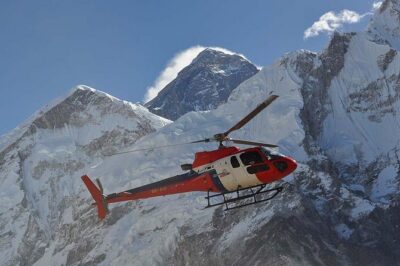
Everest Base Camp Helicopter Tour landing at Everest View Hotel
Read our review →Everest Base Camp Trek with Helicopter Return from Gorakshep to Lukla
Read our review →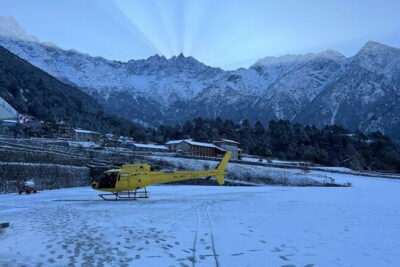
Everest Base Camp helicopter tour with landing
Read our review →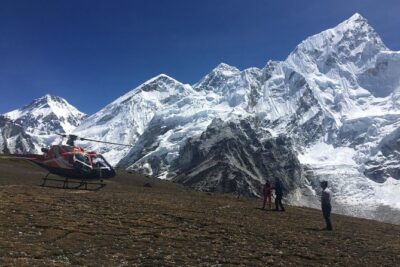
Guaranteed Landing at Everest Base Camp Kalapathar by Helicopter
Read our review →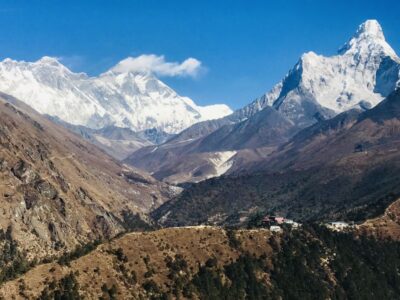
Landing Private Helicopter at Everest base camp & Gokyo for photo
Read our review →
Everest Base Camp Helicopter Tour with Stop at Everest View Hotel
Read our review →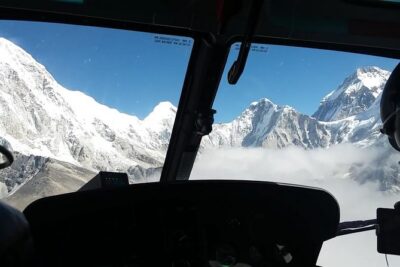
Everest Helicopter Tour from Kathmandu with Landing for Breakfast
Read our review →Other lists this flight appears in