
Review · KATHMANDU
Helicopter Return Everest Base Camp Trek, KTM-LUKLA & Gorakshep-KTM by Heli
The big appeal here is simple: you earn Everest Base Camp on foot, then replace much of the tiring return trek with a helicopter flight from Gorakshep to Kathmandu. That means more time for the trail’s best moments and less repetition on the way down, at least if the helicopter arrangement matches your booking.
I like the careful acclimatization days in Namche and Dingboche, since altitude deserves respect, not bravado. I also like the human scale of the route: prayer wheels, Sherpa villages, monasteries, suspension bridges, and evenings in tea houses rather than a nonstop rush toward a photo stop.
The main concern is the confusing duration and price structure. The experience is advertised as about nine days and costs $9,999 per person, yet the detailed schedule runs to 14 days and lists the Kathmandu to Lukla and Gorakshep to Kathmandu helicopter flights as extra charges in the main trekking months. Get the final route and total cost in writing before paying.
Key points to know before you book
- Lukla to Gorakshep on foot: You follow the classic Everest Base Camp route through Phakding, Namche Bazaar, Tengboche, Dingboche, Lobuche, and Gorakshep.
- Two acclimatization stops: Rest days in Namche at 3,440 meters and Dingboche at 4,350 meters give your body time to adjust.
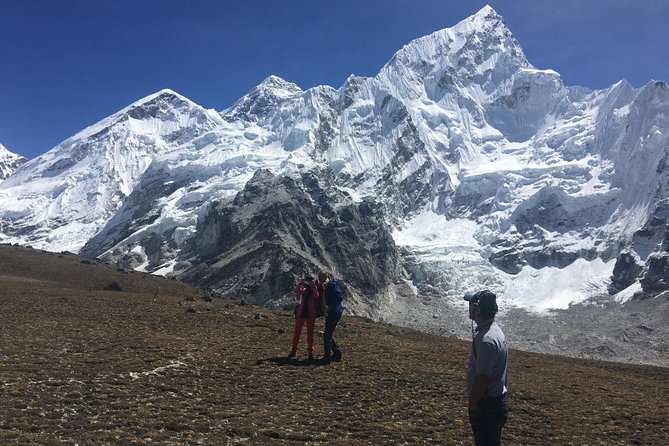
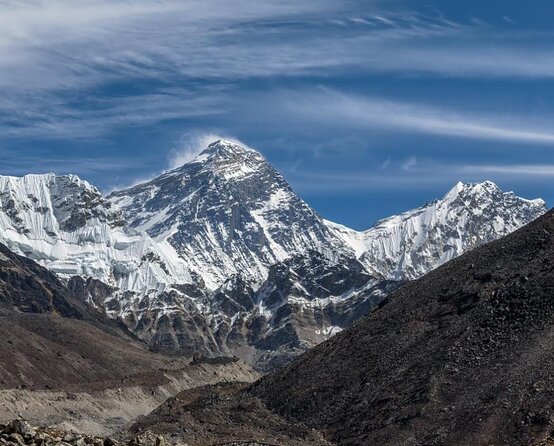
- Kala Patthar is the high viewpoint: At 5,545 meters, it provides the major mountain panorama, including Everest, Nuptse, Pumori, Lhotse, and Changtse.
- Return by helicopter may be seasonal: The quoted shared helicopter prices apply to October, November, March, April, and May, with weather still able to disrupt flights.
- Guide support is central: Dipak is named as a mountain guide associated with past departures, while Buddhi handled planning and local arrangements.
- Costs continue beyond the headline price: Lunch, dinner, porter services, transportation, and listed helicopter flights are not included.
What this Everest trek is really offering
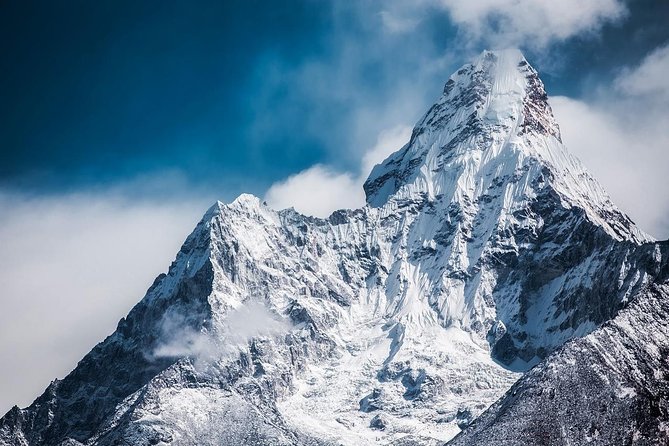
This is not a quick helicopter sightseeing ride with a short walk attached. The core experience is a serious high-altitude trek into Sagarmatha National Park, followed by an aircraft-assisted return.
You begin in Kathmandu at 1,350 meters and eventually sleep near Gorakshep at about 5,180 meters. Everest Base Camp itself sits at roughly 5,364 meters, while Kala Patthar rises to 5,545 meters. Those numbers matter. The walking is not technical climbing, but the altitude makes ordinary hills feel demanding.
The route gives you several kinds of reward. You see enormous peaks and glacial valleys, but you also pass through working Sherpa settlements. Namche Bazaar is a trading center with shops, food, and mountain culture. Tengboche and Dingboche bring monasteries, chortens, and prayer flags. The trail is as much about the people and places along the way as the final base camp marker.
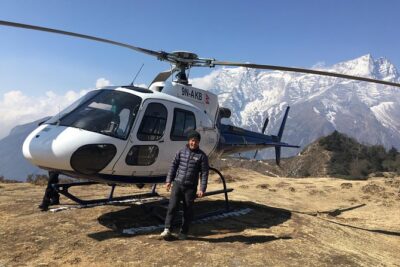
The helicopter return changes the rhythm. A normal return would retrace much of the route from Gorakshep toward Lukla, with several more walking days. Here, the advertised plan aims to take you from Gorakshep back to Kathmandu by helicopter, saving time and reducing the physical load after the high point of the trek.
That convenience comes with two catches: helicopters depend on weather and visibility, and the flight may be charged separately. At this altitude, flexibility is not a luxury. It is part of the plan.
More Himalaya Helicopter Flights around Kathmandu:
- Everest Base Camp Helicopter Tour landing at Everest View Hotel
★ 5.0 · 668 reviews - Everest Base Camp Helicopter Tour landing at Hotel Everest View
★ 5.0 · 218 reviews - Everest Base Camp Trek with Helicopter Return from Gorakshep to Lukla
★ 5.0 · 161 reviews
Kathmandu and the early flight to Lukla
Your stated meeting time is 5:45 am, which points to an early start for the mountain flight. The short flight to Tenzing-Hillary Airport in Lukla is one of the memorable transitions of the trip. You leave Kathmandu’s busy streets and arrive at a small mountain gateway at 2,828 meters.
The published flight time is about 35 minutes. From Lukla, the trek begins almost at once, with a three to four hour walk to Phakding at 2,780 meters. The first day is comparatively gentle in altitude terms, though you still need to settle into the pace and carry enough water for the walk.
The route passes through places such as Nurning, Phakding, Benkar, Monjo, and Jorsale. You cross suspension bridges decorated with prayer flags and follow the Dudh Koshi River, also known as the Milky River. These details give the opening days their character. You are not simply marching through empty mountain country. You are moving through villages, forested sections, bridges, and religious sites.
There is an important practical warning here. Lukla flights are highly weather-dependent. One past departure had its original flight canceled, after which the local organizer found a helicopter and another couple to share the cost. That is useful evidence of hands-on problem solving, but it also shows why you should keep extra time and money available for changes.
Namche Bazaar and the first acclimatization day
The walk from Phakding to Namche takes about five to six hours and reaches 3,440 meters. The trail continues beside the Dudh Koshi and crosses more suspension bridges before entering Sagarmatha National Park.
Namche Bazaar is one of the most memorable stops on the route. It is a traditional trading hub and a proper Himalayan town rather than a single line of lodges. You can expect shops, food, mountain views, and a chance to see how local trade supports life in the Khumbu region.
The rest day in Namche is not wasted time. It gives your body a chance to adjust before the trail climbs higher. The schedule calls it a rest day, but you should think of it as a light acclimatization day. The supplied plan does not specify an exact activity for it, so your guide will determine how much walking makes sense.
I especially like this pause because the route would feel too aggressive without it. You have already gained more than 1,000 meters from Lukla, and the next stages climb toward Tengboche and Dingboche. A day to slow down is a sensible part of the design.
Tengboche and Dingboche, with altitude in charge
The route from Namche to Tengboche takes four to five hours and reaches about 3,850 meters. Tengboche is known for its monastery, and the trail continues to offer chortens, prayer wheels, and prayer flags. This is where the cultural side of the trek becomes especially important.
You are walking through a region shaped by Sherpa Buddhist traditions. The religious markers are not decoration placed for visitors. They are part of everyday life, and passing them gives the walk a stronger sense of place than a route made only of viewpoints.
The next stage leads to Dingboche at about 4,350 meters, usually taking four to five hours. Dingboche is another important pause, with a second scheduled acclimatization day. By now, the cold and thin air can affect your appetite, sleep, and walking speed, even if you are fit.
The practical rule is to walk slowly and tell your guide about symptoms early. The supplied information does not promise medical services or a rescue plan, so ask the operator what procedures apply if altitude sickness or bad weather affects the schedule.
Dingboche also marks a change in scenery. The route becomes increasingly high and exposed, with less room for casual wandering. A warm fleece, puffy jacket, gloves, wool hat, and down jacket are not overpacking here. The packing list specifically calls a down jacket a must for relaxing in a tea house below freezing.
More Heli-Hikes around Kathmandu:
- Everest Base Camp Trek with Helicopter Return to Lukla – 10 Days
★ 5.0 · 34 reviews - Everest Base Camp Trek with Helicopter Return -11 Days
★ 5.0 · 12 reviews - Everest Base Camp Trek with Helicopter Return – 10 Days
★ 5.0 · 9 reviews - Everest Base Camp trek with Helicopter return 9 days
★ 5.0 · 8 reviews
Lobuche, Gorakshep, and Everest Base Camp
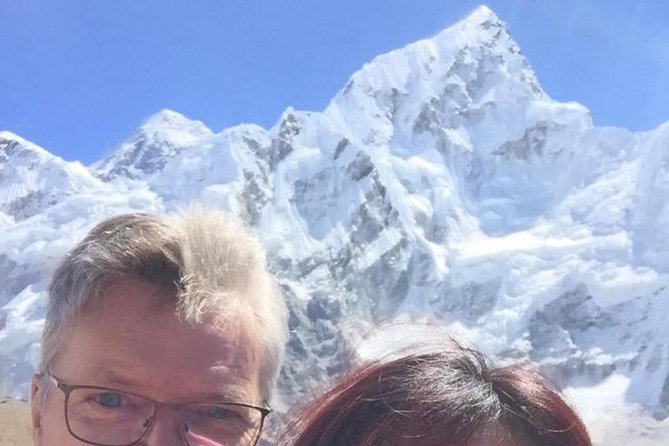
After Dingboche, the itinerary becomes more demanding. You trek to Lobuche at 4,910 meters in about four to five hours. The air is thin, and the walking day may feel longer than the clock suggests.
The following day takes you to Gorakshep at about 5,180 meters in three to four hours, followed by a two to three hour walk to Everest Base Camp. This is a high point of the trip in both the literal and emotional sense.
Everest Base Camp is famous, but the setting around it is the larger prize. The route gives you views of the Khumbu Glacier, the Khumbu Icefall, glacial rivers, avalanche paths, and several major peaks. Everest itself is not always the most dramatic-looking mountain from every angle, so the wider group of peaks is important to the experience.
Gorakshep is also the launch point for Kala Patthar. The schedule places that climb the next morning, with a two to three hour walk to the viewpoint before continuing to Pheriche. Kala Patthar reaches 5,545 meters and is described as the place for views of Everest, Nuptse, Pumori, Lhotse, and Changtse.
This is where the trek’s acclimatization plan earns its keep. You are not being pushed straight from low country to the highest point. Even so, the altitude remains serious. Do not judge the walk by distance alone. A short uphill section at this elevation can take real effort.
The helicopter return from Gorakshep
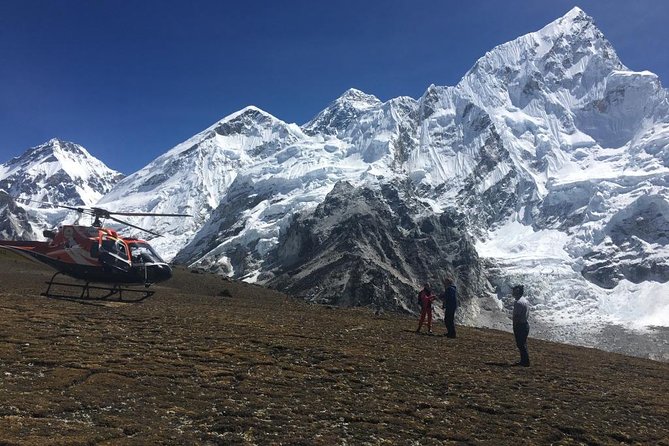
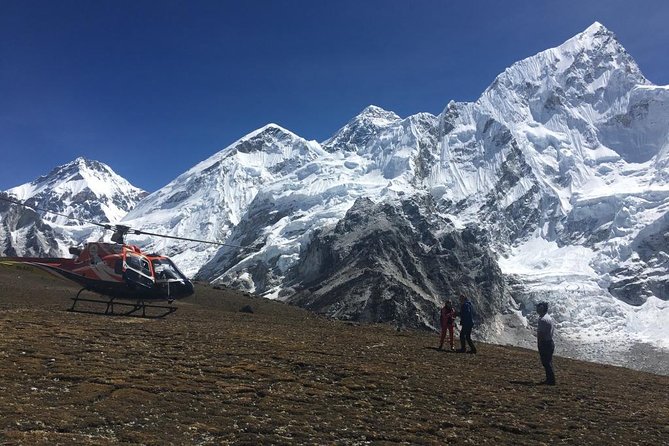
The advertised return is the feature that separates this trip from a standard Everest Base Camp trek. Instead of walking from Gorakshep back through Pheriche, Tengboche, Namche, and Lukla, you are meant to fly from Gorakshep to Kathmandu by shared helicopter.
That can be a smart choice if you have limited time, want to avoid repeating the trail, or simply prefer to spend your energy on the outbound route. It also gives you a completely different view of the valleys, glaciers, and peaks you crossed on foot.
But do not treat the helicopter as guaranteed. Weather can stop flights, and high-altitude helicopter operations depend on conditions. The cancellation terms state that a weather-canceled experience may be moved to another date or refunded, but you should ask exactly what happens if the trek has already begun and the return flight cannot operate.
The cost needs careful checking. The information gives a shared Gorakshep to Kathmandu helicopter price of $999 per person in October, November, March, April, and May. It also lists a private helicopter at $3,600 per helicopter. Those figures appear separate from the $9,999 tour price.
The Kathmandu to Lukla helicopter is also listed separately at $400 per person for a shared flight in those same months, or $2,000 for a private helicopter. This creates a major gap between the title, which suggests helicopter transport in both directions, and the included items, which list only tea houses, a guide, permits, and nine breakfasts.
Ask for a written breakdown covering the Lukla flight, the Gorakshep flight, airport transfers, porter costs, meals, and any hotel nights in Kathmandu.
Tea houses, meals, and what to pack
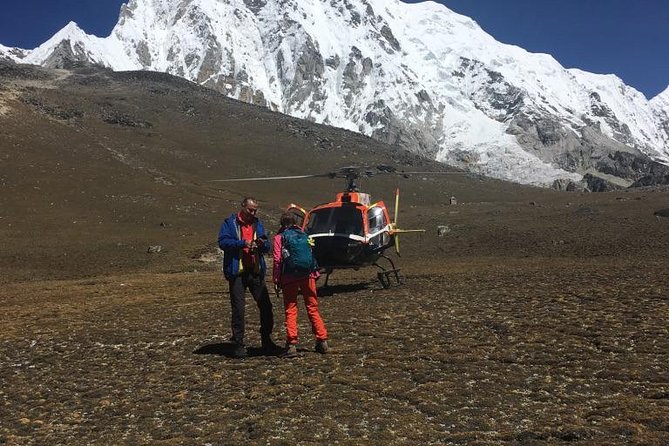
Tea houses are included for the mountain portion. That gives you a practical place to sleep and eat along the route, but it does not mean every meal is covered. Breakfast for nine meals is included, while lunch and dinner are paid locally.
That arrangement is common for a trek of this kind and lets you choose food as you go. Past departures found the tea houses and food satisfactory, with options such as Tibetan bread mentioned as a favorite. Still, the information does not promise a fixed menu, private rooms, heating, or charging facilities, so keep expectations practical.
A complimentary trekking planner duffel bag is provided and must be returned after the trip. You also need a day pack, trekking shoes, sports shoes or sandals, warm layers, a waterproof Gore-Tex layer, rain protection, gloves, sunglasses, a water bottle, and a flashlight.
The suggested packing list calls for four or five pairs of socks, two or three pairs of trekking trousers, three or four trekking shirts, and non-cotton underwear. A four-season sleeping bag is optional because one can be provided and returned, according to the supplied details.
Porter service costs $30 per day per porter and is paid directly in Lukla. That fee is separate, so decide in advance how much of your personal gear you want carried. The group size is capped at 15, which is small enough for guide contact without promising a private trek.
Guide support and the human side of the trip
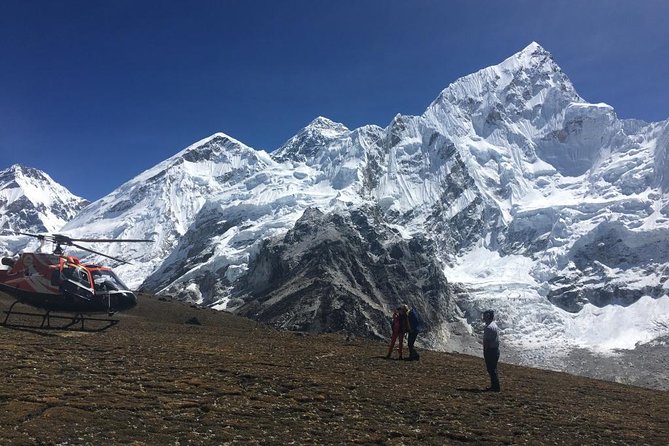
Guide support appears to be one of the strongest parts of this experience. Dipak is named as a mountain guide on past departures, and the descriptions of his work point to clear planning, useful information, and an enjoyable walking pace.
Buddhi is associated with trip planning, local communication, and practical help when flights changed. That matters in Nepal, where weather can alter the first or last transport leg with little warning. A guide who stays involved beyond the trail can make the difference between a manageable change and a costly scramble.
Porters named in past departures include Carmen and Desantis. You should confirm who will be assigned to your group, what weight limit applies, and how porter payment works, since the listed $30 daily fee is paid directly.
I would book this for a fit person who wants the full walking approach to Everest Base Camp but does not want to spend another several days retracing the route. It suits someone who values Sherpa villages, monasteries, and mountain scenery as much as the base camp sign.
It is less suitable if you need a fixed nine-day schedule, dislike basic tea house accommodation, or want one all-inclusive price with no extra calculations. The altitude and uncertain flight conditions also require patience.
Is the $9,999 price good value?
At $9,999 per person, this is a high-priced trek. It may offer value if the price truly includes the helicopter flights, private transportation, hotels, meals beyond breakfast, and close logistical support. Based on the supplied cost details, you should not assume that it does.
The listed inclusions are limited: tea house accommodation in the mountains, a trekking guide, entry and trekking permits, and nine breakfasts. Lunch and dinner are extra. Porter service is extra. Both helicopter legs are separately priced in the main trekking seasons.
That could add a substantial amount to the final bill. A shared Kathmandu to Lukla helicopter and a shared Gorakshep to Kathmandu helicopter together total $1,399 per person at the quoted seasonal rates, before porter fees, meals, and local transport. The package may have been designed around those additions, but the wording needs clarification.
The free cancellation policy allows a full refund when you cancel at least 24 hours before the start time. Changes or cancellations inside that window are not accepted for a refund, and poor weather may lead to a new date or full refund. Read the final booking terms carefully, especially if your international flights are not flexible.
Should you book this Everest Base Camp trek?
I would consider booking it if you want the classic Lukla to Everest Base Camp walk, value named guide support such as Dipak and Buddhi, and like the idea of flying out from Gorakshep rather than walking all the way back.
Before booking, ask one direct question: What is the exact total price for my dates, including both helicopter flights, meals, porters, transport, and accommodation? Also ask whether the advertised nine-day duration refers only to the trekking and helicopter portion, because the detailed schedule runs to 14 days.
If those points are settled in writing, the route offers a strong blend of mountain views, Sherpa culture, acclimatization, and time-saving transport. If the answers remain vague, choose a simpler package with a clear day-by-day plan and a firm list of inclusions.
FAQ
How long is the experience?
The summary describes the experience as approximately nine days, but the detailed day-by-day plan runs from arrival in Kathmandu through final departure over 14 days. Confirm the exact duration for your booking.
Where does the trek begin?
The trek begins with a flight from Kathmandu to Lukla, followed by a walk to Phakding. The listed Lukla flight time is about 35 minutes.
Is the return helicopter included in the price?
The cost details list the Gorakshep to Kathmandu helicopter separately at $999 per person for a shared flight in October, November, March, April, and May. Confirm whether your quoted package price includes it.
Is the Kathmandu to Lukla helicopter included?
The listed cost gives a separate shared helicopter price of $400 per person in October, November, March, April, and May. A private Kathmandu to Lukla helicopter is listed at $2,000.
What accommodation is included?
Tea house accommodation in the mountain region is included. The supplied information does not specify hotel accommodation in Kathmandu or private-room arrangements.
Are meals included?
Nine breakfasts are included. Lunch and dinner are paid locally.
What happens if bad weather cancels the experience?
The experience requires good weather. If it is canceled because of poor weather, you may be offered another date or a full refund. Cancellation at least 24 hours before the start time qualifies for a full refund under the stated policy.
Fresh on the helipad around Kathmandu
- Guaranteed Landing at Everest Base Camp Kalapathar by Helicopter★ 5.0 · 38 reviews
- Day Tour to Everest Base Camp By Helicopter★ 5.0 · 16 reviews
- Everest Base Camp Helicopter Tour with Hotel Everest View Landing★ 5.0 · 52 reviews
- Kathmandu To Lukla By Helicopter Flight★ 5.0 · 6 reviews
- Mount Everest Helicopter Tour with Landings★ 5.0 · 2 reviews
- Langtang Helicopter Tour★ 5.0 · 6 reviews
- Mount Everest Scenic Helicopter Tour★ 5.0 · 6 reviews
- Everest Base Camp Tour & View Point by Helicopter from Katmandu★ 5.0 · 3 reviews
Kathmandu Helicopter Tours, compared.
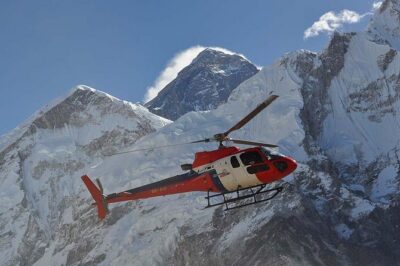
Everest Base Camp Helicopter Tour landing at Everest View Hotel
Read our review →Everest Base Camp Trek with Helicopter Return from Gorakshep to Lukla
Read our review →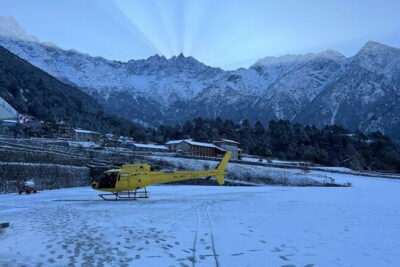
Everest Base Camp helicopter tour with landing
Read our review →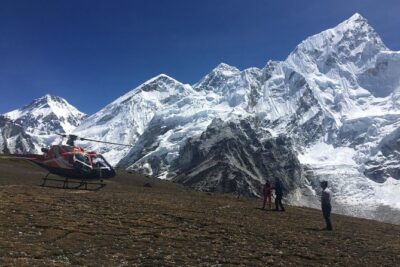
Guaranteed Landing at Everest Base Camp Kalapathar by Helicopter
Read our review →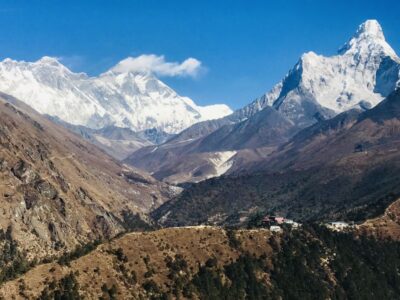
Landing Private Helicopter at Everest base camp & Gokyo for photo
Read our review →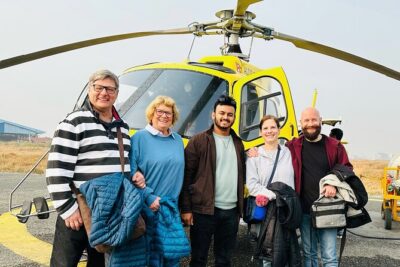
Everest Base Camp Helicopter Tour with Stop at Everest View Hotel
Read our review →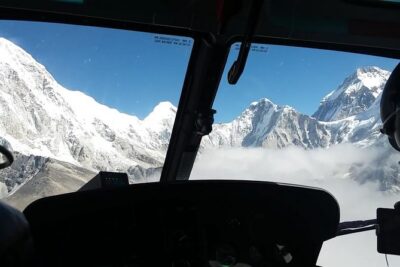
Everest Helicopter Tour from Kathmandu with Landing for Breakfast
Read our review →Other lists this flight appears in