
Review · KATHMANDU
Everest base camp trek & Heli return
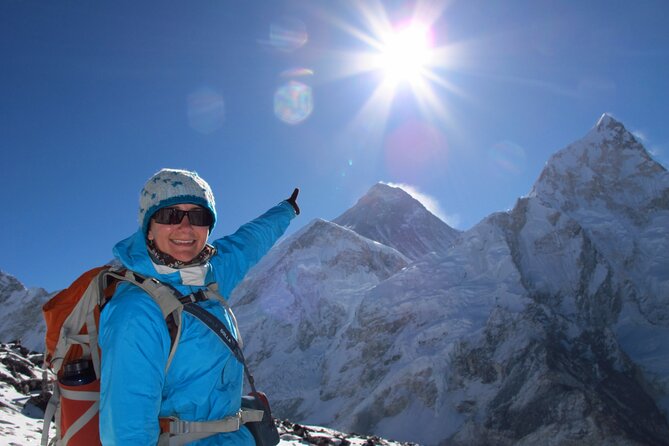
This seven-day Everest Base Camp trek packs a famous Himalayan route into a very tight schedule. You fly from Kathmandu to Lukla, walk uphill through Sherpa country, reach Base Camp on day six, climb Kala Patthar at dawn, then trade a long return trek for a shared helicopter flight from Gorakshep.
I like two things right away. First, you get the full walking approach through Phakding, Namche Bazaar, Tengboche, Dingboche, and Lobuche instead of simply flying into the high mountains. Second, the helicopter return saves several days of retracing your steps. Guide Padam has been praised for his calm manner and good English, while coordinator Kesh is known for quick communication and help with practical problems.
The catch is the pace. You gain altitude quickly, and the itinerary gives you only one acclimatization day in Namche before pushing higher. Strong fitness and good preparation matter, and the non-refundable booking rule makes travel insurance especially important.
Key points before you book
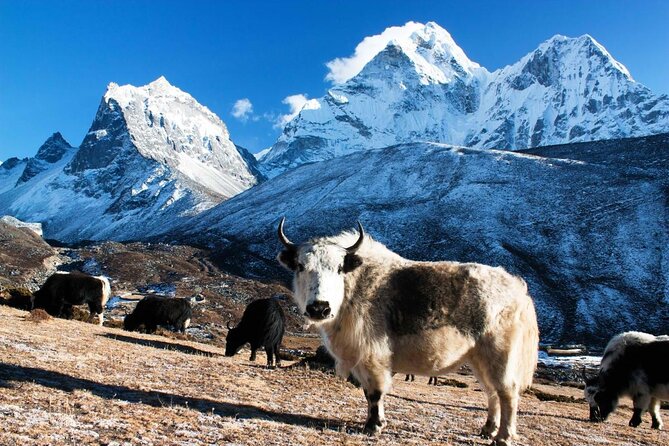
- Six trekking days, one helicopter return: You walk from Lukla to Base Camp, then fly from Gorakshep to Kathmandu after Kala Patthar.
- A demanding altitude profile: The route rises from Lukla to 5,545 meters at Kala Patthar in less than a week.
- Tea-house lodging: Overnight stays are in local tea-house lodges, with breakfast, lunch, and dinner included for six days.
- A small maximum group: The group can include up to 15 people, with an English-speaking government-licensed trekking guide.
- The best mountain views come at a cost: Namche, Tengboche, Lobuche, Base Camp, and Kala Patthar all bring strong scenery, but the walking days are long.
- Expect some flexibility: Lukla flights and helicopter flights depend on mountain weather, so plans can change.
Why this short Everest route is so appealing
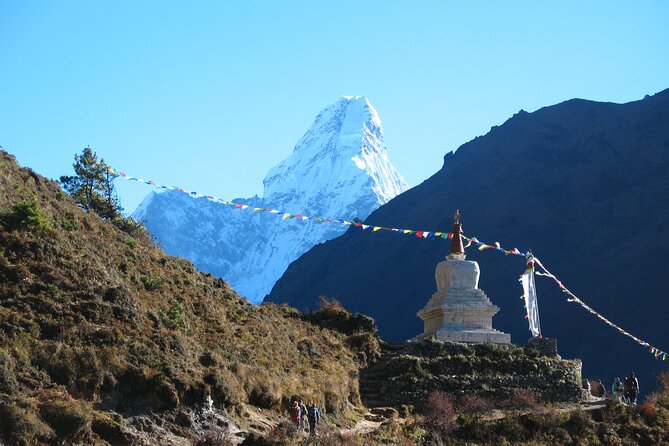
Most people associate Everest Base Camp with a long return trek. This version keeps the approach on foot but cuts out the return walk. That is the main reason to consider it. You still pass through the Khumbu villages and mountain trails, yet you avoid several days of descending the same route.
The tradeoff is a compressed schedule. The route reaches Namche Bazaar at 3,500 meters on day two, then Tengboche, Dingboche, Lobuche, and Gorakshep in quick succession. You are not getting a slow, leisurely high-altitude holiday. You are getting a focused mountain challenge with a convenient exit.
At $3,195 per person, the price needs a close look. It covers airport transfers, the Kathmandu to Lukla flight, tea-house lodging, permits and entrance fees, an English-speaking licensed guide, six breakfasts, six lunches, six dinners, and the shared helicopter from Gorakshep to Kathmandu. Those are substantial costs in a remote region.
The package does not cover Kathmandu hotels before or after the trek, personal gear, travel insurance, emergency evacuation, Wi-Fi, battery charging, hot showers, beverages, mineral water, or other personal expenses. The helicopter return is valuable, but you should still compare the total cost with a standard trek that returns by foot.
More Himalaya Helicopter Flights around Kathmandu:
- Everest Base Camp Helicopter Tour landing at Everest View Hotel
★ 5.0 · 668 reviews - Everest Base Camp Helicopter Tour landing at Hotel Everest View
★ 5.0 · 218 reviews - Everest Base Camp Trek with Helicopter Return from Gorakshep to Lukla
★ 5.0 · 161 reviews
Day one: Lukla to Phakding, 2,600 meters
Your day begins early at 5:15 a.m. at the parking area by the domestic terminal at Tribhuvan International Airport in Kathmandu. The flight to Lukla is short, but it places you immediately at the trailhead for the Everest region.
From Lukla, you walk to Phakding in about three to four hours. The route is manageable compared with what follows, though the early start, flight, and first day on foot can still feel tiring. Phakding, at 2,600 meters, is a useful first overnight stop because it lets your body begin adjusting before the bigger climb to Namche.
You sleep in a tea-house lodge. Meals are included, but drinks, bottled water, hot water, showers, Wi-Fi, and charging cost extra. Bring Nepalese rupees or confirm how the operator handles payments in the mountains, since the package does not cover these small expenses.
Day two: The hard climb to Namche Bazaar
The walk from Phakding to Namche Bazaar takes about four to five hours. It is one of the most important days in the program because you gain nearly 900 meters in elevation and enter the main Sherpa trading center of the Khumbu.
Namche is more than a stopping point. It is where the trail changes character, with a larger settlement, mountain shops, tea houses, and a busy meeting place for people heading toward Everest. The itinerary allows time to look around in the late afternoon, but it does not provide a full extra acclimatization day.
That matters. A traditional Everest Base Camp itinerary usually moves more slowly at this stage. Here, you must pay attention to your body, walk steadily, drink enough fluids, and tell your guide if you feel unwell. The listed fitness requirement is moderate, but the altitude makes this tougher than a normal moderate hike.
Day three: Rhododendron forests and Tengboche
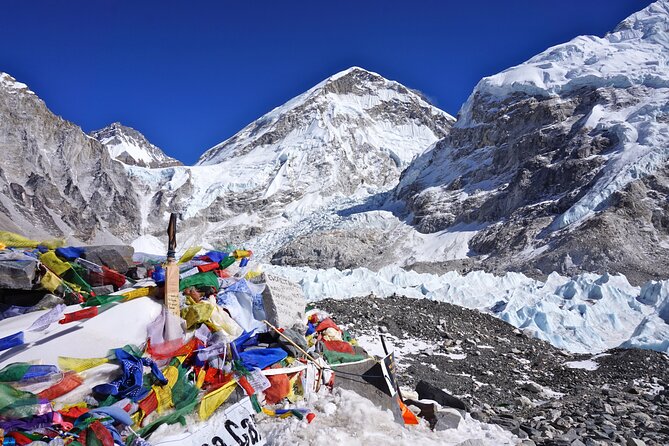
From Namche, you walk to Tengboche in roughly four to five hours. This section brings some of the route’s finest variety. You pass rhododendron forest, Mani walls, and chortens, with broad Himalayan views along the way.
Tengboche sits at 3,870 meters and is known for its monastery setting and mountain outlook. The itinerary does not promise a formal monastery visit or a particular ceremony, so you should treat this as a scenic overnight stop rather than a religious tour.
The trail can feel more demanding than its distance suggests. You are now well above Namche, and the air is thinner. Descents and climbs alternate, so conserve energy rather than racing the group. A guide such as Padam can be especially useful here, since pacing and clear instructions matter more as the altitude rises.
More Heli-Hikes around Kathmandu:
- Everest Base Camp Trek with Helicopter Return to Lukla – 10 Days
★ 5.0 · 34 reviews - Everest Base Camp Trek with Helicopter Return -11 Days
★ 5.0 · 12 reviews - Helicopter Return Everest Base Camp Trek, KTM-LUKLA & Gorakshep-KTM by Heli
★ 5.0 · 9 reviews - Everest Base Camp Trek with Helicopter Return – 10 Days
★ 5.0 · 9 reviews
Day four: Crossing the Imja Khola toward Dingboche
The sixth-hour walking day from Tengboche to Dingboche begins with a descent through rhododendron forest to Deboche. You then cross a bridge over the Imja Khola before climbing toward Pangboche and Somare.
This is a good example of why the route is not simply a high-altitude staircase. You descend before climbing again, and every loss of elevation must be regained. The villages give the day a human scale, while the river crossing adds a memorable physical point to the walk.
Dingboche sits at about 4,400 meters, although the supplied itinerary does not list its elevation. By this stage, you have climbed a long way in only four days. The overnight stay is important, but it is not presented as a separate rest day. Keep your expectations realistic: the schedule favors reaching the goal quickly rather than taking extra time to adapt.
Day five: Dingboche to Lobuche
The walk to Lobuche takes about six hours. The route brings views of Ama Dablam, Lhotse, Phortse Peak, and Cholatse, so this is a day when the surrounding peaks become a major part of the experience.
You continue to Dughla before climbing onward to Lobuche. The trail gets more serious here, not because the distance is extreme, but because altitude now affects every step. Cold, wind, and fatigue can also make a six-hour day feel longer.
Lobuche is the last overnight stop before the Base Camp push. Tea-house accommodation is simple, and personal comforts become less predictable at this height. Your guide, warm layers, sleeping gear, and careful packing matter more than small luxuries.
Day six: Lobuche, Gorakshep, and Everest Base Camp
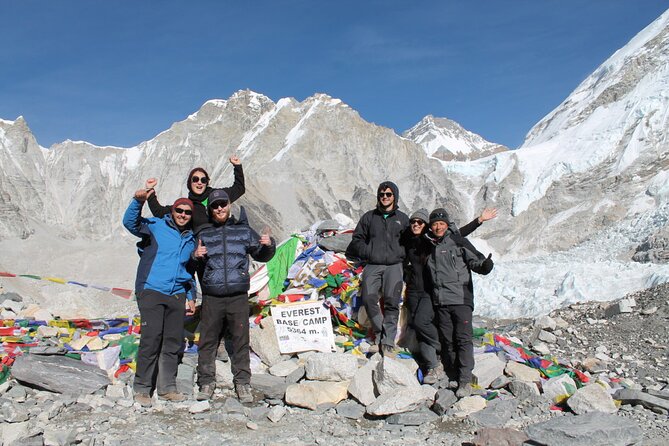
This is the main goal day. You leave Lobuche after breakfast and walk to Gorakshep, where you stop for lunch before continuing to Everest Base Camp at 5,364 meters.
The walking time is listed at about seven hours for the full day. The route passes through the Lobuche area and onward to Gorakshep, then continues across rough high-altitude ground toward Base Camp. The final section can be tiring, especially after several consecutive days of climbing.
Everest Base Camp itself is a powerful destination, but keep your expectations grounded. You reach the camp area, not the summit of Everest, and the appearance of the site can vary by season. The broader reward is the feeling of arriving at the end of the long approach, surrounded by the peaks and glaciers of the upper Khumbu.
After visiting Base Camp, you walk back to Gorakshep for the night. This out-and-back section is one reason the day is so demanding. You still need enough energy for the return after reaching your main target.
Day seven: Kala Patthar and the helicopter home
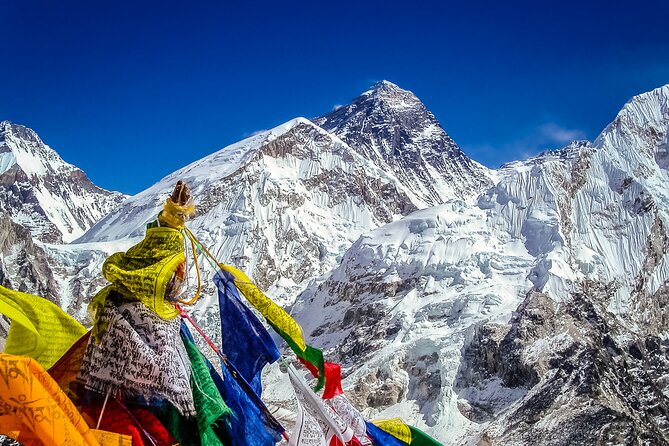
You start early for Kala Patthar, the highest point on the itinerary at 5,545 meters. The climb takes about two hours, followed by a return to Gorakshep for breakfast.
Kala Patthar is included because it offers the strongest stated viewpoint of Mount Everest and the surrounding Himalayas. Base Camp gives you the destination, but Kala Patthar gives you the elevated panorama. If weather is clear, this is likely to be the visual high point of the trip.
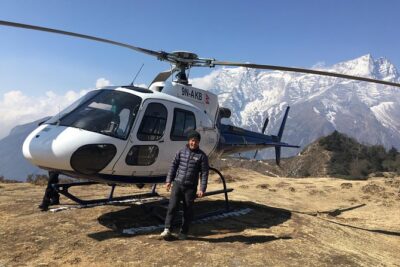
After breakfast, you take a shared helicopter from Gorakshep to Kathmandu. The flight is listed at about two hours, and the experience ends back at the original meeting point. Because it is a shared flight, you should not expect a private charter or complete control over departure timing.
Weather is a real practical factor. The route includes both a Lukla flight and a helicopter flight, and the mountain weather can delay either one. One useful feature of this operator is its reported willingness to stay in contact and help with changes when weather disrupts plans. Still, you should build flexibility into your wider Nepal schedule.
Guides, communication, and group size
The package includes an English-speaking government-licensed trekking guide. Guide Padam is specifically associated with this operator and has been praised for his mountain experience, calm support, friendly manner, and ability to answer questions in English.
Coordinator Kesh is another useful name to know. He has handled trip communication through WhatsApp, helped with changes, and even arranged boots for a person who forgot to bring them. That kind of practical assistance can matter in Nepal, where a small gear problem can become a major nuisance.
You may not be assigned Padam or communicate directly with Kesh, so treat those names as examples of the team rather than a guarantee. The maximum group size is 15. That is small enough for a guide to keep an eye on the group, though it is not the same as a private trek.
What is included, and what you still pay for
The included package is strongest on transport, permits, guiding, food, and lodging. You receive airport pickup and drop-off for the trek, the Kathmandu to Lukla flight, tea-house accommodation, required trekking permits and entrance fees, six breakfasts, six lunches, six dinners, and the helicopter return from Gorakshep.
You pay separately for:
- Kathmandu accommodation before and after the trek
- Personal trekking gear
- Travel insurance
- Emergency evacuation
- Battery charging and Wi-Fi
- Beverages, mineral water, and hot water showers
- Other personal expenses
The missing items are not minor at altitude. Good boots, warm clothing, and a suitable sleeping setup are your responsibility. Travel insurance with emergency evacuation cover is also essential for a high-altitude trek, especially under a non-refundable booking policy.
Who should choose this seven-day trek?
I would choose this route if you have limited time and strongly want to walk into Everest Base Camp rather than take a sightseeing flight. It suits a fit person who accepts long walking days, basic tea-house lodging, quick altitude gain, and a flexible schedule.
It is less suitable if you want a relaxed introduction to trekking, need a long acclimatization period, or dislike uncertain flight times. The word moderate in the fitness description should not fool you. The itinerary includes repeated five- to seven-hour days and reaches 5,545 meters.
This is also a better fit for someone who values the helicopter return enough to pay for it. If saving money matters more than time, a longer return trek may be worth comparing. If your priority is reaching Base Camp and returning quickly, the flight is the feature that makes this package distinctive.
Booking details worth knowing
Pickup and drop-off are included, and the meeting point is the TIA domestic terminal parking area in Kathmandu. The scheduled start is 5:15 a.m., so arrange your Kathmandu night before the trek with that early departure in mind.
Confirmation is normally issued at booking. If you book within two days of departure, confirmation can take up to 48 hours and remains subject to availability.
The experience is non-refundable and cannot be changed after booking. If the minimum group size is not reached and the operator cancels, you are offered another date or experience, or a full refund. Because the policy is strict, insurance is a sensible safeguard.
Should you book it?
Book this Everest Base Camp trek if you want the classic walking approach but cannot spare the time for a return journey. The route includes the key villages, high mountain views, Base Camp, Kala Patthar, and a helicopter exit. The guide support and practical communication associated with Padam and Kesh are useful advantages.
Think twice if you need gradual acclimatization or dislike basic lodging and weather delays. At $3,195, the package can be good value when you count the flights, meals, permits, guide, tea houses, and helicopter. You should still budget for gear, insurance, Kathmandu hotels, drinks, and mountain extras.
FAQ
How long does the Everest Base Camp trek and helicopter return take?
The experience lasts about seven days. You trek from Lukla to Everest Base Camp over six days, then climb Kala Patthar and fly by shared helicopter to Kathmandu on day seven.
Where does the trek begin?
The trek begins with an early flight from Kathmandu to Lukla. The meeting point is the TIA domestic terminal parking area in Kathmandu, with a scheduled start time of 5:15 a.m.
How high does the trek go?
Everest Base Camp is listed at 5,364 meters. Kala Patthar, the highest point on the route, is listed at 5,545 meters.
Is helicopter transport included?
Yes. A shared helicopter from Gorakshep to Kathmandu is included after the Kala Patthar hike and breakfast on day seven.
What accommodation is provided?
Overnight stays are in tea-house lodges along the trekking route. Hotel accommodation in Kathmandu before and after the trek is not included.
Are meals included?
Breakfast, lunch, and dinner are included for six days. Beverages, mineral water, hot water showers, and other personal food and drink expenses are not included.
What level of fitness is needed?
The activity requires a moderate physical fitness level. The itinerary includes walking days of about three to seven hours and rapid elevation gain, so you should be prepared for sustained uphill hiking at high altitude.
Fresh on the helipad around Kathmandu
- Guaranteed Landing at Everest Base Camp Kalapathar by Helicopter★ 5.0 · 38 reviews
- Day Tour to Everest Base Camp By Helicopter★ 5.0 · 16 reviews
- Everest Base Camp Helicopter Tour with Hotel Everest View Landing★ 5.0 · 52 reviews
- Kathmandu To Lukla By Helicopter Flight★ 5.0 · 6 reviews
- Mount Everest Helicopter Tour with Landings★ 5.0 · 2 reviews
- Langtang Helicopter Tour★ 5.0 · 6 reviews
- Mount Everest Scenic Helicopter Tour★ 5.0 · 6 reviews
- Everest Base Camp Tour & View Point by Helicopter from Katmandu★ 5.0 · 3 reviews
Kathmandu Helicopter Tours, compared.
Everest Base Camp Helicopter Tour landing at Everest View Hotel
Read our review →Everest Base Camp Trek with Helicopter Return from Gorakshep to Lukla
Read our review →
Everest Base Camp helicopter tour with landing
Read our review →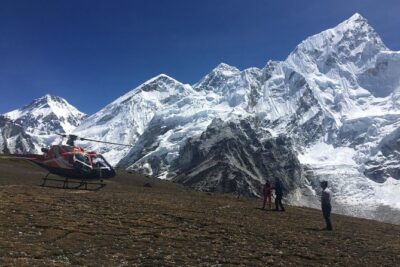
Guaranteed Landing at Everest Base Camp Kalapathar by Helicopter
Read our review →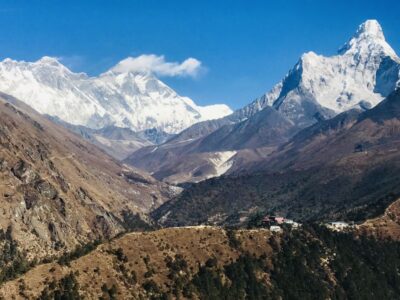
Landing Private Helicopter at Everest base camp & Gokyo for photo
Read our review →
Everest Base Camp Helicopter Tour with Stop at Everest View Hotel
Read our review →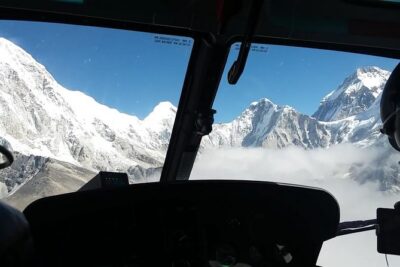
Everest Helicopter Tour from Kathmandu with Landing for Breakfast
Read our review →Other lists this flight appears in