
Review · KATHMANDU
Everest Base Camp trek with Helicopter return 9 days
Everest Base Camp is the prize, but the helicopter return from Gorakshep is what makes this nine-day trip possible for people short on time. You still walk through Sherpa villages, cross high mountain trails, and climb Kala Patthar, then skip the long descent.
I like the sensible acclimatization day in Namche Bazaar and the practical support: one porter for every two people, an experienced guide, permits, meals, and twice-daily oxygen and pulse checks. The main drawback is the pace. Seven full days in the mountains means long, tiring walking days, especially near Gorakshep and Kala Patthar.
Key points at a glance
- Helicopter return from Gorakshep: Finish the high-altitude section, then fly to Lukla rather than retracing the entire route on foot.
- Namche acclimatization day: You get a needed rest day with an outing toward Khumjung and the Everest View Hotel.
- Kala Patthar viewpoint: The final morning includes the classic high viewpoint at 5,644 meters.
- Private group format: Only your group takes part, with an experienced guide and porter support.
- Medical monitoring: An oximeter is used twice daily to check pulse, oxygen saturation, and heart rate.
- Cost and inclusions: At $3,888 per person, the price covers major logistics, meals, permits, guide costs, and flights, but not insurance, drinks, tips, or several personal expenses.
Why the helicopter return changes the Everest trek
The traditional Everest Base Camp route requires a long walk back to Lukla. This version removes that return trek. After reaching the high point around Gorakshep and Kala Patthar, you take a helicopter to Lukla, followed by the flight connection to Kathmandu included in the package.
That saves several mountain days and reduces the amount of time spent descending the same trail. I like this setup for anyone with limited annual leave, though it does not make the uphill section easy. The route still reaches very high altitude, and the difficult part comes before the helicopter.
The trek is described as moderate, but that word needs a little care. You do not need technical climbing skills, yet you do need a reasonable level of fitness. The trail becomes steeper and more remote above Dingboche, and the final days include long walks on rocky ground at thin-air elevations.
This is also a private activity, so your group does not need to match the pace of a large mixed party. That can make a real difference on a strenuous route. Your guide can help manage rest breaks and the day’s rhythm, although the fixed nine-day schedule still leaves little room for an unplanned slow day.
More Himalaya Helicopter Flights around Kathmandu:
- Everest Base Camp Helicopter Tour landing at Everest View Hotel
★ 5.0 · 668 reviews - Everest Base Camp Helicopter Tour landing at Hotel Everest View
★ 5.0 · 218 reviews - Everest Base Camp Trek with Helicopter Return from Gorakshep to Lukla
★ 5.0 · 161 reviews
Day 1: Kathmandu arrival and preparation
An airport representative meets you at the international terminal, transfers you by private car, and helps with hotel check-in and luggage. After some rest, you meet the main team.
This first day is more useful than it may sound. The Kathmandu arrival can be tiring, and the early Lukla flight on the next morning requires a prompt start. Use this time to confirm what your porter will carry, check your clothing and footwear, and ask the guide about the walking schedule.
The package includes private airport transfers and the guide’s services, but lunch and dinner in Kathmandu are not included. You should also budget for your Nepal visa, international flights, travel and medical insurance, and personal purchases.
Day 2: The short flight to Lukla and the first walk
The morning begins with a flight from Kathmandu to Lukla, home of Tenzing Hillary Airport. The flight is short and offers mountain views before you land at the main gateway to the Everest region.
From Lukla, porters join the group and the trek begins. The day is listed at about four hours of walking, giving you a manageable introduction to the route rather than throwing you straight into a major climb.
The route reaches Phakding, and the early section is a useful test of your boots, pack, and walking rhythm. Keep your daypack light. The porter arrangement is one porter for two people, so you should carry the items you may need during the day, including water, warm layers, sun protection, and medication.
The Kathmandu to Lukla flight and return flight are included. The helicopter return is listed separately from the regular flight, so the final transport plan involves flying by helicopter from Gorakshep to Lukla and then using the Lukla to Kathmandu flight connection.
Day 3: Forest paths and the approach to Namche Bazaar
From Phakding, the trail passes through rhododendron and magnolia forest toward Toktok at about 2,760 meters. The route continues toward Monjo, with bridge crossings near Bengkar Village.
The day is planned for about six hours. This is when the trek begins to feel like a serious mountain journey. You gain height, the path has more ups and downs, and the route leads toward Namche Bazaar, the main settlement and trading center of the Khumbu region.
Namche is not just a place to sleep. It is the key point where you begin adjusting to altitude. The town provides a useful pause before the trail climbs farther into the Everest region.
The itinerary information groups this section under Namche Bazaar and begins the following day in Khumjung. Exact overnight arrangements can vary with the guide’s plan and available tea houses, so confirm the night-by-night schedule before departure.
More Heli-Hikes around Kathmandu:
- Everest Base Camp Trek with Helicopter Return to Lukla – 10 Days
★ 5.0 · 34 reviews - Everest Base Camp Trek with Helicopter Return -11 Days
★ 5.0 · 12 reviews - Helicopter Return Everest Base Camp Trek, KTM-LUKLA & Gorakshep-KTM by Heli
★ 5.0 · 9 reviews - Everest Base Camp Trek with Helicopter Return – 10 Days
★ 5.0 · 9 reviews
Day 4: Namche acclimatization and Khumjung
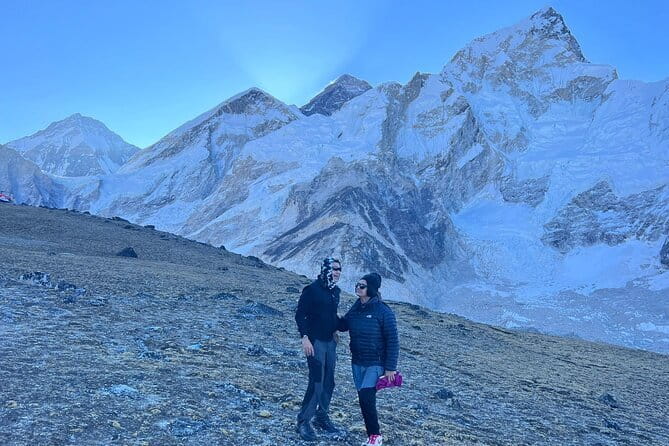
The rest day in Namche is one of the strongest parts of the plan. You do not simply sit indoors all day. The schedule includes an outing toward Syangboche Airstrip and the Everest View Hotel, with Khumjung included as a stop.
This is the classic acclimatization idea: climb a little higher during the day, then sleep lower in Namche. The outing gives you early views toward the Everest area while keeping the day shorter than a full trekking stage.
The listed walking time is about five hours, so this is an active rest day, not a complete day off. Take it slowly. You are better off treating this as a controlled altitude adjustment than trying to turn it into a sightseeing contest.
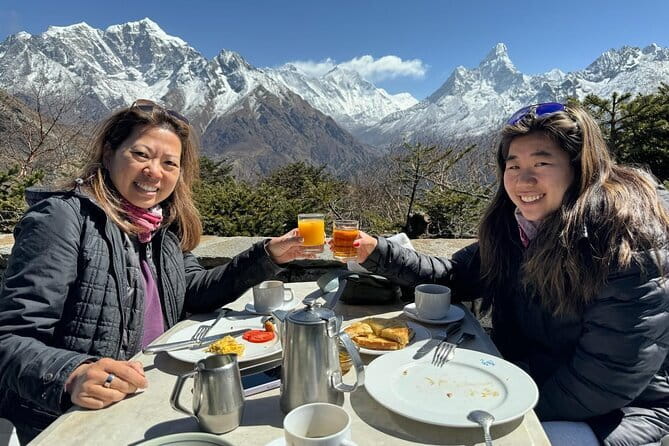
The Everest View Hotel section is also one of the itinerary’s more memorable moments because you begin to see the high peaks in a broader setting. Khumjung adds a quieter village stop away from the main trail through Namche.
Day 5: Kyangjuma and the trail beyond Namche
The path climbs from Namche toward Kyangjuma at about 3,550 meters. The walking time is listed at roughly five hours, with mountain views along the route.
This section mixes uphill trail with a descent toward Phunki Tenga before the route continues onward. That pattern matters: a trek can feel harder when you lose height after climbing, knowing you will need to regain it later.
The schedule supplied for this nine-day plan does not spell out every overnight stop between Kyangjuma and Dingboche. It does make clear that the route continues deeper into the Khumbu, and that the trail becomes more remote and steep after Dingboche at 4,410 meters.
Ask for the confirmed daily elevations before you leave Kathmandu. The guide team should be able to explain where you sleep each night and how the itinerary connects Kyangjuma, Tengboche, Dingboche, Lobuche, and Gorakshep.
Day 6: Tengboche and the high mountain trail
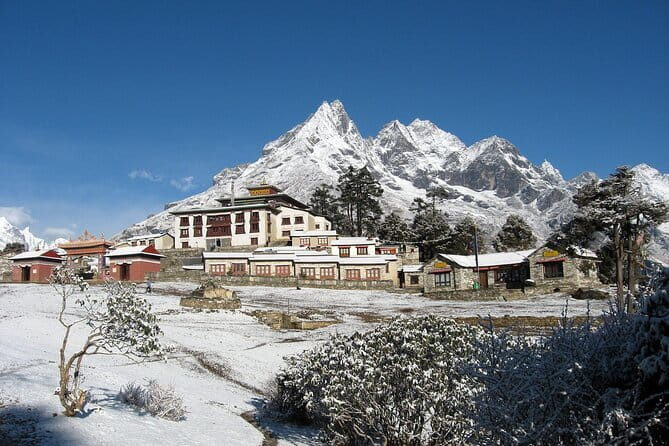
The day includes an early start for sunrise and the route toward Tengboche. From Tengboche, the trail drops through rhododendron forest to Deboche at about 3,320 meters.
The scenery changes as you climb. Lower forest gives way to more open ground, with wide mountain views and a sense that the villages are becoming farther apart. The route may offer sightings of musk deer, blue sheep, and mountain goats, although wildlife is never guaranteed.
Tengboche is a major stop on the route and one of the most atmospheric places in the itinerary. The early sunrise start gives you a good chance to see the surrounding peaks in morning light, but it also adds to the day’s fatigue. Pack your headlamp and warm layers where you can reach them quickly.
The walking time is about five hours. At this stage, steady pacing is more useful than speed. Drink regularly, eat even when your appetite is low, and tell your guide early if you develop a headache, nausea, or unusual shortness of breath.
Day 7: Dingboche and the Khumbu Glacier
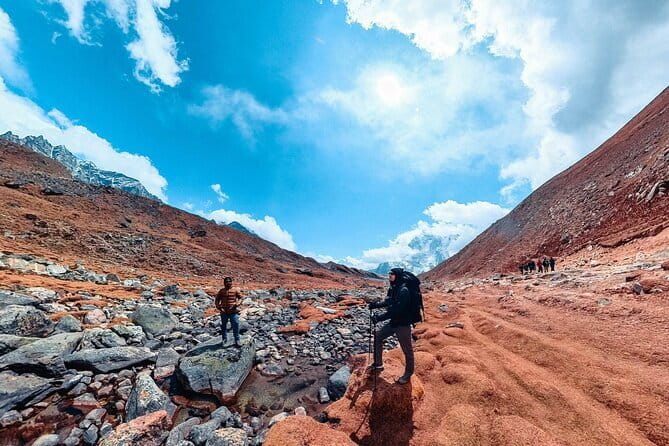
The high section begins in earnest around Dingboche. The route leaves the village and climbs a ridge, with views toward Cholatse and Tawache before continuing toward the Khumbu Glacier.
About six hours of walking are planned. The trail is more exposed, rocky, and remote than the lower sections. You should expect a slower pace here, especially as the elevation increases.
The Khumbu Glacier is one of the most distinctive parts of the trek. You walk beside a huge field of ice and rock rather than through forest or farmland. The setting feels stark and powerful, but the ground can be uneven, so good footwear and walking poles are useful.
This is also where the limits of a nine-day plan become clear. You are gaining altitude on a set schedule, and there is little spare time. The guide’s twice-daily checks with an oximeter are a sensible safety measure, but they do not replace paying attention to how you feel.
Day 8: Lobuche to Gorakshep and Everest Base Camp
Day eight is the big walking day. From Lobuche, the trail follows a broad valley toward Gorakshep, then continues over a rocky route. The walk is listed at about eight hours.
The trail gradually gets steeper as the elevation rises. Gorakshep is the last major stop before the high viewpoint and base camp section, so this day demands patience. The route is not described as technical climbing, but the altitude and rough surface make every uphill stretch harder.
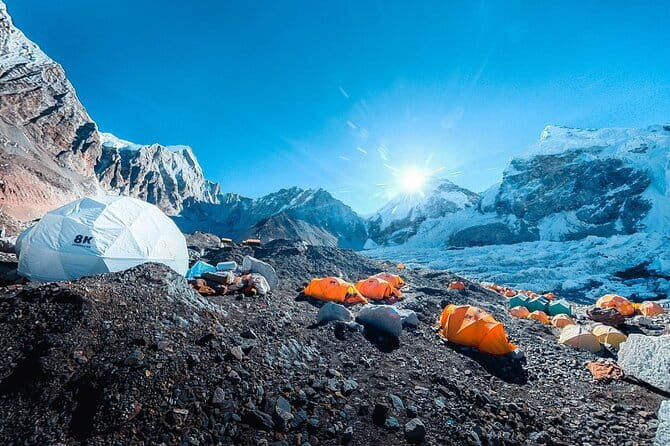
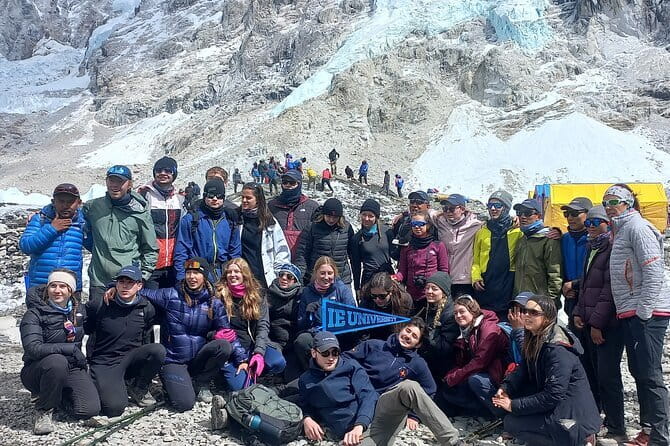
The walk toward Everest Base Camp follows the Khumbu Glacier area. Base Camp itself is a major goal, but the route is also valuable because it shows the scale of the glacier and the high valley around it.
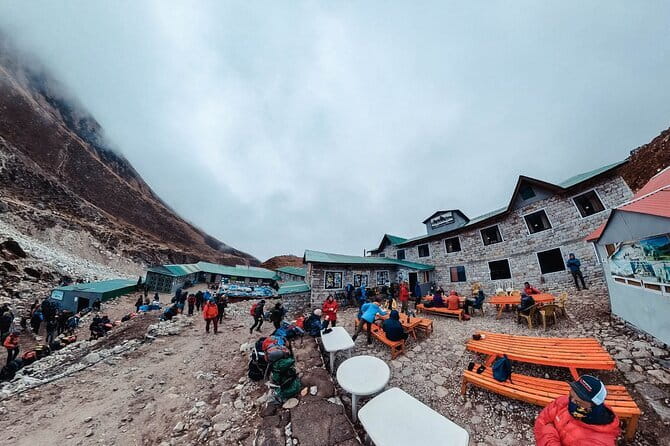
Do not expect a gentle sightseeing stroll. An eight-hour day at this height can leave you tired, cold, and short of appetite. Keep your gloves, hat, water, and extra layer accessible rather than buried in a duffel bag.
Day 9: Kala Patthar and the helicopter back to Lukla
The final morning begins with the climb to Kala Patthar. The trail starts above Gorakshep and is well used and easy to follow, but the altitude makes the climb demanding. The schedule allows about six hours for the day.
The reward is the famous high viewpoint at 5,644 meters, or 18,519 feet. Early sunlight gives the mountains a golden glow, making this one of the best photo opportunities on the route. You cannot leave the Everest area without allowing time for this viewpoint, but you should also recognize that it is higher than Base Camp and can feel harder than expected.
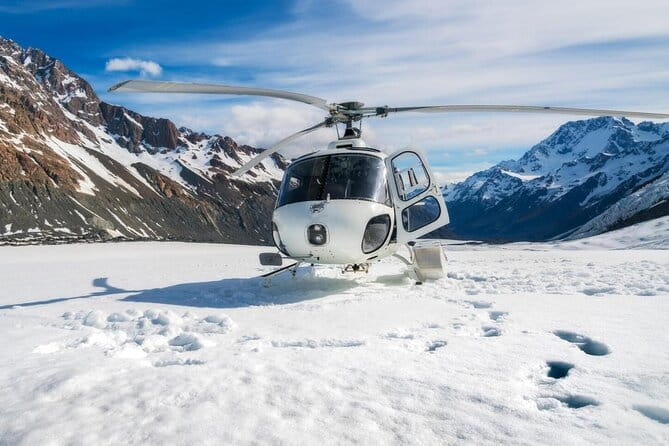
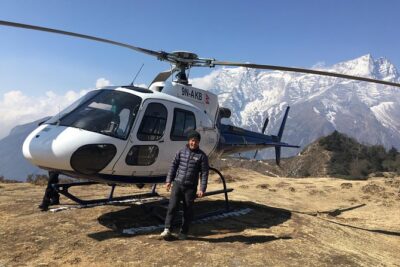
After the high-altitude walk, the helicopter takes you from Gorakshep to Lukla. This is the trip’s defining convenience. Instead of spending several more days walking downhill, you get an aerial view of the route and return to the airstrip for the Kathmandu flight connection.
The helicopter is included, but the plan remains dependent on the operating schedule and conditions in the mountains. It is sensible to keep your final Kathmandu arrangements flexible rather than booking a tight onward international connection immediately after the trek.
What the $3,888 price covers
At $3,888 per person, this is not a budget trek. The value comes from the amount of high-cost logistics bundled into a short program.
The price includes private ground transport, Kathmandu to Lukla and Lukla to Kathmandu flights, the helicopter from Gorakshep to Lukla, an experienced guide, one porter for two people, permits, government fees, taxes, meals during the trek, and a trip completion certificate.
It also includes the guide’s salary, food, lodging, transport, and insurance. A first aid kit and oximeter are provided, with checks twice a day. Those details are worth noting because support at altitude is not an optional extra.
Eight breakfasts, eight lunches, and eight dinners are included. You still pay for food in Kathmandu, drinks on the trail, desserts, hot showers, and phone charging. Tea house showers and charging generally cost about $2 to $5, according to the supplied details.
Tips for the guide, porter, and driver are expected and are not included. Add that to your real budget, along with insurance that covers trekking and medical care, visa costs, international airfare, and personal spending.
Who should book this trek
I would consider this trip if you want Everest Base Camp but cannot spare the longer schedule needed for a full return trek. It suits people who are comfortable walking for several hours on consecutive days and who prefer a private group with organized support.
It also suits families and small groups that want the guide’s full attention. A past family booking on this route was described as professional and well organized, while guide names connected with the operator include Raj and Ramesh. Ask who will lead your specific departure, since the assigned guide may differ.
I would hesitate if you want a relaxed holiday, dislike early starts, or have little experience with long uphill walks. The word moderate should not disguise the altitude. You need travel and medical insurance, and you should be ready for cold, basic tea house conditions and paid extras.
The operator permits service animals and the activity is near public transportation, but the trek itself requires moderate physical fitness. The private format does not remove the physical demands of the route.
Booking, cancellation, and practical checks
Confirmation is provided at booking, and pickup is offered. Free cancellation is available up to 24 hours before the local start time. Cancellations within 24 hours are not refunded, and changes in that final 24-hour window are not accepted.
Before paying, ask for the full overnight plan, the exact flight sequence after the helicopter, the porter baggage limit, and the name of your guide. Also confirm what happens if your Lukla flight or helicopter movement cannot operate as planned, since the listed program relies heavily on air transport.
Should you book the Everest Base Camp helicopter return trek?
Book it if time is your main obstacle and you want the best-known Everest route without walking back to Lukla. You still earn the experience on foot: Namche, Khumjung, Tengboche, the Khumbu Glacier, Base Camp, and Kala Patthar are all part of the journey.
The strongest reasons to choose it are the private format, solid inclusion list, acclimatization day, medical monitoring, and helicopter return. The main caution is the compressed schedule and high price. If you can afford $3,888 plus insurance, tips, drinks, and personal costs, and you are prepared for demanding mountain days, this is a practical short version of the Everest Base Camp trek.
FAQ
How long is the Everest Base Camp helicopter return trek?
The trip lasts approximately nine days. It includes arrival support in Kathmandu, the mountain trek, the Kala Patthar walk, and the helicopter return from Gorakshep to Lukla.
Is the tour private?
Yes. Only your group participates in this activity.
What level of fitness is required?
The tour requires a moderate level of physical fitness. The route includes several walking days of about four to eight hours and reaches Kala Patthar at 5,644 meters.
Is the helicopter flight included?
Yes. The helicopter flight from Gorakshep to Lukla is included, along with the Kathmandu to Lukla and Lukla to Kathmandu flights listed in the package.
Is an acclimatization day included?
Yes. Day four is a rest and acclimatization day in Namche Bazaar, with an outing toward Khumjung, Syangboche Airstrip, and the Everest View Hotel.
Are meals included?
Breakfast, lunch, and dinner are included during the trek, with eight of each listed. Lunch and dinner in Kathmandu are not included.
Are permits and government fees included?
Yes. Trekking permits, required entry fees, taxes, and official government costs are included.
What expenses are not included?
You pay separately for your visa, international airfare, travel and medical insurance, personal expenses, Kathmandu lunches and dinners, drinks, desserts, tea house hot showers, phone charging, and tips for the guide, porter, and driver.
Fresh on the helipad around Kathmandu
- Guaranteed Landing at Everest Base Camp Kalapathar by Helicopter★ 5.0 · 38 reviews
- Day Tour to Everest Base Camp By Helicopter★ 5.0 · 16 reviews
- Everest Base Camp Helicopter Tour with Hotel Everest View Landing★ 5.0 · 52 reviews
- Kathmandu To Lukla By Helicopter Flight★ 5.0 · 6 reviews
- Mount Everest Helicopter Tour with Landings★ 5.0 · 2 reviews
- Langtang Helicopter Tour★ 5.0 · 6 reviews
- Mount Everest Scenic Helicopter Tour★ 5.0 · 6 reviews
- Day Tour to Everest Base Camp By Helicopter from Kathmandu group sharing flight★ 5.0 · 16 reviews
Kathmandu Helicopter Tours, compared.
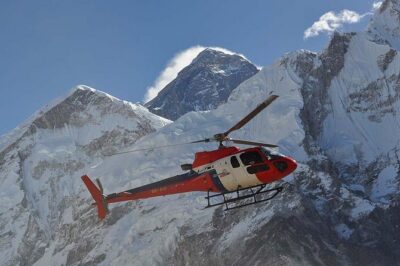
Everest Base Camp Helicopter Tour landing at Everest View Hotel
Read our review →Everest Base Camp Trek with Helicopter Return from Gorakshep to Lukla
Read our review →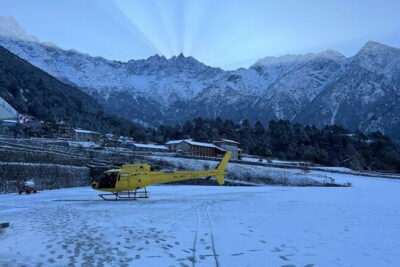
Everest Base Camp helicopter tour with landing
Read our review →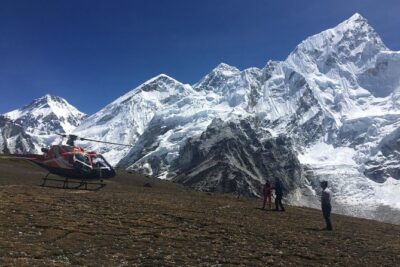
Guaranteed Landing at Everest Base Camp Kalapathar by Helicopter
Read our review →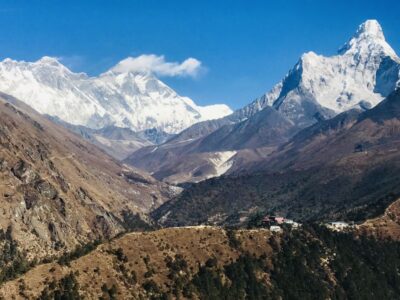
Landing Private Helicopter at Everest base camp & Gokyo for photo
Read our review →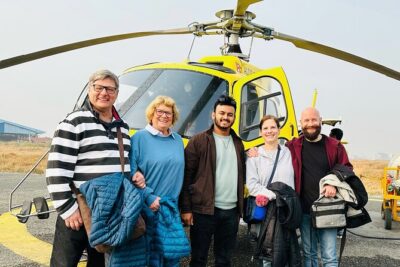
Everest Base Camp Helicopter Tour with Stop at Everest View Hotel
Read our review →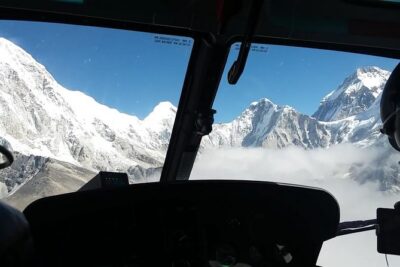
Everest Helicopter Tour from Kathmandu with Landing for Breakfast
Read our review →Other lists this flight appears in