
Review · KATHMANDU
Everest Base Camp Trek with Helicopter Return from Gorakshep to Lukla
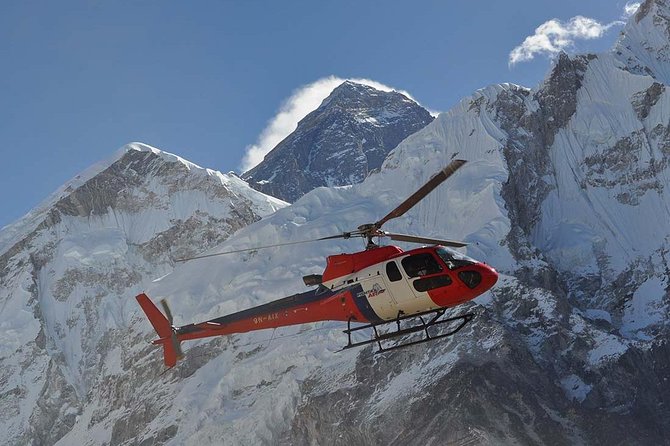
The clever part of this Everest trip comes at the end: after walking to Everest Base Camp and Kala Patthar, you skip the long return trek and fly by shared helicopter from Gorakshep to Lukla. That 20-minute mountain flight saves several walking days and gives you one last sweeping look at the Khumbu region.
I like the built-in acclimatization days at Namche Bazaar and Dingboche, plus the practical support: a local English-speaking guide, one porter for every two people, permits, meals, filtered trail water, and a first-aid kit with an oxygen monitor. The main caution is simple: this is still a demanding high-altitude trek. A helicopter return does not make the walk to 5,365 meters easy.
Key points to know before you book
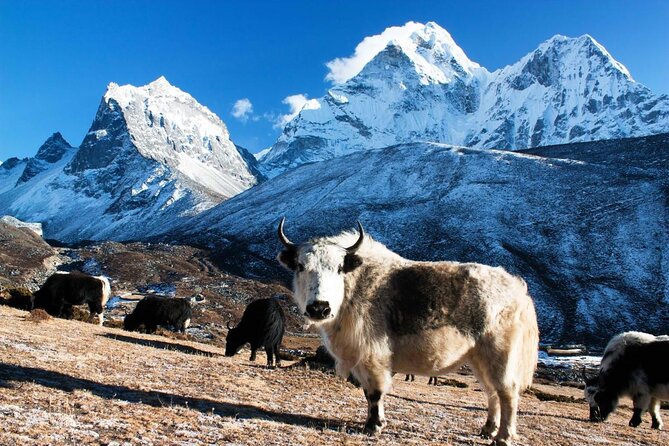
- The route reaches Everest Base Camp at 5,365 meters, with a separate climb to Kala Patthar at 5,555 meters for the best stated mountain views.
- A 20-minute shared helicopter flight from Gorakshep to Lukla replaces the normal multi-day return on foot.
- Two acclimatization days are included, one around Namche and one with a hike to Nangkartshang Peak above Dingboche.
- One porter is assigned for every two people, while guides and staff receive food, lodging, insurance, equipment, and medicine from the operator.
- The $3,000 price includes a lot, including domestic flights, permits, meals, trekking lodging, Kathmandu hotel nights, and the helicopter transfer.
- Weather can alter the plan, especially flights to Lukla and the helicopter from Gorakshep, so keep your schedule flexible.
Why the helicopter return changes the Everest Base Camp trek
Most people picture the Everest Base Camp route as an out-and-back walk from Lukla. This version keeps the famous approach but cuts out much of the return. After reaching Base Camp and climbing Kala Patthar, you take a shared helicopter from Gorakshep to Lukla, then continue by air toward Kathmandu according to the operating schedule.
That matters because the return route is not a gentle stroll. You would still face long descents, tired legs, and the same rough mountain paths. The helicopter gives you more time in the high Khumbu and less time retracing your steps.
The flight itself is short, about 20 minutes, but weather can affect it. The tour also depends on the Kathmandu to Lukla flight at the beginning and the Lukla to Kathmandu flight near the end. I would treat the stated 12 days as an approximate schedule, not a guarantee carved in stone.
More Himalaya Helicopter Flights around Kathmandu:
- Everest Base Camp Helicopter Tour landing at Everest View Hotel
★ 5.0 · 668 reviews - Everest Base Camp Helicopter Tour landing at Hotel Everest View
★ 5.0 · 218 reviews - Everest Base Camp helicopter tour with landing
★ 5.0 · 61 reviews
What the $3,000 price really covers
At $3,000 per person, this is not a budget trek. It is also more than a simple guided walking package. The price includes two nights in a three-star Kathmandu hotel with breakfast, twin-sharing guesthouse accommodation during the trek, all standard trekking meals, domestic airfare, a shared helicopter flight, national park and TIMS permits, a guide, porters, staff costs, filtered water, and government taxes.
You also receive a duffel bag, trekking map, and sun hat to keep. Staff costs include their wages, food, accommodation, insurance, equipment, and medicine. That removes many expenses that can surprise you on a high-altitude trek.
You still need to budget for international flights, a Nepal entry visa, travel insurance with emergency rescue and evacuation cover, drinks, personal gear, Kathmandu lunches and dinners, and tips. Alcoholic drinks and hot and cold beverages are not included. Tipping is expected, so do not treat it as an optional afterthought.
The strongest value here is logistical. You are paying for a team to arrange transport, permits, food, lodging, baggage support, and a helicopter exit in a remote region. If you already own trekking equipment and are comfortable organizing high-altitude travel yourself, the price may feel steep. If you want one company handling the moving parts, it is easier to justify.
Day 1 in Kathmandu: arrival and preparation
Your arrival at Tribhuvan International Airport is met by a company representative, followed by a private vehicle transfer to your hotel. A pre-trip meeting introduces you to the guide and gives you time to settle in.
This first day has real value. You can check your equipment, ask questions, and learn how the walking days will work before leaving the city. Since the trek requires at least two people and may have up to 14 participants, the meeting is also when you begin to understand the pace and group arrangement.
The Kathmandu hotel night includes breakfast. Lunch and dinner in the city are your responsibility.
Day 2: the flight to Lukla and the walk to Phakding
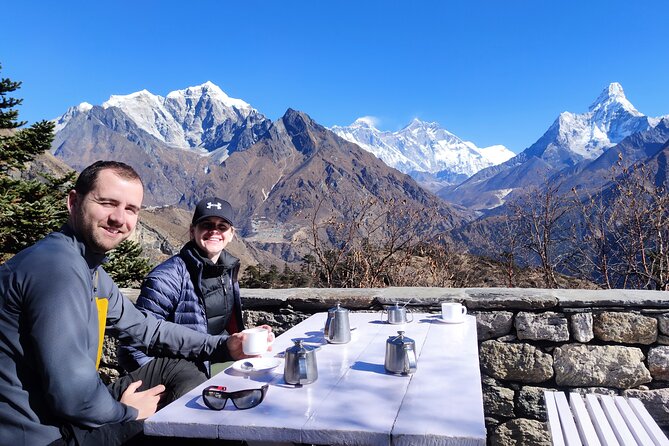
The morning starts at Kathmandu’s domestic airport with a scenic flight of about 35 minutes to Tenzing and Hillary Airport in Lukla, at 2,804 meters. This is the gateway to the trek.
From Lukla, you walk to Phakding. The day combines air travel with your first taste of the trail, so it is more than a simple transfer. You begin in a busy mountain settlement, then move onto walking paths beside the Dudh Koshi River.
Phakding is lower than Lukla and makes a sensible first overnight stop. You sleep in a trekking guesthouse, with meals included. The guesthouses in Lukla, Phakding, and Namche are listed with attached toilets, while conditions elsewhere may be more basic.
More Heli-Hikes around Kathmandu:
- Everest Base Camp Trek with Helicopter Return to Lukla – 10 Days
★ 5.0 · 34 reviews - Everest Base Camp Trek with Helicopter Return -11 Days
★ 5.0 · 12 reviews - Helicopter Return Everest Base Camp Trek, KTM-LUKLA & Gorakshep-KTM by Heli
★ 5.0 · 9 reviews - Everest Base Camp Trek with Helicopter Return – 10 Days
★ 5.0 · 9 reviews
Day 3: suspension bridges on the way to Namche Bazaar
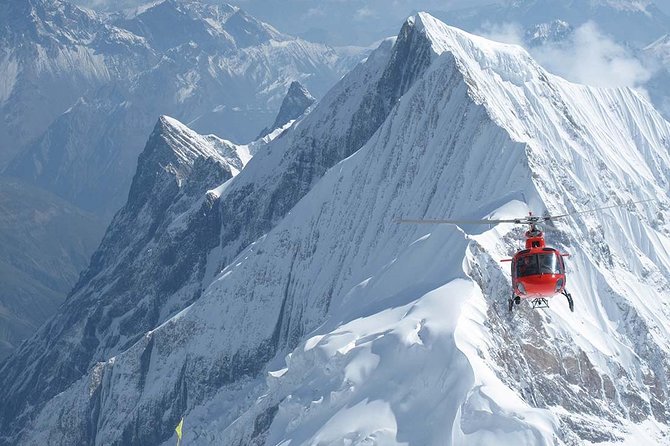
The walk from Phakding to Namche takes about six hours. The route follows the Dudh Koshi and crosses the river several times on suspension bridges hung with prayer flags.
These bridges are one of the memorable features of the approach. They are not technical climbing, but they can feel exciting when you look down at the river and watch the bridge sway under a line of hikers and pack animals.
Namche Bazaar is the main trading center of the Khumbu region and the first major altitude jump of the route. The day is long enough to test your legs, but the bigger challenge is adjusting to thinner air. You should walk steadily and avoid treating the first few days like a race.
Day 4: acclimatizing above Namche
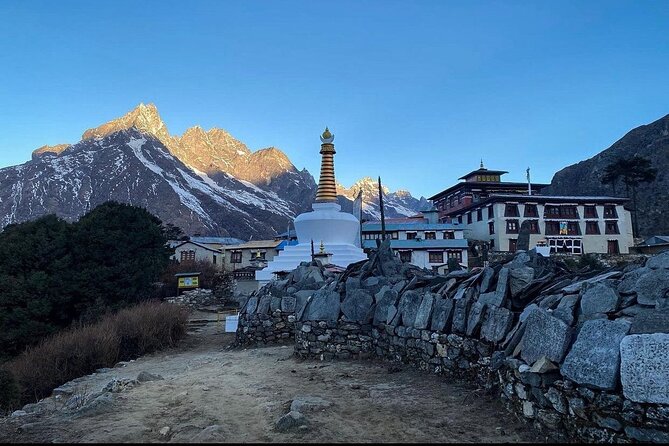
You spend a day in and around Namche rather than pushing farther up the valley. The planned outing includes the Everest View Point and a short hike for mountain views and sunrise.
This is one of the most important days in the program. Acclimatization is not a spare day added for comfort. It gives your body time to adjust before the route climbs much higher.
The listed viewpoint outing takes about 24 minutes as a stated activity duration, but the broader day is for acclimatizing around Namche. Ask your guide how much walking is planned, since the exact outing can depend on weather and group condition.
Day 5: Tengboche and its hilltop monastery
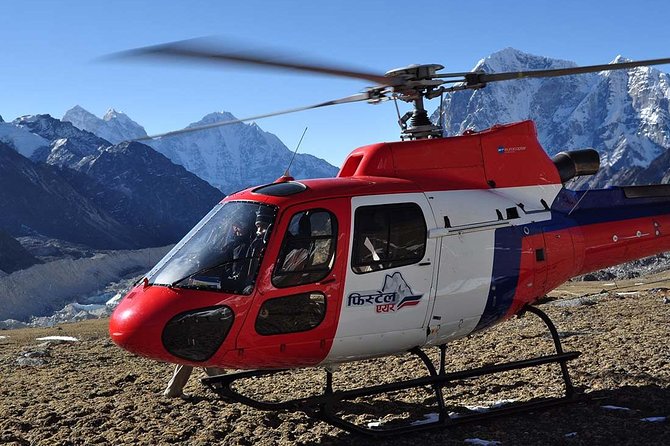
The trail continues beside the Dudh Koshi, with mountain views along the way, and climbs to Tengboche at 3,860 meters. The route first drops to Debuche, crosses the Imja Khola, and then climbs again.
Tengboche is known for its monastery, one of the cultural highlights of the route. The setting gives the day more character than a simple march between lodges. Prayer flags, mani stones, forested sections, river crossings, and high peaks make this part feel varied.
The altitude now becomes a serious factor. Even if you feel strong in Namche, the jump to Tengboche can bring headaches, poor sleep, or slower walking. Let your guide know how you feel. The first-aid kit includes an oximeter for checking oxygen saturation, but a reading is only one part of judging your condition.
Day 6: Pangboche and Dingboche
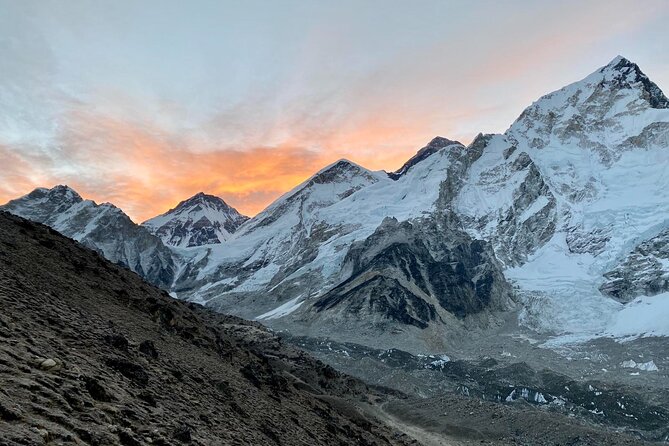
The route passes through Pangboche, with its mani stones, then continues uphill toward Dingboche. The day follows the Imja Khola area and reaches about 4,400 meters at Dingboche.
You are now above the tree line for much of the route, and the surroundings feel more open and stark. The walking may look straightforward on a map, but altitude makes each climb slower. A pace that feels almost comically cautious is the correct pace here.
Dingboche is an important overnight stop because the next day is another acclimatization day. Your meals and lodging are covered, but hot drinks and other beverages are not, so carry enough Nepalese rupees for personal purchases.
Day 7: Nangkartshang Peak acclimatization hike
Instead of gaining distance toward Base Camp, you climb Nangkartshang Peak above Dingboche. The peak is used as a viewpoint, especially for surrounding Himalayan scenery.
This is a smart design choice. You gain height during the day, then sleep at a lower elevation in Dingboche. That pattern helps prepare you for Lobuche, Gorakshep, and Base Camp.
The hike is not merely a rest day. It adds another demanding uphill outing at high altitude. If you are tired, tell your guide and keep the effort controlled. The purpose is acclimatization, not winning a race to the top.
Day 8: the moraine and memorials near Lobuche
The trail climbs toward Lobuche beside the lateral moraine of the Khumbu Glacier. It also passes stone memorials dedicated to climbers who died on nearby peaks.
This is a quieter and more serious part of the trek. The memorials give a human weight to the mountains around you. They also remind you that Everest is not only a famous viewpoint or a personal challenge. It is a demanding climbing region with real risks.
Lobuche marks another high overnight stop. By now, the cold, altitude, long walking hours, and simple lodging can wear you down. The tour provides three daily meals, and that steady food supply matters when your appetite and energy are changing.
Day 9: the long walk to Everest Base Camp
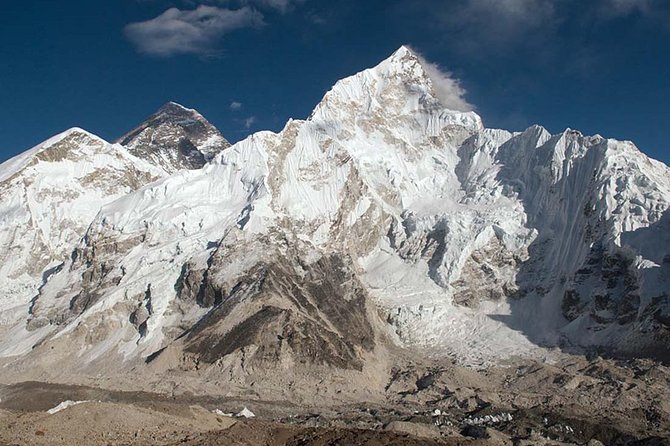
The walk from Lobuche to Everest Base Camp is one of the hardest days. You follow the Khumbu Glacier and reach Base Camp at 5,365 meters, the highest point on the main route before Kala Patthar.
Base Camp itself can look different depending on the season. In spring, climbing activity may be visible, but the exact scene changes throughout the year. Do not expect a permanent village or a simple viewpoint. The route across the glacier area is rough, and the high altitude can make the final miles feel much longer than the distance suggests.
This day is about the achievement of reaching the foot of the world’s highest mountain, but it is also a test of pacing. Eat, drink what is available, and follow the guide’s instructions. You return to Gorakshep or the planned overnight area according to the operational schedule.
Day 10: Kala Patthar at 5,555 meters
The climb to Kala Patthar is described as one of the most difficult yet rewarding parts of the trek. At 5,555 meters, it is higher than Everest Base Camp and offers the stated best mountain views on the route.
The ascent is short in distance but demanding in thin air. You may take frequent breaks, and that is normal. The effort is rewarded with broad views toward the great Himalayan peaks and the Khumbu region.
The listed activity duration is about 30 minutes, but that should not be read as the full day. The climb, descent, preparation, and high-altitude walking around Gorakshep take much longer. Confirm the exact timing with your guide, especially if the helicopter is scheduled for later that day.
The Gorakshep to Lukla helicopter flight
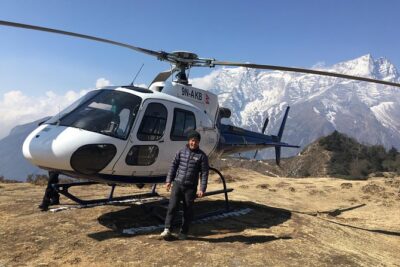
The signature feature comes after the high-point walking days. A shared helicopter carries you from Gorakshep to Lukla in about 20 minutes.
This is not a private sightseeing charter. The flight is shared, and operations depend on weather and aircraft availability. Still, it gives you a fast exit from the high Khumbu and a remarkable aerial view of the route you just walked.
The helicopter may operate on Day 10 or Day 11 depending on the company’s exact plan, weather, and local conditions. The supplied schedule describes Day 11 as Lukla and also refers to a 35-minute flight onward to Kathmandu. Confirm the precise sequence before departure, since the central promise is the Gorakshep to Lukla flight followed by the domestic journey toward Kathmandu.
Guides, porters, and group size
The operator provides an English-speaking, locally licensed guide trained in first aid. Guides named on past departures include Raj, Ram, Madan, Rajendra, Maddy, Saman, and others, but your assigned guide will depend on the departure.
The service is backed by one porter for every two people. That is a useful ratio because you carry a daypack while the porter handles the main luggage. Staff insurance, equipment, medicine, food, and lodging are included in the package.
The maximum group size is 14, and the minimum booking is two people. A smaller group can make communication easier, but the exact feel depends on who joins your departure. Your guide controls the practical pace and responds to weather, altitude, and group condition.
Who should book this trek?
You should consider it if you want the classic Everest Base Camp route but do not want to spend several extra days walking back to Lukla. It suits people with moderate physical fitness who are ready for repeated long walking days and altitude above 5,000 meters.
You should not book it as a casual sightseeing trip. The itinerary includes steep sections, suspension bridges, cold conditions, simple guesthouses, and two very high days at Base Camp and Kala Patthar. Travel insurance must cover emergency rescue and evacuation, and you should be prepared to carry personal equipment suitable for the trek.
The helicopter return is especially useful if your holiday time is limited. It is less suitable if you want the full out-and-back walking experience or if you strongly dislike weather-dependent air travel.
Should you book the Everest Base Camp trek with helicopter return?
I would book this trip if you want strong logistical support and the helicopter exit has real value for your schedule. The combination of acclimatization days, a guide, porter support, permits, meals, domestic flights, and high-altitude medical checks gives you a well-organized framework for a serious trek.
I would pause if $3,000 is your absolute travel limit, since gear, insurance, drinks, tips, visas, and international flights sit outside the price. I would also confirm the Day 10 and Day 11 flight sequence before paying.
For a fit hiker who wants to reach Everest Base Camp and Kala Patthar without retracing the entire route on foot, this is a strong choice. Go in knowing the helicopter is a convenience at the end, not a shortcut through the hard part.
FAQ
How long does the Everest Base Camp trek with helicopter return take?
The experience lasts approximately 12 days, including arrival and departure arrangements in Kathmandu.
Where does the trek begin?
The trek begins with a flight from Kathmandu to Tenzing and Hillary Airport in Lukla, located at 2,804 meters.
How long is the helicopter flight from Gorakshep to Lukla?
The helicopter flight takes about 20 minutes and is shared with other passengers.
Does the tour include meals?
Yes. Breakfast, lunch, and dinner are included during the trek, along with a farewell dinner. Lunch and dinner in Kathmandu are not included.
Is accommodation included?
Yes. The package includes two nights in a twin-sharing three-star Kathmandu hotel with breakfast and twin-sharing guesthouse accommodation during the trek.
Are permits included?
Yes. Everest National Park permits and the TIMS trekking permit are included.
Is travel insurance included?
No. You must arrange travel insurance that covers emergency rescue and evacuation.
What happens if bad weather cancels the experience?
If poor weather causes cancellation, you are offered a different date or a full refund. Weather can also affect the flights to Lukla and the helicopter transfer, so flexibility is important.
Fresh on the helipad around Kathmandu
- Guaranteed Landing at Everest Base Camp Kalapathar by Helicopter★ 5.0 · 38 reviews
- Day Tour to Everest Base Camp By Helicopter★ 5.0 · 16 reviews
- Everest Base Camp Helicopter Tour with Hotel Everest View Landing★ 5.0 · 52 reviews
- Kathmandu To Lukla By Helicopter Flight★ 5.0 · 6 reviews
- Mount Everest Helicopter Tour with Landings★ 5.0 · 2 reviews
- Langtang Helicopter Tour★ 5.0 · 6 reviews
- Mount Everest Scenic Helicopter Tour★ 5.0 · 6 reviews
- Everest Base Camp Tour & View Point by Helicopter from Katmandu★ 5.0 · 3 reviews
Kathmandu Helicopter Tours, compared.
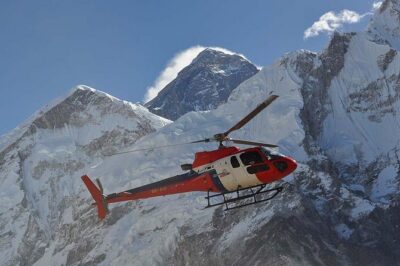
Everest Base Camp Helicopter Tour landing at Everest View Hotel
Read our review →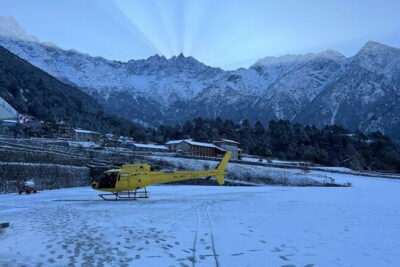
Everest Base Camp helicopter tour with landing
Read our review →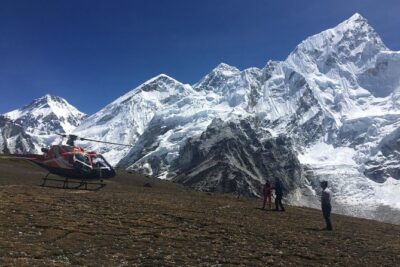
Guaranteed Landing at Everest Base Camp Kalapathar by Helicopter
Read our review →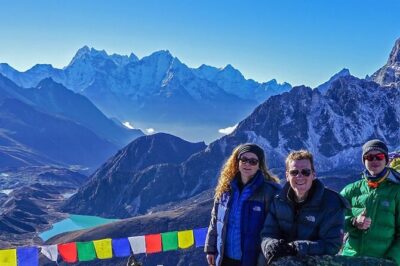
Everest Base Camp Trek with Helicopter Return to Lukla – 10 Days
Read our review →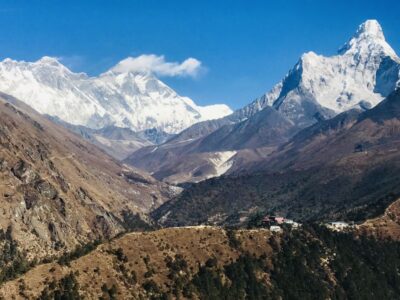
Landing Private Helicopter at Everest base camp & Gokyo for photo
Read our review →
Everest Base Camp Helicopter Tour with Stop at Everest View Hotel
Read our review →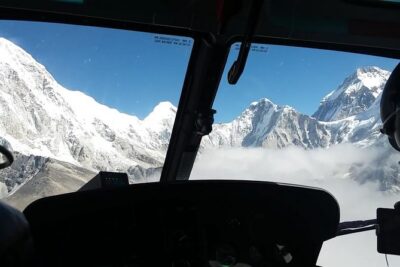
Everest Helicopter Tour from Kathmandu with Landing for Breakfast
Read our review →Other lists this flight appears in